Vietnam's food trade industry is one of the most dynamic sectors in the country. Fueled by an expanding middle class, rising disposable incomes, and shifting consumer preferences, the increasing demand for high-quality food products is undeniable. From bustling markets in Ho Chi Minh City to modern supermarkets in other major cities, the opportunity for both […]
Vietnam's food trade industry is one of the most dynamic sectors in the country. Fueled by an expanding middle class, rising disposable incomes, and shifting consumer preferences, the increasing demand for high-quality food products is undeniable. From bustling markets in Ho Chi Minh City to modern supermarkets in other major cities, the opportunity for both […]
Famously known as “The Emerald of the Equator”, Indonesia is home to at least 300 ethnic groups, in which the majority of the population belong to Javanese, Sundanese, Batak, among others. With various distinguished communities across Indonesia, the country is a multicultural nation with diverse cultural identities. Hence, on doing business in Indonesia, investors are advised to take culture and customs into consideration. In this article, Viettonkin will bring helpful insights and tips related to Indonesian public holidays to investors.
Major public holidays in Indonesia
Each year, Indonesia’s national holidays are stipulated by the Joint Ministerial Decree. The Indonesian Government has recently announced national holidays and collective leave days for 2024. In total, there are 27 days in which 17 days are national holidays while the rest are collective leaves* .
Indonesia National Holidays 2024
Date
Day
Holiday
January 1, 2024
Monday
New Year's Day
February 8, 2024
Thursday
Isra Mi'raj
February 9, 2024
Friday
Chinese New Year
March 11, 2024
Monday
Bali Hindu New Year
March 29, 2024
Friday
Good Friday
April 10, 2024
Wednesday
Hari Raya Idul Fitri
April 08-09, 2024
Monday to Tuesday
Lebaran Holiday
April 11-15, 2024
Thursday to next Monday
Lebaran Holiday
May 1, 2024
Wednesday
Labour Day
May 9, 2024
Thursday
Ascension Day of Jesus Christ
May 23, 2024
Thursday
Waisak Day
June 1, 2024
Saturday
Pancasila Day
June 17, 2024
Monday
Idul Adha
July 7, 2024
Sunday
Islamic New Year
August 17, 2024
Saturday
National Day
September 16, 2024
Monday
Prophet Muhammad's Birthday
December 25, 2024
Wednesday
Christmas Day
Indonesia Collective Leave in 2024
Date
Day
Holiday
February 10, 2024
Saturday
Chinese New Year
March 12,2024
Tuesday
Bali Hindu New Year
April 21,24 - 26
Friday, next Monday to Wednesday
Eid Al-Fitr 1444 Hijri
May 24, 2024
Friday
Waisak Day
May 10, 2024
Friday
Ascension Day of Jesus Christ
June 18, 2024
Tuesday
Idul Adha
December 26, 2024
Thursday
Christmas Day
Calendar of Indonesian Public Holidays (Source: Viettonkin Consulting)
(*) collective leaves: In case the public holidays coincide with the weekend, Thursday, or Tuesday, the employees are granted an additional collective leave day, also known as “cuti bersama” in Indonesian.
Eid Al-Fitr – known as Lebaran – is one of the most significant and celebrated holidays in Indonesia, marking the end of Ramadan. This holiday reflects Muslim’s holiest month, thus, people spend the day with close family members and friends. Idul Adha is another Muslim day that is quite wide-spread in Indonesia. On this holiday, Muslims will go to Mosques and share meat with other people. The day is filled with warmth and caring for those who are less fortunates. Similarly, Isra Mi’raj is also a holiday for the Muslims community. This holiday is an occasion for Muslims to socialize and visit families and friends.
Eid Al-Fitr in Indonesia (Source: Daily Express)
In addition, besides having Chinese New’s Year like other ASEAN countries (Singapore, Thailand, among others), Indonesian people celebrate Balinese Hinduism New Year “Hari Raya Nyepi” on March 22 annually. The holiday is very popular in Bali with local residents enjoying the new year by not using electricity anywhere. They believe that this occasion is to reflect on oneself without any distractions.
Chinese New Year in Indonesia (Source: Indonesia Travel)
Furthermore, to every Indonesian, Indonesian Independence day is of the most importance. The celebration may even take place for over a month to remember the day Indonesia found liberation and independence from the colonists. It is also referred to as Hari Merdeka. Last but not least is Pancasila Day when Sukarno – Indonesia’s first president – declared the five important principles in Pancasila, by which the new nation ought to be governed. The principles hold strong life philosophy and Indonesian core values for Indonesians.
Indonesian Independence (Source: Kabar 24)
Implications of public holidays for enterprises and companies in respect of the Calculation of Employee Salary and Holidays
In addition, according to Indonesian Regulations 6/2016, all local employees on a permanent basis and temporary basis are eligible for a yearly religious holiday bonus – the so-called Tunjangan Hari Raya (THR), which must be paid in Indonesian Rupiah. Yet, employers do not necessarily pay the THR to foreign employees.
The Tunjangan Hari Raya (THR)
Indonesians appreciate their diverse religions and collectivist societies. Hence, through public holidays, they spend on significant things to their culture and customs. In this way, THR helps Indonesian people to afford these celebrations.
THR is equal to the salary of one month for employees with a least 12 months of work. Meanwhile, for those with less than 12 months of work, the THR will be paid on a prorated basis, which is calculated as follows:
(service period/12) x 1 month’s salary
In accordance with the amended law, freelance workers are also eligible for THR. Similar to the aforementioned conditions, those working for over 12 continuous months are entitled to the THR equal to one month’s salary. This bonus is calculated on the average salary they received throughout this period.
In case employees have worked over 1 month yet less than a year, the THR bonus is calculated based on the average monthly salary throughout the employment period.
How employers are fined for non-compliance with THR?
Only businesses with permission from Indonesia’s Ministry of Manpower can delay this allowance payment to employees. Otherwise, they have to face a fine or other alternative administrative sanctions. To be more specific,
5% of the THR is the penalty for delayed payment. Employers are obliged to pay their employees the full THR bonus with the fine without any exceptions. In case the employer is in financial difficulties, they must submit to the local Manpower Department for an exception of 30 days prior to the national religious holiday.
Written warning from the Manpower Department,
Business activities restrictions,
Temporary suspension of all production; and
Suspension of business activities within a certain period;
The employees have all rights to sue their employer in the Industrial Relations Court if the employer still delays the THR payment despite the implementation of the sanctions.
One mindful note for investors in Indonesia is that holidays will affect the tax planning of investors. If the legal and compliance due dates coincide with public holidays, they might be extended. Thus, paying attention to national holidays is essential. Being attentive to public holidays may help investors schedule their tax compliance ahead of the due date, hence fulfilling tax obligations on time.
To avoid future legal violations, investors are advised to consult leading experts in the field. In this way, investors can reduce the risk of non-compliance, and legal concerns, thus focusing more on core business activities. With decades of experience in many Southeast Asia markets, along with a team of seasoned and professional experts insightful of the regional and domestic markets, Viettonkin is willing to accompany and support investors along with Indonesian legal procedures and compliance.
Singapore is a melting pot of diverse cultures with a socio-cultural fabric of Chinese, Malaysian, Indian, among others. This distinct yet harmonious blend of various traditional customs has brought about colorful public holidays and celebrations all year round. Thus, when venturing into Singapore, the cultural environment does affect how investors do business. This article provides you with insightful information about Singapore’s public holidays, and tips to legal compliances.
Major public holidays in Singapore
Chinese New Year is the most anticipated public holiday in Singapore. Similar to Tet Holiday of Vietnam, on this occasion, people return home to celebrate the new year with family and friends. In Chinatown, Chinese New Year activities are often held, namely lion and dragon dance, visiting temples, among others.
Chinese New Year in Singapore (Source: Venuerific)
In addition, both Thailand and Singapore have a public holiday for the birth, the enlightenment, and the death of the Buddha. Yet, in Singapore, it is called “Vesak Day” when people of the Buddhist community practice public talks, vegetarian food fairs and hymn singing.
Vesak Day in Singapore (Source: Gift Giving Ideas)
Hari Raya Puasa – one of the most important events for the Malay community in Singapore – is commonly known as Eid Ul Fitr, marking the end of Ramadan. Meanwhile, known as the Feast of Sacrifice, Hari Raya Haji marks the end of the Haj pilgrimage to one of the holiest cities – Mecca. People spend these holidays by wearing their finest clothes, visiting families and friends and joining the thanksgiving feast.
Hari Raya Puasa in SIngapore (Source: Internet)
Singapore Public Holidays 2024
Date
Day
Holiday
January 1, 2024
Mon
New Year's Day
February 10, 2024
Sat
Chinese New Year
February 11, 2024
Sun
Chinese New Year Holiday
February 12, 2024
Mon
Chinese New Year Holiday
March 29, 2024
Fri
Good Friday
April 10, 2024
Wed
Hari Raya Puasa
May 1, 2024
Wed
Labor Day
May 22, 2024
Wed
Vesak Day
June 17, 2024
Mon
Hari Raya Haji
August 9, 2024
Fri
National Day
October 31, 2024
Thu
Deepavali
December 25, 2024
Wed
Christmas Day
Calendar of Singapore’s Public Holidays (Source: Viettonkin Consulting)
Implications of public holidays for enterprises and companies in respect of the Calculation of Employee Salary and Holidays
Under theEmployment Act 1968, employees are entitled to 11 paid public holidays annually. Therefore, if employers require their employees to work on one of those holidays, they are to pay an extra day’s salary or be granted a day off in lieu.
Additionally, in case a public holiday coincides with a non-working day, employees have another day off or one extra day’s salary instead of the paid public holiday at the gross rate. At the same time, if a public holiday falls on the rest day, the following working day will be regarded as a paid public holiday.
However, in case the employees are not covered by the Employment Act, the Employee salary on public holidays will be decided based on the terms of the labor contract.
How are employees qualified for a paid public holiday?
In 2 scenarios as follow, employees are paid at their gross rate on a public holiday:
Not absent on the working day immediately before or after a holiday without any reasonable excuse and consent of the employers.
Or on authorized leave due to reasonable excuse on the day right before or after a holiday.
Otherwise, if the holiday falls into approved unpaid leave, employees are not qualified for a holiday pay.
How employers pay for employees in case they work on holiday?
By default, when employees work on a public holiday, employers are to pay them an additional day’s pay. Yet, under mutual agreement, employees can have alternative options, which are a public holiday or a time off. For certain categories of employees, employers also have the option to offer time-off-in-lieu, with the number of hours to be mutually agreed upon. This applies to:
Workmen earning more than $4,500 a month.
Non-workmen earning more than $2,600 a month.
All managers and executives.
If any public holiday falls on a rest day, the working day next following that rest day is a paid holiday.
Meanwhile, when the employees are required to work on public holidays, they are to be paid the following: The gross rate of pay for that day; An extra day’s salary at the basic rate of pay; and Any traveling allowance, if payable under the terms of their employment contract. The extra day’s salary can be replaced by either another day off
One mindful note for investors in Singapore is that holidays will affect the tax planning of investors. If the legal and compliance due dates coincide with public holidays, they might be extended. Thus, paying attention to national holidays is essential. Being attentive to public holidays may help investors schedule their tax compliance ahead of the due date, hence fulfilling tax obligations on time.
To avoid future legal violations, investors are advised to consult leading experts in the field. In this way, investors can reduce the risk of non-compliance, and legal concerns, thus focusing more on core business activities. With decades of experience in many Southeast Asia markets, along with a team of seasoned and professional experts insightful of the regional and domestic markets, Viettonkin is willing to accompany and support investors along Singapore’s legal procedures and compliance.
[Under the Employment Act 1968, employees are entitled to 11 paid public holidays annually. Therefore, if employers require their employees to work on one of those holidays, they are to pay an extra day’s salary or be granted a day off in lieu.
Additionally, in case a public holiday coincides with a non-working day, employees have another day off or one extra day’s salary instead of the paid public holiday at the gross rate. At the same time, if a public holiday falls on the rest day, the following working day will be regarded as a paid public holiday.
However, in case the employees are not covered by the Employment Act, the Employee salary on public holidays will be decided based on the terms of the labor contract.
How are employees qualified for a paid public holiday?
In 2 scenarios as follows, employees are paid at their gross rate on a public holiday:
Not absent on the working day immediately before or after a holiday without any reasonable excuse and consent of the employers.
Or on authorized leave due to reasonable excuse on the day right before or after a holiday.
Otherwise, if the holiday falls into approved unpaid leave, employees are not qualified for holiday pay.
How do employers pay for employees in case they work on holiday?
By default, when employees work on a public holiday, employers are to pay them an additional day’s pay. Yet, under mutual agreement, employees can have alternative options, which are a public holiday or a time off. For certain categories of employees, employers also have the option to offer time-off-in-lieu, with the number of hours to be mutually agreed upon. This applies to:
Workmen earn more than $4,500 a month.
Non-workmen earning more than $2,600 a month.
All managers and executives.
If any public holiday falls on a rest day, the working day next following that rest day is a paid holiday.
Meanwhile, when the employees are required to work on public holidays, they are to be paid the following: The gross rate of pay for that day; An extra day’s salary at the basic rate of pay; and Any traveling allowance, if payable under the terms of their employment contract. The extra day’s salary can be replaced by either another day off
One mindful note for investors in Singapore is that holidays will affect the tax planning of investors. If the legal and compliance due dates coincide with public holidays, they might be extended. Thus, paying attention to national holidays is essential. Being attentive to public holidays may help investors schedule their tax compliance ahead of the due date, hence fulfilling tax obligations on time.
To avoid future legal violations, investors are advised to consult leading experts in the field. In this way, investors can reduce the risk of non-compliance, and legal concerns, thus focusing more on core business activities. With decades of experience in many Southeast Asia markets, along with a team of seasoned and professional experts insightful of the regional and domestic markets, Viettonkin is willing to accompany and support investors along with Singapore’s legal procedures and compliance.
Thailand is the second-largest economy in Southeast Asia (SEA), behind Indonesia. Asides, this country was made of an intriguing, diverse, and traditional culture with unique Thai holidays. Therefore, bearing Thailand’s cultural and traditional holidays in mind will help investors familiarize themselves with the business and legal environment. In this article, Viettonkin will provide insights and tips for investors about Thailand’s national holidays and labor compliance.
Thailand’s important holidays
Thai holidays include a wide variety of celebrations in which several holidays are to commemorate the country’s history, while the others are for religious observances.
One of the most significant holidays is Chulalongkorn Day on October 23rd each year, which honors the era of King Chulalongkorn. King Chulalongkorn is one of the most significant figures in Thai’s history, known for his achievements in Thailand’s modernization, religious freedom, and national independence.
Similarly, Coronation Day is held on May 5 annually to remember the coronation of the reigning monarch – King Bhumibol. The holiday is referred to as “Wan Chattra Mongkhon” in Thai.
Coronation Day in Thailand (Source: Internet)
The Visakha Puja Holiday is frequently referred to as “Buddha’s Birthday.” This holiday, which is celebrated in various Asian countries, is the major Buddhist festival, commemorating the birth, enlightenment, and death of the Buddha.
In addition, Buddhists in Southeast Asia, including those in Thailand, Vietnam, Laos, Myanmar, and Cambodia, also observe Buddhist Lent. Buddhist Lent, known in Thailand as “Wan Khao Phansa” lasts for three months during the wet season.
The Thai New Year’s National Holiday, also known as the Water Splashing Festival – Songkran Day occurs every April from the 13th to the 15th. Songkran is a Sanskrit word that means “passing” or “approaching.” Thais have a strong tradition surrounding the Songkran water festival, which symbolizes washing away all unfavorable omens and welcoming in a prosperous new year. These days, Thai people appreciate family reunions, with many of them traveling home to visit their elderly relatives.
Songkran Day in Thailand (Source: Britannica)
The Kingdom celebrates Maha Songkran, often known as “Great Songkran,” on April 13 to honor senior citizens. Families typically honor their older relatives by giving them presents and traditional foods. Thai New Year’s Eve is observed in Wan Nao on April 14. A widespread custom is to gather sand and bring it to monasteries and temples to represent the filth people’s feet have accumulated over the previous year. The first day of the Thai New Year is called Wan Thaloeng Sok, which means “to start a new year or era,” and it occurs on April 15.
Thailand Public Holidays 2024
Date
Day
Holiday
January 1, 2024
Monday
New Year's Day
January 2, 2024
Tuesday
New Year Holiday
February 10, 2024
Saturday
Chinese New Year *
February 24, 2024
Saturday
Makha Bucha Day
February 26, 2024
Monday
Makha Bucha Holiday
April 6, 2024
Saturday
Chakri Day
April 8, 2024
Mon
Chakri Day Holiday
April 10, 2024
Wed
End of Ramadan *
April 13-16, 2024
Saturday to next Tuesday
Songkran Festival
May 1, 2024
Wed
International Labour Day*
May 4, 2024
Sat
Coronation of King Vajiralongkorn
June 5, 2024
Mon
Coronation of King Vajiralongkorn Holiday
May 13, 2024
Mon
Royal Ploughing Ceremony *
May 22, 2024
Wed
Visakha Bucha Day
June 3, 2024
Mon
Queen Suthida's Birthday
July 20, 2024
Sat
Asahna Bucha Day
July 21, 2024
Sun
Khao Phansa Day *
July 22, 2024
Mon
Asahna Bucha Day Holiday
July 23, 2024
Tue
Khao Phansa Holiday *
July 28, 2024
Sun
King Vajiralongkorn's Birthday
July 29, 2024
Mon
King Vajiralongkorn's Birthday Holiday
August 12, 2024
Mon
Her Majesty the Queen Mother's Birthday
October 13, 2024
Sun
Passing of His Majesty the Late King
October 14, 2024
Mon
Passing of His Majesty the Late King Holiday
October 23, 2024
Wed
Chulalongkorn Memorial Day
December 5, 2024
Thu
His Majesty the Late King's Birthday
December 10, 2024
Tue
Constitution Day
December 25, 2023
Wed
Christmas Day *
December 31, 2023
Tue
New Year's Eve
Note:— Chinese New Year, Christmas Day and End of Ramadan are observed in Narathiwat, Pattani, Yala and Satun provinces only.— Labour Day is observed by all sectors except the Government sector.— Royal Ploughing Ceremony and Khao Phansa Day are observed by the Government sector only.
Calendar of Thai Public Holidays (Source: Viettonkin Consulting)
Every year, the Thai government publishes a list of 16 holidays, thus, employees can select the other twelve holidays besides Labor Day (May 1st) at the beginning of the year. This means that employees are given a minimum of 13 paid traditional holidays (according to Section 29 of the Labour Protection Act B.E. 2541). The following working day must be designated as a paid holiday if a traditional holiday falls on a weekend.
According to Section 29 of the Labour Protection Act B.E. 254, an employer shall inform an employee in advance of at least thirteen annual traditional holidays as prescribed and notified by the Minister, which shall include National Labour Day.
Section 30 of Thailand's Labor Protection Act (LPA) states that the employer must schedule (or "fix") the employee's annual paid leave time in advance. Somewhat surprisingly, the law does not require the employee's consent for the employer to schedule their annual leave time. However, annual paid leave may be taken on specified dates if both parties agree to these dates in advance.
In general, when a public holiday occurs during a weekend, the following business day is considered a paid annual leave day for the employee.
The employee may take the substitute leave day at a later date if they so prefer and if the employer agrees. However, the employee must take the substitute leave day within the same calendar year, and unlike regular annual paid leave, the substitute leave day cannot be carried over into the following year.
Implications of public holidays for enterprises and companies in respect of the Calculation of Employee Salary and Holidays
In accordance with Section 62 of the Labour Protection Act B.E. 2541, if an Employer requires an Employee to work on a traditional Holiday, the Employer shall pay the Employee for the Holiday at the following rates:
For an Employee who is entitled to Wages on Holidays, the payment shall be made in addition to Wages at a rate at least equal to the hourly wage rate of a Working Day for the number of hours of work done, or, where an Employee receives Wages on a piece rate basis, of not less than one time of the piece rate of Wages of a Working Day for work done; or
For an Employee who is entitled to Wages on Holidays, the payment shall be made at not less than two times the hourly wage rate of a Working Day for the number of hours of work done, or, where an Employee receives Wages on a piece rate basis, at not less than two times of the piece rate of Wages of a Working Day for work done.
There is no law requiring an employer to pay a bonus. Criteria and conditions of bonus payment or employee’s entitlement to bonus shall be in accordance with an agreement between an employer and an employee. Yet, when you want your company to be an attractive employer, you can pay an attractive salary plus a 13th-month bonus or normal salaries plus many months of bonus.
Investors should be aware of how wages are determined on public holidays in accordance with Thai law to reward workers for their efforts. They might be extended if the legal and compliance due dates coincide with public holidays. Thus, being mindful of public holidays may help investors schedule their tax compliance ahead of the due date, hence fulfilling tax obligations on time. Investors are advised to contact top industry professionals to avoid future legal non-compliance. Therefore, they can concentrate more on growing and expanding the business. With decades of experience in diverse global markets and a team of seasoned and professional experts insightful of the regional and domestic markets, Viettonkin is willing to walk you through your business journey.
Every nation is distinguished by its own culture. Thus, their national holidays are celebrated differently and uniquely. These also affect investors in making investment decisions, aside from the business and legal environment. Therefore, it is crucial for business owners to understand and familiarize themselves with traditional holidays and practices. In this article, Viettonkin will provide insights and tips for investors about Vietnamese national holidays and labor compliance.
Vietnam’s public holidays
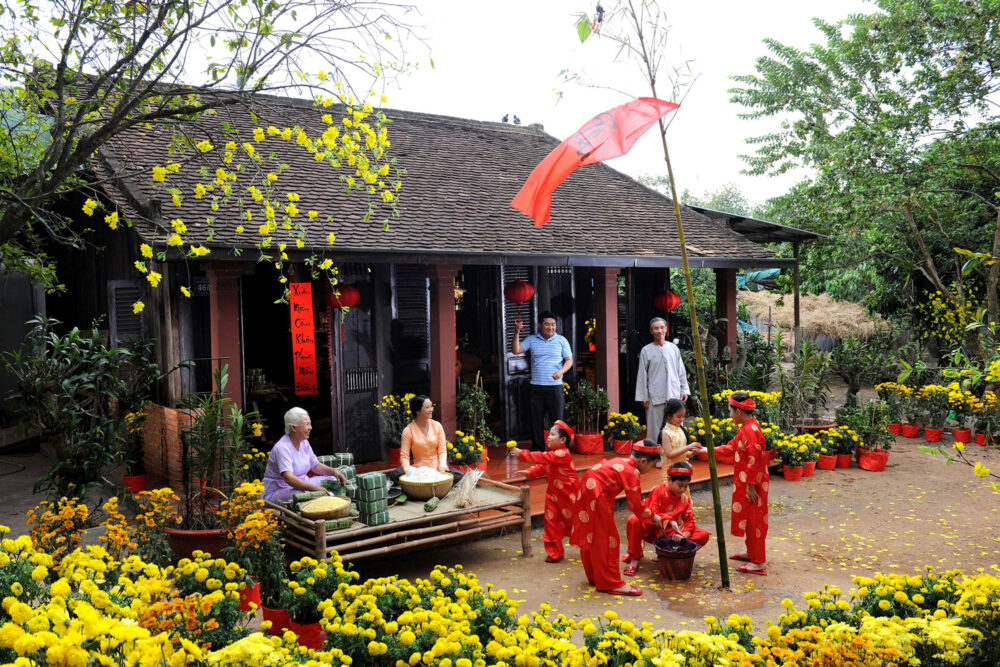
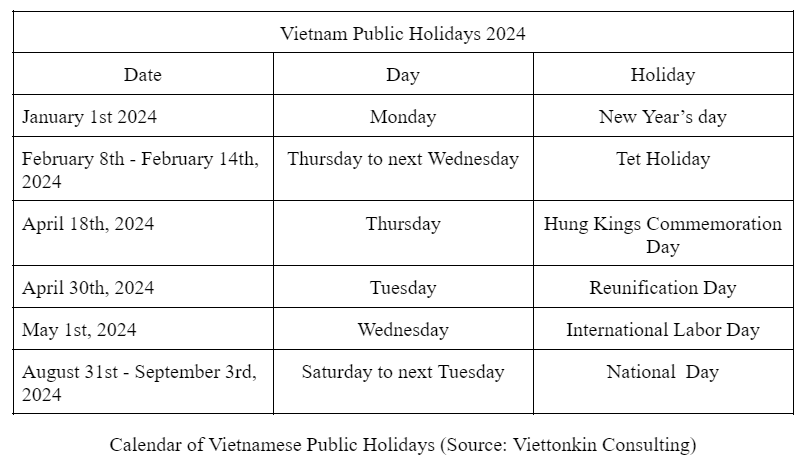
Vietnam is known for its deep-rooted and diverse culture, in which national holidays are often associated with Vietnamese traditions and customs, or special events in history. For example, the Lunar New Year (“Tet Holiday'') is considered the most important and desirable public holiday of the year. Tet usually happens on the 1st day of the lunar new year and symbolizes warmth and family reunions. Besides, Hung King’s Anniversary on April 30th and May 1st annually reflect Vietnamese origin and philosophy “When drinking water, remember the source”. Thus, people have several days off to commemorate and show gratitude towards Hung King and his forefathers.
Tet Holiday in Vietnam (Source: Internet)
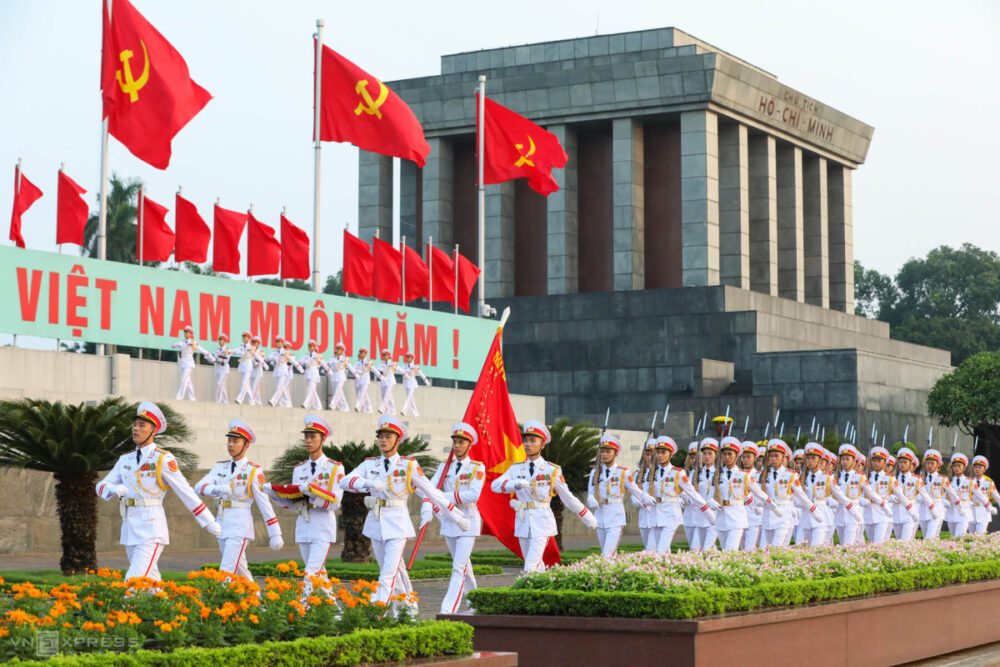
In addition, another significant holiday in Vietnam is on September 2nd – Independence Day. Vietnamese people celebrate the day when the country was established and recall the heroic history of the nation.
Independence Day in Vietnam (Source: Vnexpress International)
In Vietnam, the holiday schedule for special holidays such as the Lunar New Year, and Hung King’s Anniversary, among others, will be regulated by the state. Traditionally, the Tet holiday is the longest holiday, lasting for 7 days, from February 8th to February 14th in 2024. For the remaining holidays, employees will have a maximum of 6 days off.
Regarding civil servants, they will have 7 days off on Tet Holiday as mentioned above (February 8th - 14th, 2024). For non-civil servants, the Lunar New Year holiday in 2024 will be determined by the employer's decision. Accordingly, the employer has three options following the lunar calendar for this holiday:
- 1 day off at the end of the previous year and 4 days off at the beginning of the following year
- 2 days off at the end of the previous year and 3 days off at the beginning of the following year
- 3 days off at the end of the previous year and 2 days off at the beginning of the following year
If the weekly day off coincides with Tet holiday, the employee will be compensated by taking the day off on the next working day.
Implications of public holidays for enterprises and companies in respect of the Calculation of Employee Salary and Holidays
The Labor Code 2019 stipulates how salary is calculated during public holidays, annual leave, and personal leave. In case employees are off work, the salary for employees on public holidays, annual leave, and personal leave is the salary according to the labor contract at the time they take leave. Some expenses, such as mid-shift lunches, allowances for gas, a car, a phone, and other items, are not included in the salary used as the foundation for public holidays. In case the employees are on duty during public holidays, the employee’s salary is calculated as follows (Article 98 of the Labor Code 2019) Employees who work overtime on public holidays and paid holidays are paid at least 300% of their salary, not including the daily salary during the public holidays or paid leave for employees receiving daily salaries. Specifically, for employees who receive hour-based wages on public holidays, the overtime pay is equal to the actual hourly wage paid on a normal working day multiplied by 300% multiplied by the number of overtime hours, excluding the daily salary during public holidays or paid leave in case the employee receives a daily salary. Meanwhile, for employees who receive product-based wages on national time off, the overtime pay is equal to the unit price of the product salary of the normal working day multiplied by at least 300% and multiplied by the number of products. One mindful note for investors in Vietnam is that holidays will affect the tax planning of investors. They might be extended if the legal and compliance due dates coincide with public holidays. Thus, paying attention to national holidays is essential. Being attentive to public holidays may help investors schedule their tax compliance ahead of the due date, hence fulfilling tax obligations on time. To avoid future legal violations, investors are advised to consult leading experts in the field. In this way, investors can reduce the risk of non-compliance, and legal concerns, thus focusing more on core business activities. With decades of experience in many Southeast Asia markets, along with a team of seasoned and professional experts insightful of the regional and domestic markets, Viettonkin is willing to accompany and support investors along Vietnamese legal procedures and compliance
Viettonkin Consulting is thrilled to share the comprehensive and collaborative efforts between Vietnam and the United States across various critical domains. From addressing climate change and advancing clean energy solutions in the Mekong Delta and Red River Delta regions to enhancing healthcare and pandemic response, the partnership is poised for remarkable impact. Additionally, both nations are committed to addressing the consequences of war, promoting human rights, and fostering cultural exchanges. This partnership extends its influence to regional and international forums, ensuring peace, stability, and cooperation on a global scale.
Cooperation on climate, energy, environment and health
Vietnam and the United States will work together in the Mekong Delta and Red River Delta regions, focusing on cross-sectoral adaptation to climate change; reducing pollution; and providing voluntary technical assistance to modernize power transmission infrastructure, integrate renewable energy, develop climate markets, find energy storage solutions, and improve regulatory frameworks to enable a timely and equitable energy transition.
The two leaders acknowledged the significance of collaboration between their respective nations, as well as with non-governmental experts, to advance sustainable agriculture and biodiversity conservation, mitigate pollution, and bolster the resilience of vulnerable communities. This includes efforts to prepare for disasters. The United States endorses Vietnam's drive to enhance clean energy production.
President Biden expressed his appreciation for Vietnam's climate agreements under the Just Energy Transition Partnership (JETP) and its aim of achieving net-zero greenhouse gas emissions by 2050. General Secretary Nguyen Phu Trong welcomed the United States' efforts in mobilizing public and private sector funding to aid Vietnam in implementing the JETP and collaborating with the international community to ensure its success. The JETP aims to maintain national sovereignty in energy, security, and financial matters while still promoting sustainable and environmentally friendly practices.
The United States has committed to providing financial and advanced technological support to assist Vietnam in meeting its obligations under the international climate agreement. Vietnam is open to receiving funding for climate change response, energy transition, green growth, and energy infrastructure regeneration from international financial institutions like the World Bank.
Both parties expressed their deep appreciation for the work of the US Centers for Disease Control and Prevention (CDC) in Vietnam over the last 25 years. They also welcomed the establishment of the CDC Regional Office in Hanoi in 2021 and planned to establish Vietnam's CDC. The two leaders acknowledged the contributions made by cooperation between the two countries in responding to the Covid-19 pandemic, and pledged to strengthen coordination to ensure health security, including preventing, detecting, and responding to pandemics and other global disease risks.
The two leaders emphasized the significance of working together to address the threat of epidemics resulting from human-animal contact. They also discussed the need to expand vaccination efforts and support public health activities, including training individuals in laboratory science and public health under the One Health initiative).
The United States has expressed its support for programs aimed at preventing and controlling HIV and tuberculosis epidemics in Vietnam. This support is being channeled towards the country's critical medical facilities such as Bach Mai Hospital and Cho Ray Hospital to help achieve full control of HIV epidemics and the eradication of tuberculosis by 2030, in line with both global agreements and Vietnam's national program. Additionally, the United States is backing Vietnam's efforts to develop its pharmaceutical industry as part of a broader move to strengthen global health security cooperation.
The United States is prepared to enhance cooperation with the aim of improving regulation compatibility. This will help Vietnam take an active role in the medical supply chain, both regionally and internationally.
Cooperate in overcoming the consequences of war
The two leaders expressed their appreciation for the strong collaboration between Vietnam and the United States in addressing the aftermath of the war. They considered this a crucial element in the relationship between the two nations, which helps foster trust and deepen mutual understanding.
Vietnam and the United States have expressed their commitment to finishing the decontamination of Bien Hoa airport, and to advancing the clearance of mines and explosives. Both countries have agreed to increase their support for people with disabilities, regardless of the cause, and to assist the Vietnam National Mine Action Center in enhancing its capabilities, particularly in improving coordination between central and local levels. Additionally, both countries pledge to continue their support for Vietnam in locating missing soldiers and improving the country's DNA testing capacity.
President Biden expressed his gratitude on behalf of the American people for Vietnam's long-standing support in locating information and remains of US soldiers who went missing during the war. Vietnam pledged to continue comprehensive cooperation with the United States in the search for the remains of US soldiers missing during the war.
The two leaders welcomed the significant increase in people-to-people exchange activities between their countries. They agreed to collaborate in promoting two-way tourism, cooperation between enterprises in both countries, expert and academic exchanges, and learning opportunities.
The two parties aim to strengthen cooperation between US states and Vietnamese provinces and cities in practical and effective ways, with specific programs and projects. They also seek to enhance relationships between communities, industries, enterprises, young generations, and people's organizations of the two countries through exchanging delegations, organizing joint seminars, and engaging in cultural exchange activities involving arts, music, and sports. Finally, they will coordinate to organize commemorative activities to celebrate the relationship between the two countries.
The two leaders expressed their appreciation for the valuable contributions of the Vietnamese community in the United States towards strengthening the relationship between the two countries. President Biden acknowledged the Vietnamese American community as one of the most successful, dynamic, and innovative communities in the United States.
President Biden congratulated Vietnam on its important contributions to global peace and stability. These include participating in United Nations peacekeeping operations, as well as providing disaster response capacity and search and rescue to handle natural disasters around the world.
The two parties plan to promote the role of dialogue and consultation mechanisms formed between their respective Ministries of Defense, as well as between other ministries and branches. They aim to achieve effective cooperation in humanitarian and constructive efforts, such as overcoming the consequences of war, military medicine, UN peacekeeping, maritime law enforcement, and maritime security capacity, among other fields of mutual interest. This cooperation will be carried out in compliance with the signed documents and agreements between the leaders and agencies of the two countries.
The two parties emphasized the importance of promoting cooperation between law enforcement and criminal justice agencies of both countries. They decided to deepen existing cooperation in the fields of law enforcement, security, and intelligence. They will coordinate, exchange information, and share experiences to improve the effectiveness of maritime cooperation and the prevention and combat of transnational crime, piracy, money laundering, human trafficking, illegal trafficking of narcotic substances and drug precursors, cyber crimes, and high-tech crimes.
The two leaders have agreed to create a Security and Law Enforcement Dialogue mechanism involving relevant law enforcement, security, and intelligence agencies. Both countries denounce all forms of terrorist acts and extremist violence, and anticipate working together to combat terrorism and the funding of terrorist organizations in accordance with the United Nations Charter and other relevant international commitments that both countries have agreed to as members.
The two leaders expressed their satisfaction with the progress made in promoting defense trade and industry cooperation, taking into account each other's conditions. The United States committed to continuing its support for Vietnam in enhancing its defense self-reliance, in line with Vietnam's specific requirements and established mechanisms.
Promote and protect human rights
The two leaders emphasized the significance of promoting and safeguarding human rights, as well as adhering to each country's constitution and international obligations. They agreed to sustain their support for the advancement and preservation of human rights through open and productive channels of communication, such as the Human Rights Dialogue and the yearly Vietnam-US Labor Dialogue. This will foster greater mutual understanding and reduce any discrepancies.
The leaders of both countries emphasized the importance of cooperation to ensure that everyone, including vulnerable groups regardless of gender, race, religion, or sexual orientation, as well as people with disabilities, can fully enjoy their human rights. Vietnam and the United States acknowledge that human rights, regional stability, world peace, and sustainable development are interrelated. Both parties recognized the valuable contributions of social and religious organizations in fields such as education, healthcare, and social services in both countries.
Coordinate on regional and international issues
Vietnam and the United States aim to improve coordination on regional and global issues of mutual interest and concern. This will contribute to joint efforts in maintaining peace, stability, cooperation, and development in the region and the world. The two parties have agreed to strengthen coordination at regional and international forums, including the United Nations, Asia-Pacific Economic Cooperation (APEC), East Asia Summit (EAS), ASEAN Regional Forum (ARF), ASEAN Defense Ministers Meeting Plus (ADMM+), and other relevant ASEAN Ministerial conferences.
Both parties agree on promoting multilateralism, respecting international law (including the United Nations Charter), and promoting an open and inclusive regional structure with ASEAN playing a central role. Vietnam values the United States' robust support for ASEAN's central role and ASEAN's vision for the Indo-Pacific region.
ASEAN-US Comprehensive Strategic Partnership was recently established, and a special summit will be held in Washington, DC in 2022. General Secretary Nguyen Phu Trong expressed appreciation for the United States' commitment to ASEAN and encouraged its continuation.
During their meeting, President Biden expressed his admiration for ASEAN's accomplishments and reiterated the importance of ASEAN's central role. The two leaders also commended Indonesia for its upcoming presidency in 2023 and welcomed Laos as the next country to take over the ASEAN presidency in 2024.
The General Secretary, Nguyen Phu Trong, expressed his appreciation for the United States hosting APEC this year. President Biden is excited to welcome President Vo Van Thuong to San Francisco for APEC Summit Week in November 2023.
The two leaders expressed their unwavering support for resolving disputes through peaceful means, in accordance with international law, without the threat or use of force. They also emphasized the importance of freedom of navigation, aviation, and lawful trade in the East Sea, while respecting the sovereignty, sovereign rights, and jurisdiction of coastal states over their exclusive economic zones and continental shelves, as outlined in the United Nations Convention on the Law of the Sea (UNCLOS) of 1982.
The two leaders acknowledged the significance of completely and efficiently carrying out the entire 2002 Statement on the Conduct of Parties in the East Sea. They also affirmed their backing for ASEAN's initiatives to accomplish the Code of Conduct in the East Sea in a meaningful and effective manner, in agreement with international law, including UNCLOS 1982, without compromising the legal rights of any country.
The two leaders stressed the significant importance of the Mekong sub-region in maintaining stability, peace, prosperity, cooperation, and sustainable development. Cross-border cooperation and sustainable development are crucial in addressing challenges and seizing new opportunities, including food security and sustainable water management, supporting communities and their livelihoods, promoting economic connectivity, resolving non-traditional security issues, and collaborating to provide opportunities for human resource development. The two parties welcomed the Mekong-US Partnership framework and other Mekong mechanisms, such as the Mekong River Commission and the Ayeyawady-Chao Phraya-Mekong Economic Cooperation Strategy (ACMECS).
The two leaders have decided to cooperate closely with other Mekong countries to expand their collaboration within this framework, as well as within the Lower Mekong Initiative.
The two leaders highlighted the significance of completely executing the ASEAN Five-Point Consensus, and reiterated ASEAN's appeal for an immediate cessation of violence and de-escalation among relevant parties in Myanmar. This is to establish a conducive environment for extending humanitarian aid and promoting inclusive communication across the nation.
During their meeting, the leaders of both countries talked about various regional and international issues that concerned them both. They reached an agreement that peaceful means should be used to resolve any disputes, in accordance with the United Nations Charter, while ensuring the safety of their citizens and protecting essential infrastructure that supports their daily lives.
Vietnam and the United States have reiterated their support for achieving lasting peace and complete denuclearization of the Korean Peninsula. Both countries urge all relevant parties to fulfill their obligations and international commitments, including complying with the relevant resolutions of the United Nations Security Council.
For the Ukraine issue, the two Leaders supported the need for the formation of a comprehensive, fair and lasting peace in accordance with the United Nations Charter and international law.
Since the normalization of bilateral relations in 1995, Vietnam-US relationship has developed strongly, deeply, substantially, and effectively. This new chapter in the relationship between the two countries will take Vietnam-US partnership to a new position. The two countries will fulfill their people's aspirations for a bright and dynamic future, contributing to maintaining peace, stability, cooperation, and development in this important region and around the world.
Final Thoughts
As this dynamic relationship enters a new era, there are boundless opportunities for businesses, organizations, and individuals to engage and contribute to its growth and success. Viettonkin Consulting stands ready to guide you through these opportunities and facilitate your involvement in this historic partnership. Together, we can work towards a brighter future that prioritizes collaboration, sustainability, and mutual prosperity. Reach out to Viettonkin Consulting today and be a part of this exciting journey towards a comprehensive strategic partnership between Vietnam and the United States. Your participation can make a meaningful difference in shaping the future of this remarkable alliance.
Viettonkin is pleased to announce the Leaders' Joint Statement, officially upgrading the relationship between Vietnam and the United States to a comprehensive strategic partnership.
This historical document not only contains all the essential content that forms the foundation for a new era in Vietnam-US relations, but it is also well-written and carefully crafted from start to finish. The document addresses important and highly sensitive issues, such as Vietnam's independence, national sovereignty, and the East Sea issue, as well as hot regional and international topics like Ukraine, Myanmar, and North Korea, with sincerity and clarity.
Additionally, the document covers other significant subjects, such as human rights, workers' rights, religious freedom, and the consequences of war, which are of great importance to Vietnam-US relations.
(VNEconomy: The dialogue between two leaders)
Leaders’ Joint Statement: Vietnam-US relation is upgraded to a comprehensive strategic partnership.
On September 10, 2023, the General Secretary of the Central Committee of the Communist Party of Vietnam, Nguyen Phu Trong, and the US President, Joseph R. Biden Jr., met in Hanoi, Vietnam for talks.
The two leaders have welcomed a new era of bilateral friendship and cooperation as the two countries upgrade their relationship to a comprehensive strategic partnership for peace, cooperation, and sustainable development. The United States is committed to supporting a strong, independent, prosperous, and self-reliant Vietnam.
Since President Truong Tan Sang and President Barack Obama established Vietnam-US Comprehensive Partnership ten years ago, the two countries have made significant progress in strengthening mutual understanding, building trust, and promoting cooperation across all fields within the Comprehensive Partnership framework.
As part of their new relationship, the two leaders highlighted the important principles that guide Vietnam-US partnership. These include respecting the United Nations Charter and international law, as well as respecting each other's political institutions, independence, sovereignty, and territorial integrity. Vietnam and the United States will continue to collaborate in various areas to protect their respective interests, promote peace, stability, cooperation, and prosperity in the region and the world.
Political and diplomatic relations
The two leaders emphasized the importance of further enhancing the political and diplomatic relationship between their countries. They agreed to promote delegation exchanges and maintain regular contact at all levels to improve mutual understanding and strengthen their shared political beliefs. The two leaders also expressed support for improving the effectiveness of existing dialogue mechanisms and discussed the possibility of establishing an annual dialogue between the Vietnamese Minister of Foreign Affairs and the US Secretary of State.
The two leaders aimed to strengthen relations between their respective political parties and legislative bodies. They encouraged dialogue, exchange, and discussion to share each side's priorities and practical experiences.
The leaders of both nations will oversee their respective government agencies to ensure effective coordination and implementation of mutually agreed-upon cooperation programs. Both countries have committed to maintaining favorable conditions to complete the construction of diplomatic and consular agency headquarters, as well as ensuring an appropriate number of personnel at the representative agencies. This will be done in compliance with international conventions that both countries are members of, as well as mutual agreements between Vietnam and the United States, and the laws of each country.
Economic - trade - investment cooperation
The two leaders confirmed that economic, trade, and investment cooperation, as well as inclusive economic growth based on innovation, play a central role in bilateral relations. Both parties agreed to create favorable conditions and further open their markets to each other's goods and services. They also pledged to support trade and economic policies and regulatory measures to achieve the aforementioned goals, and to work together to address issues such as market access barriers through the Trade and Investment Framework Agreement.
The United States is pleased with the progress made in Vietnam's market-based economic reform process. We are excited and committed to a strong and coordinated approach that supports Vietnam's transition to a market economy and its recognition as a market economy under US law.
On September 8, 2023, Vietnam officially requested that the United States consider recognizing their market economy regulations. The United States will promptly review this request as required. The United States values Vietnam's consistent efforts to modernize and improve transparency in their monetary and exchange rate policies, promote macroeconomic stability, and ensure the safety and soundness of their banking system.
The two leaders expressed their support for the ongoing reinforcement of a multilateral trading system that is fair, open, inclusive, equitable, transparent, and rules-based, with the World Trade Organization (WTO) playing a crucial role. They welcomed the recent progress and expressed their hope for more significant progress in the Indo-Pacific Economic Framework for Prosperity (IPEF) in the near future, which will bring tangible benefits to the economies, workforce, households, and businesses of both nations and the entire region.
The two leaders acknowledged the significance of upholding globally recognized labor rights, as outlined in the International Labor Organization's (ILO) Declaration on Fundamental Principles and Rights at Work. Additionally, they aim to collaborate on safeguarding intellectual property rights and advancing aviation, which may involve revising Vietnam-US Air Transport Agreement in accordance with Open Skies principles.
The United States has committed to increasing support for Vietnam in areas such as manufacturing, developing high-quality physical and digital infrastructure, transitioning to equitable and sustainable energy, and promoting smart agriculture. Additionally, the US will support Vietnam's participation in regional and global supply chains, with a particular focus on the Mekong Delta region. To this end, the US International Development Finance Corporation (DFC) will continue to finance private sector projects in Vietnam, specifically those related to infrastructure, climate and energy efficiency, healthcare, and small businesses, including those that are climate-focused and women-owned.
Digital cooperation, science, technology, innovation
Vietnam and the United States have agreed to foster collaboration in science, technology, and innovation in the digital realm, marking a significant advancement in their comprehensive strategic partnership. The United States has pledged to increase its assistance to Vietnam in training and cultivating a highly skilled workforce for the technology sector. Vietnam's enormous potential to emerge as a major player in the semiconductor industry has been acknowledged, and both leaders endorse the rapid growth of Vietnam's semiconductor ecosystem. The two parties will work closely together to elevate Vietnam's standing in the global semiconductor supply chain.
As a result, Vietnam and the United States have announced the initiation of initiatives for human resource development in the semiconductor field. The US Government will provide an initial seeding grant of VND 2 million, and there will be additional support from the Government of Vietnam and the private sector in the future. Vietnam and the United States have agreed to work together on promoting innovation and entrepreneurship, with a comprehensive approach to cooperation. The two leaders expressed their support for the development of safe and reliable digital infrastructure in Vietnam. They believe that this process will create new opportunities for enhancing Vietnam's innovation capacity in the digital field and promoting the country's digital economy. These efforts will focus on supporting open and interoperable networks and, upon notifying the U.S. Congress, exploring the possibility of establishing an Open Radio Access Network (O-RAN) training department in Vietnam. The goal is to create a secure 5G network and apply new technologies to provide opportunities for Vietnam's innovation community to enhance their digital skills.
The importance of continued cooperation between leading academic institutions in Vietnam and the United States was emphasized by both Leaders. This can be achieved through collaborative research initiatives, training courses, and professional exchanges and exchange programs that focus on science, technology, engineering, and mathematics (STEM).
(VNEconomy: Two leaders at the press conference)
The United States has announced its intention to support Vietnam in training high-quality human resources, which will help Vietnam achieve its development goals in the near future. Currently, there are nearly 30,000 Vietnamese students studying in the United States, and the United States is encouraging educational institutions to welcome even more Vietnamese students. The two leaders also congratulated the launch of the Peace Program in Vietnam and the 31st anniversary of the Fulbright Vietnam program.
Both parties expressed their appreciation for the endeavors of Fulbright University Vietnam (FUV) and its efforts to expand its role as a regional hub for public policy education. The leaders also acknowledged the pressing need to invest in human capital, recognizing it as a vital resource for future growth, security, stability, and development.
Vietnam and the United States acknowledge that long-term economic success can only be achieved when both countries provide their people with ample opportunities to learn new skills, share ideas, and gain international experience and understanding.
Vietnam and the United States agree to promote collaboration between their universities and laboratories, sharing scientific knowledge and learning opportunities. The focus is to support more Vietnamese students, teachers, scholars, and research experts to participate in education and training programs in the United States. Vietnam is also open to welcoming more US students, scholars, and professors to study, research, and teach at Vietnamese universities. Vietnam encourages US universities to establish partnerships with Vietnamese universities, including opening branches in Vietnam.
Final Thoughts
The joint statement issued on this occasion underscores a shared commitment to fostering a new era of bilateral friendship and cooperation, grounded in principles like upholding international law, respecting sovereignty, and safeguarding territorial integrity.
This partnership extends far beyond mere rhetoric, encompassing a wide array of collaborative efforts across diverse domains. From addressing global issues to fortifying political, economic, and diplomatic relations, the commitment between these two nations is palpable. To explore the myriad opportunities emerging from this historic development, we invite you to connect with Viettonkin Consulting today and be a part of this exciting journey towards a comprehensive strategic partnership between Vietnam and the United States.
Stay tuned with us for Part 2!
Since the establishment of diplomatic relations between Vietnam and Italy on March 23, 1973, the political relationship between the two countries has been consolidated and developed rapidly.
January 21, 2013, marked a milestone as the two countries signed a joint statement on the establishment of the strategic partnership on the occasion of the official visit to Italy by Party General Secretary Nguyen Phu Trong. Since then, both countries have actively promoted practical and effective cooperation in all areas, including politics, diplomacy, economics, science, education, defense and security, environmental protection, and local connectivity. Over the past five decades, bilateral relations have grown intensively and extensively across spheres.
Both sides have maintained effective mechanisms for bilateral cooperation, including the annual Strategic Dialogue at the Deputy Foreign Minister level (4th round in June 2022), Defense Policy Dialogue at the Deputy Minister level (3rd round in 2019), the Joint Committee on Economic Cooperation (7th round in June 2022), and the Joint Committee on Science and Technology Cooperation (7th round in July 2020).
Recently, on the celebration of 50th founding anniversary of diplomatic ties and the 10th anniversary of the bilateral strategic partnership, Vietnam President Vo Van Thuong and his Italian counterpart Sergio Mattarella discussed and agreed on major orientations and measures to strengthen the Vietnam – Italy strategic partnership at their talks in Rome (July 26, 2023).
Source: Vietnam Plus, 2023.
Vietnam & Italy economic-trade-investment ties
Vietnam is one of the 10 emerging markets prioritized for trade and investment development by Italy until 2030. Both sides continue to create favorable conditions for businesses of the two countries to enhance cooperation in areas where Italy has strengths and Vietnam has demand, such as mechanical engineering, infrastructure construction, textiles and garments, leather shoes, wood processing, supporting industries, construction materials, oil and gas, renewable energy, food processing, and more.
Economic-trade cooperation
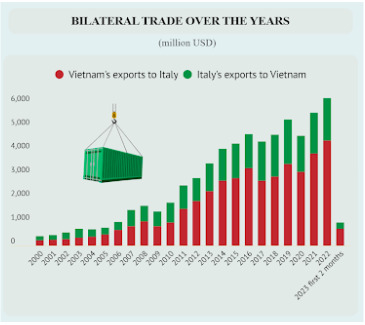
In 2022, bilateral trade reached over 6.2 billion USD, up 11% compared to 2021, with expectations to reach 7-8 billion USD per year. Italy is the third largest trading partner of Vietnam in the EU (after Germany and the Netherlands), and Vietnam is the largest trading partner of Italy in ASEAN.
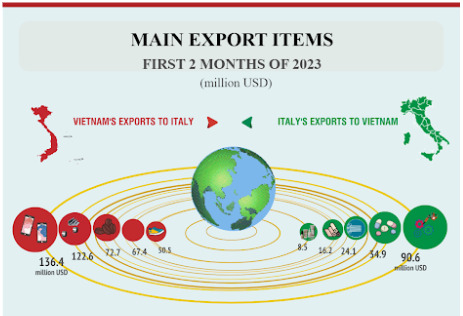
Vietnam's exports to Italy are quite diverse, with many items having large export turnover, including phones and components, machinery and equipment, transportation parts, iron and steel, textiles and garments, footwear, coffee, among which, phones and components are the leading export group, accounting for about 25% of Vietnam's exports to Italy. Some exports such as steel to the Italian market have increased sharply due to taking advantage of the benefits from the EVFTA agreement. Overall, bilateral trade between Vietnam and Italy has grown thanks to positive effects of the EU-Vietnam Free Trade Agreement (EVFTA)
Source: General Statistics Office of Vietnam & General Department of Vietnam Customs. Infographic from Vietnam Plus, 2023.
Source: General Statistics Office of Vietnam & General Department of Vietnam Customs. Infographic from Vietnam Plus, 2023.
Investment cooperation
Regarding investment, as of June 2023, Italy had run 147 valid projects worth 472.83 million USD in Vietnam, ranking 36 out of the 141 countries and territories investing in the country, and ninth among the 25 EU investors in the country. The projects are mainly in industries such as leather shoes, construction, sanitation equipment, water heaters, steel processing. Many large Italian corporations are actively operating in Vietnam in the manufacturing industry, such as Bonfiglioli (manufacturing motors), Piaggio (manufacturing and assembling motorcycles, engines), Danieli Officina (steel production), Fiat Iveco (Mekong automobile joint venture), Datalogic, Ariston (water heater production). Many wood processing and stone processing factories in Vietnam are using Italian machinery and technology. Danieli's steel refining equipment has been present in over 10 projects in Vietnam, including the Vietnam-Italy steel plant and the Phu My steel plant.
Deputy Foreign Minister Ha Kim Ngoc and his Italian counterpart Manlio Di Stefano co-chair the consultation. Photo: VNA
Binh Duong and Vinh Phuc are typical examples of commercial cooperation and investment activities with Italy. Regular investment promotion activities are conducted annually. Binh Duong (ranked third in the country in attracting FDI after Ho Chi Minh City and Hanoi) currently has 8 investment projects with Italian enterprises with a total capital of nearly 64 million USD in the fields of manufacturing industry, fashion accessories, consumer goods, and food production. Among the 17/63 provinces and cities with Italian investment, Vinh Phuc is at the forefront with large projects from Piaggio with a total registered capital of 165 million USD.
Development cooperation
In terms of development cooperation, Italy has also maintained its official development assistance (ODA) to Vietnam, focusing on vocational training, personnel development, environmental protection, and water resources management, support to small and medium-sized enterprises, health care, and scientific research.
Italy is currently continuing to provide ODA to Vietnam with 7 ongoing projects and 3 other projects in the preparation phase, with a committed capital of over 117 million euros, focusing on vocational training and human resource development, environmental protection and water resource management, support for small and medium-sized enterprises, healthcare, and scientific research programs. Italy has approved the Ministry of Finance's proposal not to extend the Agreement on supporting the water sector program (September 2022).
According to the WB's National Climate and Development Report for Vietnam (July 2022), Vietnam needs about 368 billion USD in additional investment for climate change adaptation solutions by 2040, thus having a great demand for financial support from developed countries in the EU, including Italy. Additionally, Italy confirms its funding of 250 million euros to Vietnam from the Green Climate Fund under the JETP framework to combat climate change.
Prospects and trends in future bilateral relations
Vietnam and Italy have issued a Joint statement on strengthening their bilateral strategic partnership on the occasion of President Vo Van Thuong’s State visit to Italy (26 to 27 July 2023). The visit was of great significance in promoting political trust and strengthening the Vietnam - Italy Strategic Partnership. The visit was also particularly meaningful as it took place at a time when the two countries celebrate the 50th anniversary of diplomatic relations (1973-2023) and the 10th anniversary of the Strategic Partnership. Here are the key notes of the joint statement on strengthening economic, trade, investment and development cooperation:
The two Parties expressed their high appreciation for being each other's important trade and investment partners, and underscored the potentials and needs for sustained cooperation in many other fields, especially in infrastructure development, digital economy, high technology, green growth, renewable energy, creative industries and smart agriculture. They stressed the need to continue creating favorable conditions for each other’s respective stakeholders engaging in investment and business activities.
The two Parties pledged to continue to fully and effectively implement the Vietnam - EU Free Trade Agreement (EVFTA) and improve the access to the market of each other’s Party, by removing unnecessary and unjustified trade restrictions. They also agreed to maintain the effective implementation of the Joint Committee on Economic Cooperation and strive to soon bring two-way trade value to US$7 billion.
Vietnam welcomed the adoption by the Italian Parliament of the law on the ratification of the EU - Vietnam Investment Protection Agreement (EVIPA), which will create favorable conditions for investors from both parties, on the basis of equality and mutual benefit. The Italian Party acknowledged Vietnam's recent efforts in seriously and thoroughly implementing the EC's recommendations in the fight against illegal, unreported, and unregulated (IUU) fishing.
The two Parties commended Italy’s continued ODA for Vietnam over the past years and welcomed the expansion of the Italian Agency for Development Cooperation Office in Hanoi in charge of the region, as well as Italy’s new strategy to promote development cooperation with ASEAN and Vietnam.
Vietnamese President Vo Van Thuong (L) and President of the Italian Senate Ignazio La Russa at their meeting in Rome on July 26.
Conclusion
In conclusion, the economic-trade potentials between Vietnam and Italy are promising and continue to flourish. The two countries have established strong partnerships in various fields, including trade, investment, and development cooperation. Vietnam's strategic location in Southeast Asia, combined with its abundant natural resources and young, skilled workforce, presents a wealth of opportunities for Italian businesses seeking to expand their markets.
The year 2023 is of significance as it marks the 50th anniversary of the bilateral diplomatic ties, and 10 years since the establishment of the strategic partnership. With ongoing efforts to strengthen cooperation and investment ties, both countries can leverage their strengths and create mutually beneficial partnerships for sustained economic growth and development in the years to come.
If you are an Italian investor looking to expand your business into Vietnam, Viettonkin Consulting can help. We have extensive experience in the Vietnamese market and can provide you with the support you need to succeed. Contact us today to learn more. With our help, you can take advantage of the many opportunities available in Vietnam and build a successful business. Don’t hesitate to reach out to us!
Over nearly half a century of cooperation, Vietnam and Singapore have achieved numerous outstanding achievements, especially in the field of business investment, economics, and commerce. Despite the surge of Covid-19 in recent years, Singaporean investors are constantly seeking opportunities to diversify and expand their business presence in Vietnam. As of July 2022, Singapore has become the second largest foreign direct investor (FDI) in Vietnam, only after South Korea.
Thriving Economic Cooperation from Solid Foundation
Up until now, Vietnam has also had about 118 valid investment projects in Singapore, with a total registered capital of 498 million USD, mainly focusing on the fields of science and technology, retail trade, automobile and motorcycle repair, information and communication technology, and the manufacturing and processing industry.
Economic cooperation is the cornerstone of Singapore-Vietnam relations. Singaporean entrepreneurs always consider Vietnam as one of the top attractive investment destinations in the whole world…
Vivian Balakrishnan - Singapore's Minister for Foreign Affairs
For many years, Singapore has maintained its position as a leading investor in Vietnam, ranking second among the 140 countries and territories that have invested in Vietnam. As of February 2022, Singapore had 2,860 valid investment projects in Vietnam with a total registered capital of 66 billion USD, with a focus on the process industry, manufacturing, real estate, electricity, gas, production, and distribution.
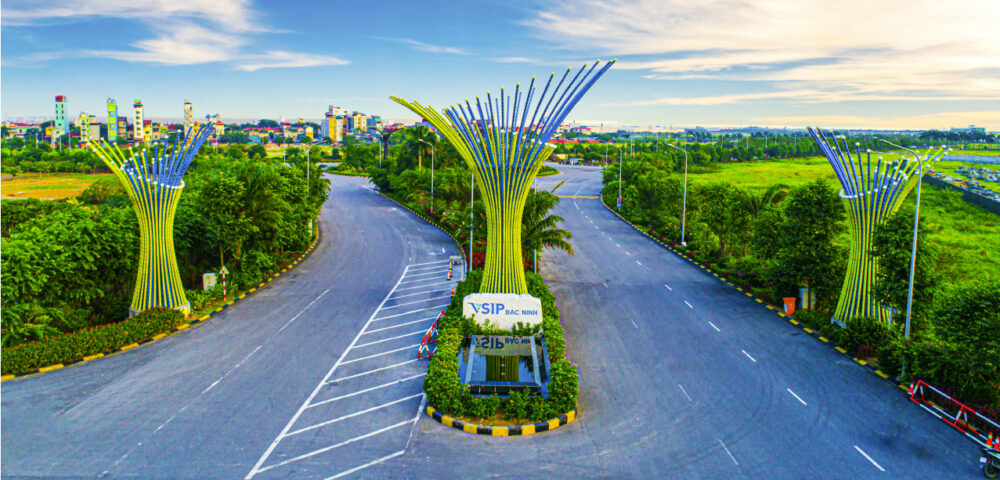
The Vietnam-Singapore Industrial Park (VSIP) is currently the most well-known investment project in Vietnam. This is deemed a symbol of economic cooperation between the two countries, making an important contribution to Vietnam's socio-economic recovery and development. In the 25 years since the first park was established, there have been another 10 VSIP projects located in 7 localities, attracting 14 billion USD in investment and creating more than 270,000 jobs for Vietnamese locals.
The VSIP project, along with other initiatives in the past, paved the way for Singaporean investors to select the Vietnamese market and its domestic businesses as their preferred locations and partners. On January 18th, 2022, Quadria Capital - an Asian private investment fund headquartered in Singapore, completed an investment of 90 million USD in “Con Cưng”- a Vietnamese mother and baby retail chain, with an ambition of helping this brand to open 2,000 more stores by 2025. This investment marks Quadria Capital's second foray into the Vietnamese market, following the acquisition of FV Hospital in 2017.
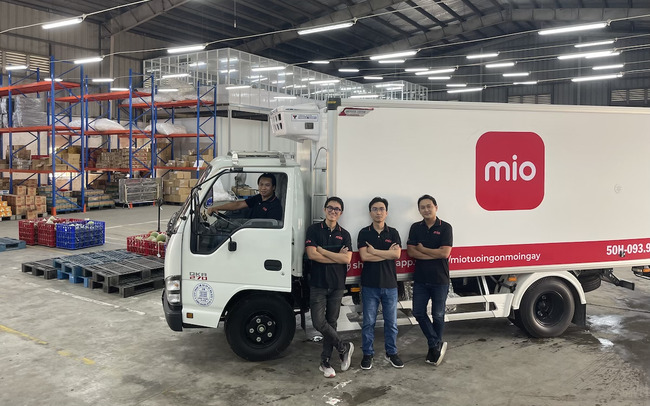
On January 20th, Mio - a Vietnamese e-commerce platform specializing in selling and distributing agricultural products via social networks, successfully raised over $8 million in a Series A funding round from Jungle Ventures. Jungle Ventures is a Singapore-based investment fund that focuses on helping young start-up entrepreneurs in Southeast Asia and India. In Vietnam, Jungle Ventures is well-known for its investments in KiotViet and Dat Bike, a startup that produces electric motorcycles.
Mio - a Vietnamese e-commerce platform specializing in selling and distributing agricultural products
Top Emerging Industries for Singaporean Entrepreneurs to Invest in
In a recent interview, Jaya Ratnam - Singaporean Ambassador to Vietnam pointed out three areas that are becoming increasingly attractive to Singaporean investors in Vietnam in the near future. As follows:
Supply chain and logistics
Singapore companies hope to contribute more expertise, human resource training, and digital solutions to develop the logistics sector in Vietnam.
Vietnam Airlines (VNA) and Vietnam Railways Corporation (VNR) recently signed an inaugural Memorandum of Understanding (MoU) with Singapore's supply chain and logistics provider YCH to establish multimodal connectivity for the Vietnam SuperPort. As the first multimodal infrastructure project invested in by a Singaporean firm in Vietnam, Vietnam SuperPort is anticipated to improve logistics and supply chain connectivity in the ASEAN region through the adoption of cutting-edge technologies and creative solutions. It is being propelled by the robust economic ties made possible by the close partnership and strong business ties between Vietnam and Singapore.
Green economy
As Singapore entrepreneurs increase their investment in sustainable infrastructure and renewable energy, they keep looking forward to working with Vietnam with the ambition of achieving net zero carbon emissions by 2050. The collaboration between Sembcorp Group (Singapore) and Vietnam Electricity Corporation is a typical example of cooperation in this field. Besides, Sembcorp is also working on developing a network of Vietnam - Singapore Industrial Parks (VSIP) to integrate sustainability and innovation. In March 2022, Sembcorp celebrated the 11th VSIP launch in Binh Duong province, where it will build a carbon-neutral factory owned and operated by the LEGO Group.
Digital Economy
Developing a digital economy will be a priority for both countries in the upcoming decades. Vietnam has identified the digital economy as one of the primary growth drivers propelling it to become a high-income country by 2045. The rapidly growing middle class and young population in Vietnam have made this sector extremely attractive in the eyes of Singaporean investors when it comes to e-commerce, digital payments, smart cities, and digital commerce.
The bilateral digital collaboration between the two nations would offer a platform for Vietnamese and Singaporean enterprises to transact with one another in an easy and safe manner, allowing them to build their digital operations. Establishing common ground in these areas will also aid in the safe and dependable adoption of developing technology, as well as encourage further innovation.
The Singapore Partnership Program (SCP) will evolve in tandem with Vietnam's demands. Vietnam is SCP's most important partner. Singapore has been assisting Vietnam's Industry 4.0 goal by sharing digital transformation expertise in a variety of domains such as governance, cybersecurity, e-commerce, trade and investment, and judicial reform.
Expanding future investment opportunities
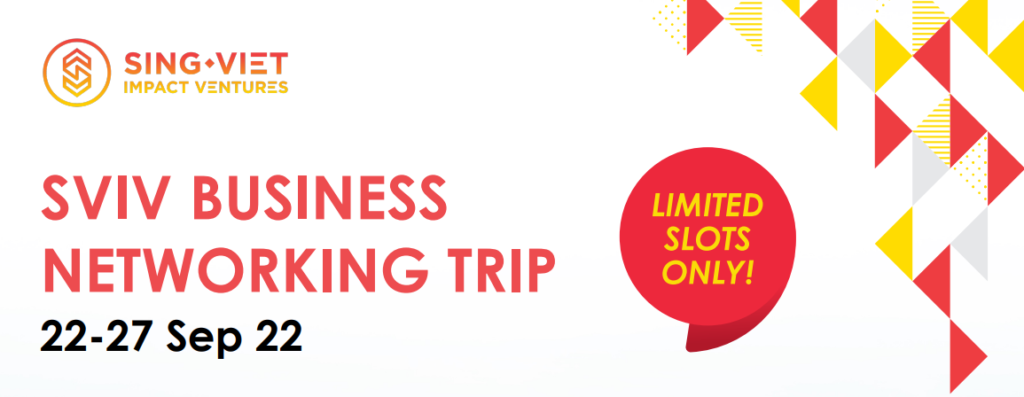
To continue promoting Vietnam-Singapore economic cooperation in the future, both countries are prioritizing practical initiatives to create favorable conditions for businesses and investors to restore production, promote trade, and investment. The Sing-Viet Impact Ventures (SVIV) Vietnam Mission Trip (Hanoi) is the most anticipated event in Vietnam this September.
Hosted by SVIV and Viettonkin Consulting, the SVIV Vietnam Mission Trip (Hanoi) is set to take place on September 22, 2022. This event will have the participation of Singaporean business owners from industries such as aerospace engineering, manufacturing, food and beverage, HR advisory, legal advisory, telecommunications, marketing, and tech startups, and Vietnamese entrepreneurs and high-level executives from industries such as consulting, legal advisory, education, marketing, IT outsourcing, energy, and tech startups.
This collaboration between SVIV and Viettokin is a great opportunity for Singaporean businesses and investors not only to have a better grasp of Vietnam’s market but also to be able to gain a better idea of how to approach this market in the most effective way.
With a significant purpose and vision, SVIV will also help to promote the connection of collaboration between Vietnamese and Singaporean firms. Viettokin hopes that SVIV will provide you with excellent experiences and investment prospects. Contact us right away to improve your chances of business success!
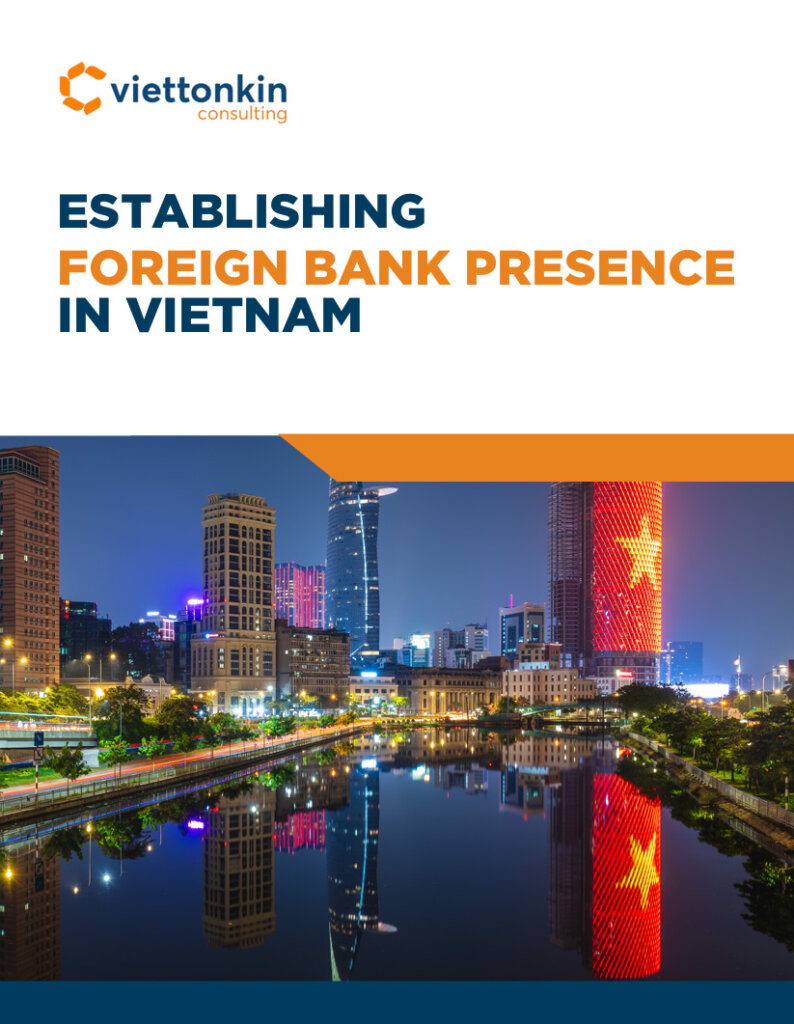
Entering Vietnam's Banking Market: Get Your Essential 2025 eBook
Vietnam's dynamic banking sector is a top destination for foreign investment. To succeed, you need a deep understanding of the local landscape, from new regulations to market entry models.
Our eBook, "ESTABLISHING FOREIGN BANK PRESENCE IN VIETNAM" gives you the crucial insights you need, including:
2024–2025 Sector Overview: Key economic and banking industry analysis.
Step-by-Step Entry Guidance: A deep dive into all primary market entry modes.
The Latest Legal Updates: Critical regulatory changes taking effect in 2025.
Smart Investment Strategies: Insights on M&A, strategic equity, and Fintech.
Download now for the expert knowledge to invest with confidence.
Entering Vietnam's Banking Market: Get Your Essential 2025 eBook
Vietnam's dynamic banking sector is a top destination for foreign investment. To succeed, you need a deep understanding of the local landscape, from new regulations to market entry models.
Our eBook, "ESTABLISHING FOREIGN BANK PRESENCE IN VIETNAM" gives you the crucial insights you need, including:
2024–2025 Sector Overview: Key economic and banking industry analysis.
Step-by-Step Entry Guidance: A deep dive into all primary market entry modes.
The Latest Legal Updates: Critical regulatory changes taking effect in 2025.
Smart Investment Strategies: Insights on M&A, strategic equity, and Fintech.
Download now for the expert knowledge to invest with confidence.
Founded in 2009, Viettonkin Consulting is a multi-disciplinary group of consulting firms headquartered in Hanoi, Vietnam with offices in Ho Chi Minh City, Jakarta, Bangkok, Singapore, and Hong Kong and a strong presence through strategic alliances throughout Southeast Asia. Our firm’s guiding mission is aimed towards facilitating intra-ASEAN investments and connecting investors in Southeast Asia with the rest of the world, thus promoting international business relationships and strengthening inter-nation connections.



 English