Vietnam's food trade industry is one of the most dynamic sectors in the country. Fueled by an expanding middle class, rising disposable incomes, and shifting consumer preferences, the increasing demand for high-quality food products is undeniable. From bustling markets in Ho Chi Minh City to modern supermarkets in other major cities, the opportunity for both […]
Vietnam's food trade industry is one of the most dynamic sectors in the country. Fueled by an expanding middle class, rising disposable incomes, and shifting consumer preferences, the increasing demand for high-quality food products is undeniable. From bustling markets in Ho Chi Minh City to modern supermarkets in other major cities, the opportunity for both […]
What is the current situation of Vietnam food and beverage industry? Whether foreign investors stand any chances to levergage opportunities in this market? Let's find out in this article!
Market overview of Vietnam Food and Beverage Industry
Vietnam has become one of the most attractive and dynamic food and beverage (F&B) markets globally in 2019, ranking top 10 in Asia (IBM, 2019).
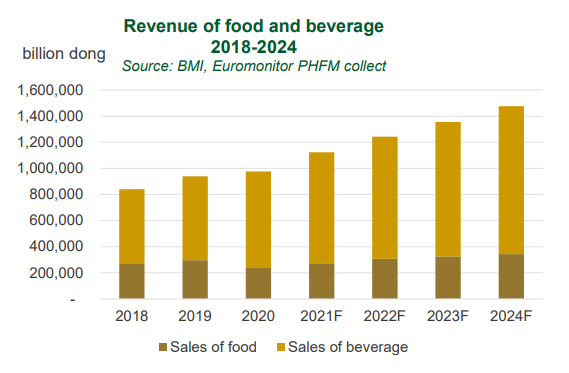
Before 2020, Vietnam's food and beverage industry continuously grew, and its market would be full of potential. In 2020, despite the ravage of the pandemic, the total revenue of F&B products landed at 975,867 billion VND, increasing by 3.8% YoY, with 15,8% contribution to the GDP.
According to Mordor Intelligence, the F&B industry in Vietnam would expand at 8.65% annually in 2021-2026. The compound annual growth rate from 2021 to 2025 is projected at 4.98%. Experts anticipated that the market size will reach 678 million USD, with the predicted number of consumers being 17.1 million by 2025.
Securities company VNDirect also forecasted that the F&B industry will blossom in 2022, from 10-12%, thanks to the reopening of in-person services and the recovery of domestic consumption. Additionally, according to market research firm - BMI, the spending of Vietnamese households would be on an upward trend in 2022-2025.
The spending on F&B currently accounts for the highest portion in the monthly expenditure structure of consumers, with 35%. It is calculated that there will be about 17 million middle-income households in Vietnam by 2030. Thus, Vietnam will become the third-largest urban market in terms of consumer numbers and the fifth largest regarding total spending in Southeast Asia by 2030 (Phu Hung Security, 2020).
In addition, global financial services provider-Fitch Solutions-estimated Vietnamese people's spending on essential goods, namely food and non-alcoholic beverages, housing and utilities, to grow between 8% and 10% YoY in 2022 and 2023 respectively, driven by rising spending post-pandemic. In this way, revenue of non-alcoholic drinks would increase by 10,5% in 2024 from an impressive annual rate of 12.5% in 2020.
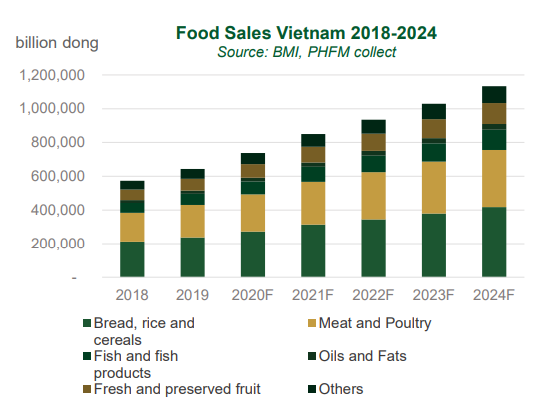
Figure 2: The estimation of Food sales in Vietnam from 2018-2024 (Source: Phu Hung Security)
The recovery of Vietnam F&B industry
The pandemic Covid-19 has substantially changed the landscape of F&B towards digital transformation. Thus, the application of technology to the F&B has helped this market in Vietnam back on track after two years of difficulties due to the pandemic.
Since the beginning of 2022, the F&B industry has been robust, recording two-digit growth in the first quarter. In particular, the F&B revenue in January - March increased by 1.5 times over the last quarter of 2021, with a 24% jump in the number of transactions. In the second quarter of 2022, the F&B industry will continue to grow as the pandemic is under control in Việt Nam and the Government has issued demand stimulus policies, especially in tourism.
According to the latest survey by Q&Me at the end of 2021, in Vietnam, 75% of respondents used online food delivery services and 24% were first users due to COVID-19. F&B businesses turned to technologies as a solution for their ongoing concern of revenue growth and new customer attraction during the pandemic.
Some well-known F&B companies namely Starbucks, the Coffee House, Yen Sushi, among others, have set up their own online store to adapt to the Covid-19 situation and increase the customers’ experience. Further, F&B companies also cooperate with ride-hiding firms such as Baemin, Grab and Shopee Food to maintain their operation.
Jinwoo Song - CEO of Baemin Vietnam assessed that technology platforms have assisted businesses in the F&B industry to easily approach potential customers, reducing fixed costs and exploring many untapped opportunities. With the support of technology, the recovery time for production and business activities of F&B enterprises is also forecasted positively. 47% of enterprises are estimated to recover in six months, 33% of enterprises from 7-12 months, and 13% after more than 12 months.
Major trends in Vietnam F&B industry post- Covid-19
The new consumption trends will become a growth driver for the F&B industry of Vietnam in 2022.
The rise in middle-class households
Domestic demand for high-end goods has been increasing. According to the General Statistics Officer of Vietnam (GSO), Việt Nam is the world’s 17th largest population country with approximately 100 million people. As for Fitch Solutions, disposable income per household in Vietnam will stand at 6,848 USD by 2024, with a 8% compound growth rate in the 2020-2024 period. Therefore, a rapidly rising middle-income class and increasing disposable income will boost the country’s demand for luxury products, namely high-quality wine, caviar, among others.
The rise in Generation - Z
The young generation are trend-creators in food. Albeit relatively low income, Gen Z spends most of their money on food and drinks out of home, with almost 900.000 VND per month (equal to 40 USD). Decision Lab highlighted in a report “Generation Z is a cohort that the food and beverage industry needs to sit up and pay attention to.” With high curiosity and aspiration for new experience, the Gen-Zs always find newness in exposure to diverse, foreign cuisines, which drives the growth of exotic food and drinks from different cultures.
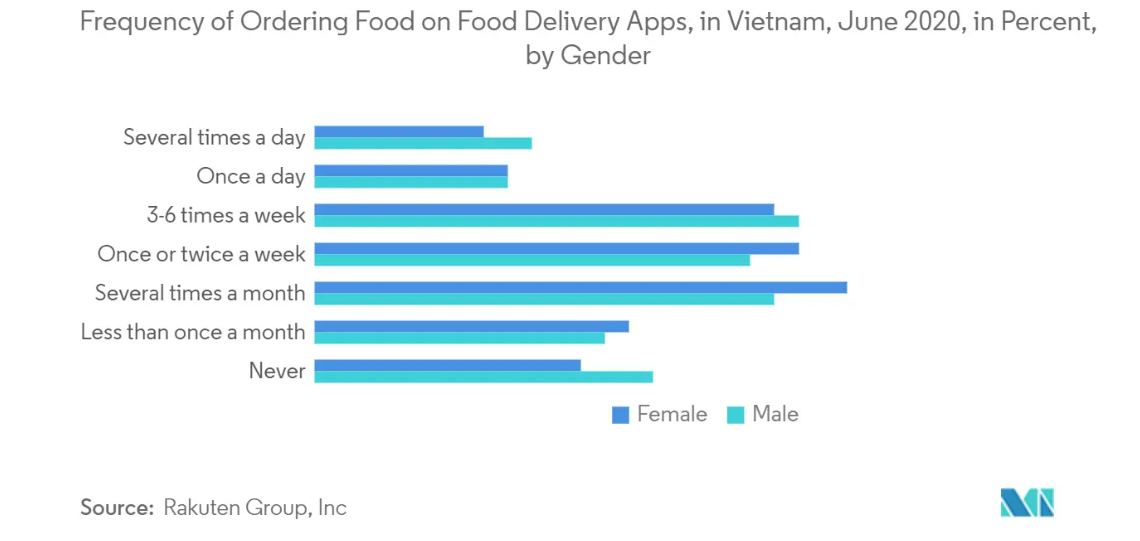
Figure 3: Frequency of Food ordering and delivery in Vietnam by gender (Source: Rakuten Group)
Consumer health and wellness
Since the outbreak of the pandemic, consumers are concerned more about their health and well-being. Hence, they are willing to spend extra to keep themselves healthy. This, therefore, has given rise to new diet trends, with a high demand in healthier food, for example, gluten-free, eat-clean or keto meals.
The new trend has presented opportunities for industry players and newcomers to the F&B market as they can take advantage of Vietnamese people’s new eating habit - love for green, healthy snacking and new eating style - eating out in groups.
Beyond personal health, consumers have been more aware of their surroundings and seek F&B brands they share the same ethics with. As a result, industry players are growing more cautious about their environmental footprints, from their ingredients origins to the products processing and packaging.
A shift in consumer payment habits
The pandemic has driven global consumers to adopt a digital - oriented approach in how they live, shop and work. The F&B industry is also affected by this trend as an increasing number of consumers have shifted to cashless habits such as QR codes, mobile phone payments and contactless cards to make everyday transactions in a safer and contact-free manner.
Mastercard New Payments Index 2021 showed that 84% of consumers in the Asia-Pacific have used emerging forms of payments in 2020 alone. While 88% adopted at least one new payment type in the last year. Two-thirds of all respondents (including 75% of millennials) said they tried new payment methods due to the pandemic. Surprisingly, 60% of surveyees would avoid merchants that do not accept electronic payments of any kind.
Winnie Wong, Country Manager, Vietnam, Cambodia and Laos, Mastercard critically commented that “The pandemic has accelerated a shift towards adopting digital-first habits in Vietnam, and these are here to stay for the long-term. As a result, consumers are now expecting more omni-channel and seamless digital experiences when they interact with businesses including F&B”
To meet these evolving demands, F&B businesses must always adopt a digital-first method which puts consumer needs at the core of their businesses. This is imperative to mitigate the impact of the pandemic and stay ahead of the competition, she further advised.
What chances are for the investors?
With digital transformation for seamless eating experiences, safety and security, the undeniable growing demand for high-quality products, potential new markets are waiting for newcomers. Insights into trends and the sustainable and innovative thinking towards the F&B industry can benefit investors in the Vietnam F&B market. Most importantly, investors should see ahead of the times and capture opportunities to reap desirable results.
Yet, how can they know what trends to focus on? It seems quite a challenge for foreign investors looking for investment opportunities in Vietnam. In this situation, the best practice is to ask for help from the top-notch experts. Viettonkin is one of the leading professional firms with more than 12 year experience in diverse industries and majors. Our team of well-informed professionals in Vietnamese markets and legal systems are capable of assisting you navigate through the process of establishing a new business in Vietnam. With us by your sides, you can focus on what really matters to you. Let us be your trustworthy partner!
Have you ever thought about opening up a restaurant or running a cafe or even importing food and beverage products in Singapore? If yes, this article will provide you information about F&B product registration in the country!
Overview of Food and Beverage Product in Singapore
Many individuals in the country have sought their fortunes in the F & B industry as Singaporeans themselves have always had a huge love for food. Singaporeans also love seeking out and dining at new restaurants.
This exciting business has become an inspiration for many entrepreneurs, however the industry can be so challenging. There are also many examples for both successful and failed of F&B businesses. SPRING Singapore study reported that nearly a quarter of all operating F&B businesses are new, while 57% of F&B businesses survive the first 5 years.
Despite all of this, there are still many F&B businesses starting in the country every year. If you plan to start your new F&B business or product, you will want to get the legal formalities properly, quickly, and affordably, so you can focus on your other part of setting up your business.
The Food and Beverage Product Registration License
Not all licenses will apply to all F&B businesses, so it’s a great idea to carefully review your business model and figure out which are the necessary licenses for you. There are a few that are compulsory for all F&B businesses, while others only apply to a specific type of F&B.
Securing these licences may not be a simple task of just applying for them. You might be required to spend additional resources and funds to make sure that you meet the relevant standards.
All food retail establishments must have a Food Shop License issued by the National Environment Agency (NEA) to be sure that they comply with the Code of Practice of Environmental Health (COPEH) and operational requirements for food shops including minimum kitchen size, refuse management, noise and cooking fumes control.
You will need to start on this earlier since the inspectors may require you to make changes to your restaurant or food shop that may need an additional renovation, which means additional time and cost to you.
Obtaining all the licenses and legal formalities, you will need to register your company, then register with the Central Provident Fund (CPF), after that you can secure Food Shop License from NEA, and lastly is to have employees take Basic Food Hygiene Training.
You might be a bit confused about the licenses that you need to get for your F&B business. In this part, here is a guide to help you better understand the different types of license and how much they cost!
The Types of Food and Beverage Product License
1. Food Shop License
You have to apply and have a food shop license approved for setting up your F&B establishment. The food shop license is tied to the physical outlet, and any previous license will have to write in to cancel the license before the new application is approved.
Before applying for a food license, the applicant will have to ensure that they satisfy the specifications in a pre-application checklist, which includes documentary, food shop design, and hygiene requirements.
The cost for the license is S$195 and valid for 1 year. You can apply for a license here.
2. WSQ Food Hygiene Course
Food handlers need to apply for this course to get certified for handling food. The WSQ course consists of 6 hours of coursework and 1.5 hours of assessment. A statement of Attainment (SOA) will be awarded to participants upon completion.
Food handlers who were registered and awarded more than 5 years ago can attend a refresher training course. You can attend the course provider that is listed here.
You need to pay S$8 - S$40.50 for the course, and you can apply via the Singapore Food Agency.
3. Liquor License
If you intend to sell liquor or beers, then you will need the Liquor License. There are several classes of the license you can apply for. Under the Customs (Liquors Licensing) Regulations, any sales of intoxicating liquors in Singapore will require a liquor license issued by the Liquors Licensing Board (LLB).
There are 8 classes of licensing available, which determine the hours, where, how, and for what purposes you can supply and distribute the liquor.
The cost is between S$110 to s$880 valid for 1 year, it is depending on the category of license you are applying for. You can click here to apply for this license.
4. MUIS Halal Certification License
There are 3 requirements for your food establishment, before applying for a MUIS Halal Certification license. They are:
Halal Requirements: raw materials used must be Halal and validated with supporting documents.
Staffing Requirements: a minimum of 2 or 3 Muslim staff employed in each premise with a Halal Certification application. For the catering or central kitchen services, it requires a minimum of three staff.
System Requirements: the applicant must comply with 10 principles of the Singapore Muis Halal Quality Management System (HalMQ).
You need to pay S$80.25 to S$1.219.80 for this license. Submit your application on LicenseOne.
5. Import License
An import license is generally required for food traders, but you also need to apply for one, if you are doing any of the following for your F&B business:
Importing, exporting, or transshipping meat and fish products.
Importing, exporting, or transshipping fresh fruits and vegetables.
Importing fresh table eggs.
Different licenses are required too, but it is depending on the type of food you import. The cost that you need to pay is S$84 to S$378 valid for 1 year, depending on the type of food product you are importing. You can go to GoBusiness Licensing website to apply for this license.
In conclusion, before establishing your F&B business, you need to prepare everything and pick the license that fits for your business. Then, you can register for the F&B product license, so you can set up your business smoothly. If you are unsure about something, you can always contact us below. Viettonkin will always be ready to assist you!
Entering Vietnam's Banking Market: Get Your Essential 2025 eBook
Vietnam's dynamic banking sector is a top destination for foreign investment. To succeed, you need a deep understanding of the local landscape, from new regulations to market entry models.
Our eBook, "ESTABLISHING FOREIGN BANK PRESENCE IN VIETNAM" gives you the crucial insights you need, including:
2024–2025 Sector Overview: Key economic and banking industry analysis.
Step-by-Step Entry Guidance: A deep dive into all primary market entry modes.
The Latest Legal Updates: Critical regulatory changes taking effect in 2025.
Smart Investment Strategies: Insights on M&A, strategic equity, and Fintech.
Download now for the expert knowledge to invest with confidence.
Entering Vietnam's Banking Market: Get Your Essential 2025 eBook
Vietnam's dynamic banking sector is a top destination for foreign investment. To succeed, you need a deep understanding of the local landscape, from new regulations to market entry models.
Our eBook, "ESTABLISHING FOREIGN BANK PRESENCE IN VIETNAM" gives you the crucial insights you need, including:
2024–2025 Sector Overview: Key economic and banking industry analysis.
Step-by-Step Entry Guidance: A deep dive into all primary market entry modes.
The Latest Legal Updates: Critical regulatory changes taking effect in 2025.
Smart Investment Strategies: Insights on M&A, strategic equity, and Fintech.
Download now for the expert knowledge to invest with confidence.
Founded in 2009, Viettonkin Consulting is a multi-disciplinary group of consulting firms headquartered in Hanoi, Vietnam with offices in Ho Chi Minh City, Jakarta, Bangkok, Singapore, and Hong Kong and a strong presence through strategic alliances throughout Southeast Asia. Our firm’s guiding mission is aimed towards facilitating intra-ASEAN investments and connecting investors in Southeast Asia with the rest of the world, thus promoting international business relationships and strengthening inter-nation connections.






 English