Vietnam's food trade industry is one of the most dynamic sectors in the country. Fueled by an expanding middle class, rising disposable incomes, and shifting consumer preferences, the increasing demand for high-quality food products is undeniable. From bustling markets in Ho Chi Minh City to modern supermarkets in other major cities, the opportunity for both […]
Vietnam's food trade industry is one of the most dynamic sectors in the country. Fueled by an expanding middle class, rising disposable incomes, and shifting consumer preferences, the increasing demand for high-quality food products is undeniable. From bustling markets in Ho Chi Minh City to modern supermarkets in other major cities, the opportunity for both […]
Industrial zones (IZs) and industrial parks(IPs) are areas designated by the government for industrial production, where investors can access high-quality infrastructure, services, and incentives. In recent years, Vietnam has witnessed a remarkable surge in the establishment of industrial zones and parks, serving as magnets for both domestic and foreign investments.
In this blog post, we will delve into Vietnam's industrial potential behind this exponential growth, shedding light on the strategic advantages and government support. Join us as we uncover the driving forces behind this phenomenon and uncover the immense potential that awaits you in Vietnam's thriving industrial sector.
The current situation of IZs and IPs in Vietnam (2023 updated)
According to the Vietnam Association of Realtors (VARS), in 2023, Vietnam has planned 563 IPs in 61 out of 63 provinces. Out of these, 397 IPs have been established and 292 IPs are operational with a total natural land area of over 87,100 hectares, and an industrial land area of over 58,700 hectares. Another 106 IPs are under construction with a total natural land area of around 35,700 hectares, and an industrial land area of around 23,800 hectares.
IZs nationwide have a high occupancy rate of over 80%, with the southern provinces reaching about 85%. Some IPs in major cities and provinces namely Hanoi, Ho Chi Minh City, Dong Nai, Bac Ninh, Bac Giang and Binh Duong are nearly full. Among those provinces, Binh Duong has the highest occupancy rate in the country with 29 operational IZs that are over 95% occupied.
In January of 2023, the average rent rose by 10% to 100 - 120 USD/m2/lease cycle from the previous period of 2022 and is expected to keep rising, especially in the south where supply is limited.
In the first months of 2023, more than 10,000 domestic projects and nearly 11,000 valid foreign direct investment projects have invested over 340 billion USD in IPs and economic zones.
Government incentives in establishing new IPs and IZs in Vietnam (2023 updated)
Designed by Viettonkin
In the coming years, Vietnam plans to promote the development of key industries, including electronics, artificial intelligence, robot manufacturing, automobiles, supporting industries, biotechnology, biomedical electronics, software production, digital products, clean energy, renewable energy.
In addition, Vietnam focuses on developing large-scale industrial production in coastal economic zones, focusing on heavy industrial production and deep processing while forming value chains, and ensuring security, quality, and regulations on traceability, among others.
Thus, by 2030, Vietnam will raise the proportion of industrial sectors in GDP to over 40% and the proportion of processing and manufacturing industry in GDP will reach over 25%, creating jobs for 5 - 6 million workers in 2025 and 7- 8 million workers by 2030.
Following this strategy, in the next 10 years, the IP's land area is expected to increase by 115,000 hectares, reaching 205,800 hectares with 558 IPs, an increase of 177 IPs compared to 2020.
Unleasing Vietnam's Industrial Potential - The rise in IPs and IZs
Enhancing the high-quality FDI projects in manufacturing and processing sectors
At government level, the growth of IZs are essential for the Vietnamese government to execute their plan and strategy for developing the manufacturing and processing sector leading up to 2025. It helps to develop the infrastructure, attract investment (domestic and foreign), and enhance the living standards of local communities around the IZs.
In addition, IPs and IZs are one of the main drivers of Vietnam’s export-oriented growth. A typical example is IZs in Ho Chi Minh City, which exports 7 billion USD worth of goods every year and employs more than 281,000 workers. The products exported from IPs and IZs are mainly manufactured goods, such as electronics, garments, footwear, and machinery, which highly value-add and diversify Vietnam’s export markets.
Enhancing the competitiveness and innovation of the domestic industries
According to the United Nations Industrial Development Organization (UNIDO), IZs and IPs can enhance the competitiveness and innovation of domestic industries by attracting foreign direct investment (FDI) and enabling technology transfer, as well as facilitating linkages and cooperation among enterprises.
Attracting foreign direct investment and technology transfer
IPs and IZs are the main destinations for FDI inflows into Vietnam, accounting for about 70% of the total registered FDI capital in 2021 (GSO). FDI enterprises in IPs and IZs bring advanced technologies, management skills, and market access, which can help improve the productivity, quality, and efficiency of the domestic industries. FDI enterprises can also stimulate technology spillovers to local suppliers and customers through backward and forward linkages.
Facilitating linkages and cooperation among enterprises
IPs and IZs provide opportunities for enterprises to exchange materials, energy, water, by-products, or services with each other, creating industrial symbiosis and cooperation. This can help reduce operating costs, increase resource efficiency, and create value-added products. Other than that, IPs and IZs can also foster innovation networks among enterprises, research institutes, universities, and government agencies, enhancing knowledge creation and diffusion.
IPs and IZs have contributed to Vietnam’s remarkable improvement in its competitiveness and innovation indicators in the past decade. According to the World Economic Forum’s Global Competitiveness Report 2021, Vietnam ranked 42nd out of 141 countries in terms of overall competitiveness, up from 65th in 2010. Vietnam also ranked 42nd out of 131 countries in terms of global innovation index in 2021, up from 71st in 2010. IPs and IZs are expected to continue to play a vital role in supporting Vietnam’s industrial development goals.
Creating jobs and improving living standards
According to the Ministry of Planning and Investment (MPI), IPs and IZs have created jobs for more than 4 million laborers over the past 30 years, as well as provided them with training, education, and social welfare. For example, in 2022, Samsung employed 160,000 workers, which is 0.3% of Vietnam’s total workforce.
Creating jobs
IPs and IZs provide employment opportunities for a large number of workers, especially in rural areas where poverty rates are higher. For instance, after 14 years since its arrival in the country, Samsung has invested 9.3 billion USD in Bac Ninh, which is almost half of its total investment in Vietnam. This investment has helped transform Bac Ninh from a poor province to a leading industrial producer and the second-largest exporter in the country (after Ho Chi Minh City).
Besides, IPs and IZs have attracted workers from other provinces, creating a dynamic labor market and reducing regional disparities. According to the General Statistics Office of Vietnam (GSO), in 2021, industrial zones and parks employed about 3.8 million workers, equivalent to 7.6% of the total labor force.
Improving living standards
IPs and IZs offer training, education, and social welfare for workers, which can improve their productivity, quality, and income level. In addition, the establishment of IPs and IZs also contribute to the development of local communities by providing infrastructure, utilities, and services, namely schools, hospitals, markets, entertainment facilities, among others. At the same time, towards the goals of COP26, new IPs and IZs promote environmental sustainability by implementing eco-industrial park (EIP) initiatives, which aim to reduce pollution, waste, and emissions.
Final Thoughts
The increasing number of industrial zones and parks in Vietnam presents a compelling opportunity for investors seeking to tap into the country's dynamic and rapidly expanding industrial sector. With strategic advantages and robust government support, Vietnam offers an ideal environment for business and investment.
Together, let's seize the opportunities that await and forge successful ventures in Vietnam's thriving industrial landscape!
Singapore's ability to attract high-quality high-tech foreign direct investment (FDI) projects is a testament to its compelling strategies and business environment. While there is no one-size-fits-all approach, Vietnam can take inspiration from Singapore's achievements and learn valuable lessons to enhance its own investment landscape. By adapting and implementing successful strategies, Vietnam can pave the way for increased high-quality high-tech FDI and foster economic growth.
Singapore’s FDI inflow in the high-tech sector
Singapore's ICT and high-tech sector has emerged as a cornerstone of the country's thriving knowledge-based economy. In 2021, the sector witnessed a remarkable surge in foreign direct investment (FDI), with software and IT services leading the charge. With a staggering 90 projects, this sector alone accounted for over one-quarter (26.5%) of all investments pouring into the country.
The country’s ability to attract high-tech investment can be attributed to its steadfast commitment to fostering a business-friendly environment, supported by a robust infrastructure, substantial investments in R&D, and a highly-skilled labor force. These factors have propelled Singapore to the forefront of the global high-tech industry, establishing it as a premier destination for foreign investors seeking a thriving and innovative business ecosystem.
What makes Singapore an ideal destination for high-tech investors
Singapore's transparent legal landscape and attractive tax incentives have positioned it as an enticing destination for investors looking to tap into the high-tech sector.
One of Singapore's standout features is its efficient and business-friendly environment, as exemplified by the seamless company incorporation process. Foreign investors can establish a business in Singapore swiftly, with the registration procedure often completed within a single day, provided all the necessary documentation is in order. This streamlined process eliminates unnecessary bureaucratic hurdles and allows investors to swiftly kickstart their high-tech ventures.
To further attract top-notch talent and promote technological innovation, Singapore also introduced extensive incentive policies, one of which is the pioneering work permit called Tech.Pass in 2021. This permit is specifically designed to entice highly accomplished technology entrepreneurs, experts, and business leaders. Unlike the traditional Employment Pass, Tech.Pass does not require the sponsorship of a local employer, granting professionals greater flexibility in their activities.
Singapore's attractive tax regime is another enticing factor for high-tech investors. The country offers competitive corporate tax rates and a plethora of tax incentives and exemptions, including research and development (R&D) tax incentives, investment allowances, and enhanced deductions for qualifying expenses. These measures significantly reduce the tax burden for companies operating in the high-tech sector, allowing them to allocate more resources toward innovation and growth.
Well-established infrastructure
Singapore's dedication to infrastructure investment has propelled it to the forefront of global rankings, securing its position as the world leader in terms of infrastructure quality. In 2021, Singapore jumped up two places to claim the number one spot in the Global Infrastructure Index 2021.
Singapore has also invested heavily in the development of cutting-edge facilities and technology parks that cater specifically to the needs of high-tech companies. These specialized zones, such as the renowned one-north precinct, are designed to foster collaboration, innovation, and knowledge-sharing among industry players. They provide state-of-the-art research and development facilities, advanced laboratories, and incubation spaces that support the growth and expansion of high-tech enterprises.
By prioritizing infrastructure development, Singapore has created a solid foundation that supports various sectors, including the high-tech industry.
Government’s intensive investment in R&D
Looking ahead, Singapore has committed to allocating over S$25 billion (US$17.6 billion) for R&D in a continuing effort to build a more resilient and sustainable economy.
To support the R&D efforts, Singapore has also established model factories within its universities and research centers, providing researchers and industry players a testbed for new manufacturing techniques, technologies, and business models, to refine their innovations before they are exported to the rest of the world.
These investments not only foster technological advancements but also create a fertile ground for collaboration between academia, research institutions, and industry players. This collaborative environment fuels the development of groundbreaking solutions and positions Singapore as an attractive destination for high-tech investors seeking to leverage cutting-edge research and innovation.
Singapore’s intensive investment in tech-talent
Singapore boasts a highly skilled workforce, securing the second rank globally in the 2021 Global Talent Competitiveness Index, published by INSEAD.
Despite the global job cuts in the tech sector in the first quarter of this year, Singapore’s tech talent remains resilient and sought after. The country continues to prioritize investments in tech skills, with major banks like OCBC, DBS, and UOB offering training programs for technology staff and tech industry entrants.
The country's collaboration between industry, education, and government entities ensures the continuous development of tech professionals and job opportunities, which ultimately solidifies Singapore's position as a leading destination for tech innovation and investment.
Singapore’s exemplary success in attracting high-tech FDI to the semiconductor sector
The semiconductor industry, characterized by its rapid pace of innovation, finds a welcoming home in Singapore, a nation that recognizes the paramount importance of technological advancements. Singapore's commitment to fostering a culture of research and development (R&D) is evident in its robust initiatives aimed at propelling the semiconductor sector to new heights. Steady and sustained investments in R&D form a key pillar of Singapore's economic development strategy, providing the country with a competitive edge against larger and better-resourced nations. Specifically, in December 2020, the Singapore government announced a significant boost in its R&D budget, allocating $25 billion for the next five years, a 30% increase from the previous allocation. This substantial investment underscores Singapore's unwavering dedication to sustaining its competitiveness and bolstering its status as a leading tech and innovation hub, further reinforcing its commitment to supporting the semiconductor industry. By continuously investing in R&D, Singapore ensures that it remains at the forefront of semiconductor technology, attracting high-tech FDI and solidifying its position as a global leader in innovation.
What key lessons can Vietnam learn from Singapore’s success in attracting high-tech investments?
The Vietnamese government has set clear targets and objectives to draw high-tech FDI. Specifically, the National Strategy for Foreign Investment Cooperation for the 2021-2030 period aims to raise the percentage of registered foreign capital from Asia, Europe, and the US to over 70% of the total disbursed in Vietnam by 2025 and 75% by 2030. However, the country’s still facing several challenges related to infrastructure development, the lack of industrial real estate properties, eco-industrial parks, and the complexity of the administrative procedures. To fully realize this vision, Vietnam must tackle these obstacles by taking inspiration from Singapore's experience.
Incentives and Streamlining Administrative Procedures
Singapore's exemplary success in attracting high-tech investments offers valuable insights for Vietnam. One crucial aspect is the provision of attractive incentives and the streamlining of administrative procedures.
To stay competitive in the region, the Vietnamese government must ensure that its incentive packages remain attractive to potential investors since the current complex administrative procedures can pose a significant challenge to funding opportunities. The approval and licensing process can be onerous, with differing requirements and timelines between provinces.
Thus, to enhance the country's attractiveness for investment, it’s important that the Vietnamese government streamline the licensing and approval procedures for projects. Simplifying the process will enable companies to establish their operations promptly and encourage more inflows into the country.
Enhancing Infrastructure and Facilities
Singapore's success in attracting high-tech investments is closely tied to its highly developed infrastructure, which has played a pivotal role in facilitating business operations and logistics. Vietnam should prioritize enhancing both the quantity and quality of its infrastructure and facilities to attract high-tech foreign-led companies. While the northern region of Vietnam has made significant strides in transportation infrastructure over the last five years, there is a pressing need to improve road transport systems and airports in the southern region. This will accommodate the surging demand and logistical requirements of existing and potential manufacturers. By investing in robust transportation infrastructure, Vietnam can effectively address connectivity challenges and position itself as an attractive destination for high-tech investments.
Final thoughts
Singapore's remarkable success in attracting high-quality high-tech foreign direct investment (FDI) projects serves as a valuable blueprint for Vietnam. The nation's proactive approach, characterized by a business-friendly environment, state-of-the-art infrastructure, enticing incentives, and a skilled workforce, has propelled it to the forefront of the global high-tech investment landscape.
Vietnam has much to gain by emulating Singapore's strategies and adapting them to its unique context. By cultivating an environment that nurtures business growth, streamlining administrative procedures, and offering compelling incentives, Vietnam can position itself as an irresistible destination for high-quality high-tech FDI projects, fostering remarkable economic development and innovation.
To delve deeper into Vietnam's immense potential and gain invaluable insights into navigating its dynamic investment landscape, we would like to invite investors and business owners to join our upcoming webinar, "Unlocking Business Opportunities in Vietnam.” This exclusive event promises to unveil the untapped possibilities that Vietnam holds, enabling participants to connect with industry experts, engage in meaningful discussions, and acquire the knowledge needed to make informed investment decisions.Seize this unique opportunity to unlock the doors to Vietnam's thriving business landscape. Reserve your spot today and embark on an exhilarating journey toward maximizing your investment potential in Vietnam's high-growth sectors. Together, let's explore the limitless horizons of Vietnam's dynamic economy and pave the way for a prosperous future.
Da Nang is a booming hub for high-quality FDI projects in Vietnam. The city’s strategic location, business-friendly environment, and advanced infrastructure have drawn foreign investors looking for profitable opportunities in Southeast Asia.
This article explores the most updated government initiatives to promote and support investments in Da Nang’s high-tech parks. Whether you are an experienced investor or a newcomer to the Vietnamese market, this comprehensive guide will give you valuable insights into the current investment climate and the opportunities in Da Nang’s high-tech parks.
FDI situation in Da Nang in the first 6 months of 2023
Economic and FDI situation in Da Nang
According to the Director of the City Statistics Department, for the first 6 months of 2023, Da Nang’s economy ranks third among the five centrally administered cities in terms of growth rate, which is estimated at 3.74% for the first 6 months of the year. The city’s gross domestic product (GRDP) has risen by 3.74% compared to the same period in 2022, and by 13.48% compared to the first 6 months of 2019, before the COVID-19 pandemic.
Regarding foreign direct investment (FDI) attraction, Da Nang has attracted 64 new FDI projects with a total registered capital of 10.6 million USD, an increase of 45 projects and 47% of the capital compared to the same period last year. The total capital registered in Q2 of 2023, including new and additional capital, was 27.31 million USD, which was 60.7% of the amount registered in the same period in 2022.
Additionally, 18 foreign investors participated in capital contribution and share purchase with a total value of 2.77 million USD. There were also 20 FDI projects that adjusted their capital, with an additional investment of 13.94 million USD.
High-tech parks in Da Nang
According to the Management Board of Da Nang Hi-Tech Park and Industrial Parks, Da Nang Hi-Tech Park has a total planned area of over 1,128 hectares (ha), divided into six functional sections: Production (202.58 ha), R&D (99.93 ha), Logistics - logistics - CNC service (27.45 ha), Residential (31.4 ha), Focal technical infrastructure (9.75 ha) and Administration (28.35 ha).
Source: Internet
This place has attracted 29 FDI projects with a total 905 million USD investment by the end of Q1 of 2023. The current occupancy rate in the Hi-Tech Park is 44%, with 58% in the production section, 76% in the logistics, logistics and high-tech services section, and 5.5% in the research, development, training and business incubation section.
Government initiatives on high-quality FDI projects in the high-tech parks in Da Nang
Da Nang Central Government Objectives and Directions in attracting high-quality FDI projects in high-tech parks.
According to Resolution No. 43-NQ/TW on Da Nang construction and development until 2030, with a vision to 2045, the city aims to become a smart eco-city, a hub for entrepreneurship and innovation, as well as a livable coastal city at the Asian level.
Da Nang City People's Committee approved Decision No. 3395/QD-UBND promulgating "Project on promoting investment attraction in Da Nang city in the period of 2021-2025, vision to 2030”. The project targets to attract registered investment capital of about 3 billion USD for the 2021-2025 period, and about 4 billion USD for the next 5 years. Following the project plan, it is also expected that by 2025, 50% of the enterprises will make use of modern management, environmental protection, and high technology. By 2030, this proportion is expected to reach 100%.
To reach such goals, Da Nang is keying on developing three main pillars: Tourism, High-tech Industry and Marine Economy, and five key areas: Tourism and high-quality services linked to resort real estate, Seaports and airports linked to logistics services, High-tech industry linked to creative and start-up urban construction, and the information technology, electronics and telecommunications industries linked to the digital economy.
The city sees attracting investment in the hi-tech park as the core driving force for creating breakthroughs and making a key contribution to Da Nang’s economic development. We expect Da Nang Hi-Tech Park to contribute at least 10-15% to the overall economic output during the 2025-2030 period.
Mr. Le Trung Chinh - Da Nang City People’s Committee Chairman
Particularly, Da Nang Hi-Tech Park focuses on attracting investment from leading technology groups in production chains, prioritizing large-scale projects with investment rates of 15 million USD/ha or more.
The city leaders are determined to continuously create and improve a favorable business and investment environment for investors to do business and grow. We believe that the city’s success depends on the success of businesses and investors.
Mr. Le Trung Chinh.
Initiatives on high-quality FDI projects in high-tech parks in Da Nang
According to Mr. Vu Quang Hung - Head of the Management Board of Da Nang Hi-Tech Park and Industrial Parks, the city has separate policies to support investors in addition to the national policies. The city also prepares urban-level social infrastructure for foreign investors who invest in Da Nang Hi-Tech Park.
Improvement of the effectiveness and efficiency of investment management and supervision;
Renovation and improvement of investment promotion activities;
Promotion of administrative reform.
In addition, the approval for Da Nang to apply all mechanisms and policies specified in Decree No. 94/2020/ND-CP for the National Innovation Center is also suggested.
Regarding tax incentives, for new investment projects, technology enterprises in Da Nang Hi-Tech Park enjoy an income tax rate of 10% for 15 years. Meanwhile, new investment projects with a capital scale of 3,000 billion VND or more are entitled to a 10% preferential tax rate for up to 30 years. Technology enterprises also get an income tax exemption for 4 years and a 50% reduction in tax payable amount for the next 9 years.
Businesses and investors will also be exempt from tax on goods imported to create fixed assets in high-tech park projects namely machinery, components, means of transport, construction materials, among others. Along with that, import tax is exempt for a period of 5 years if investors import raw materials, supplies and components that have not yet been produced at home, or imported for production of investment projects in high tech parks.
Additionally, the Prime Minister’s Decision No. 66/2014/QD-TTg and the Government’s Decree No. 111/2015/ND-CP specify the list of industries and trades that are prioritized for investment to Da Nang Hi-Tech Park. Specifically, 6 following industry groups are given priority for investment in the high-tech parks:
Information technology, the media, computer software
New material technology, nanotechnology, new energy
Automation and precision mechanics
Environmental technology, petrochemical technology and some other special technologies
Biotechnology for health, agriculture and fisheries
Technology of microelectronics, mechatronics, optoelectronics
The management board always supports the business. We will stand by them when they come to do the investment procedures, walking them through each step of the process. We will provide the highest level of support in making the application dossier and issuing investment certificates as fast as possible.
Mr. Vu Quang Hung
Similarly, the City People’s Committee has decided to reduce the processing time by 25% (currently 11 working days) to make it easier for organizations and individuals, foreign investors and foreign-invested enterprises in obtaining and making amendments to the Investment Registration Certificate.
How to invest in high-tech parks in Da Nang
Source: Management Board of Da Nang Hi-tech Parks and Industrial Parks, designed by Viettonkin Consulting
Final Thoughts
To sum up, Da Nang's high-tech parks present a compelling opportunity for foreign investors looking to capitalize on Vietnam's growing economy. With the government's updated initiatives and unwavering support for high-quality FDI projects, the city is poised to become a hub of innovation and business excellence.
To not only explore the potential of Vietnam but also Da Nang and other regions, along with gaining deeper insights into navigating the investment landscape, we invite you to join our upcoming webinar, "Unlocking Business Opportunities in Vietnam". Our panel of experts will share the latest Vietnamese Market Regulations, Policies, and FDI trends to help you make informed decisions and maximize your investment potential.
Don't miss this chance to connect with industry leaders, network with like-minded professionals, and gain a competitive edge in the Vietnamese market. Reserve your spot today by visiting our LinkedIn or contacting our team directly. Together, let's embark on the prosperous journey into Vietnam!
Remember, the future of venturing into Vietnam awaits – and we are here to guide you every step of the way.
FDI continues to play a pivotal role in driving Vietnam's economic growth in 2023, reaffirming its significance as a key pillar of development. While the first quarter witnessed sluggish growth in FDI capital, the month of May brought promising improvements. As the global economy grapples with downturns and geopolitical tensions, the Vietnamese government remains committed to stabilizing the economy and attracting more FDI. These concerted efforts not only instill confidence but also facilitate the much-needed economic recovery. By fostering an investor-friendly environment, Vietnam is well-positioned to capitalize on the potential of foreign investment and propel its economic resurgence.
Overview of Vietnam’s FDI Performance in the First 5 Months of 2023
Highlights of Total FDI Value in the First 5 Months of 2023
On May 20, 2023, the Department of Foreign Investment (DFI), under the Ministry of Planning and Investment, released the latest information regarding the total foreign direct investment (FDI) in Vietnam. The figures for the first 5 months of 2023 demonstrate significant improvement, with a total registered FDI of approximately US$10.86 billion. The breakdown of this value reveals that newly registered capital amounted to over US$5.26 billion, marking a notable increase of 27.8% compared to the same period in 2022. Adjusted capital stood at US$2.28 billion, indicating a decline of 59.4% in comparison to the same period in 2022. Additionally, investment capital through capital contribution and share purchase reached nearly US$3.32 billion, reflecting a substantial growth of 67.2% compared to the same period in 2022.
Source: Foreign Investment Department
By comparing the statistics with that of April 20, 2023, it becomes evident that FDI attraction in May 2023 has experienced some improvement, with a 10.6 percentage point increase. Although the total registered FDI in the first five months of 2023 remains lower than the previous year, the number of registered projects has risen by 17.9% during the same period. This increase in projects is driven by a significant rise in newly granted projects and the projects with a capital increase, which have grown by 66.4% and 22.8% respectively. However, the number of projects contributing capital and buying shares experienced a slight decrease of 4.6%, declining from 1,339 to 1,278.
The Foreign Investment Agency suggests that the growth rate of new projects surpasses that of total investment capital, indicating that small and medium-sized foreign investors continue to express interest in and confidence in Vietnam's investment environment. Meanwhile, it's also important to note that large corporations are cautiously evaluating the prospects of making substantial investments in Vietnam due to the potential impact of the global minimum tax policy.
Key Sectors Attracting FDI
According to the DFI, in the first five months of 2023, out of the 21 national economic sectors that received foreign investment capital, the processing and manufacturing industry continues to be the most attractive, with an impressive investment capital of over US$6.64 billion, accounting for 61.2% of the total registered investment capital.
Source: Ministry of Planning and Investment
The financial and banking sector, although ranking second, experienced remarkable growth of more than 12 times during the same period in 2022. The total investment capital in this sector reached over US$1.53 billion, representing more than 14.1% of the total FDI investment. The trading real estate and science & technology sectors secured the third and fourth positions, with a total registered capital of nearly US$1.16 billion and US$481 million respectively.
Major FDI Investors
The first five months of 2023 have seen Vietnam attract investment from a diverse range of countries and territories, with 82 of them recognizing the immense potential of this thriving nation. Among these investors, Singapore emerges as the frontrunner, injecting over US$2.53 billion into Vietnam, representing a significant share of more than 23.3% of the total investment capital. Japan secures the second position with a substantial investment of nearly US$2.1 billion, accounting for approximately 19.1% of the total investment capital—an impressive 2.2 times higher than the same period last year. China claims the third spot with a registered investment capital nearing US$1.61 billion, constituting 14.8% of the total investment capital. Other major contributors to Vietnam's growth also include Taiwan, Hong Kong, and South Korea, among others.
Thriving Investment Destinations
Across Vietnam's diverse provinces and cities, foreign investors have found fertile ground to sow their capital, with a total of 50 locations witnessing significant investment. Figures for the first 5 months of 2023 showing that leading the charge is the vibrant capital city of Hanoi, which has attracted a substantial registered investment capital of nearly 1.87 billion USD, accounting for almost 17.2% of the total registered investment capital, marking an impressive growth of nearly 2.7 times compared to the same period in 2022. Bac Giang claims the second spot with a total registered investment capital exceeding 1 billion USD, representing more than 9.4% of the country's total investment capital. These figures are followed by the vibrant economic hub of Ho Chi Minh City, Binh Duong, Dong Nai, etc.
Vietnam's FDI Outlook for 2023: A Beacon of Growth
Factors contributing to the improvement of FDI in the first 5 months of 2023
Foreign Direct Investment (FDI) remains a cornerstone of Vietnam's economic growth in 2023, positioning the country as a shining example of swift integration into the global value chain.
According to economic experts and policymakers, Vietnam's FDI growth prospects are bolstered by three key factors.
First, the positive economic growth achieved in 2022 establishes a solid foundation for further investments. Second, the government's continuous efforts to stabilize and enhance the business and investment environment amidst the global geopolitical risks and economic recession, instill trust and confidence in potential investors. Specifically, to tackle those challenges, the government has been implementing flexible monetary policies and is actively engaged in guiding; offering policies to encourage and support enterprises, especially about taxes and also organizing the effective implementation of various laws such as the amended versions of the Law on Enterprises, the Law on Investment, etc. Finally, Vietnam's effective utilization of the advantages presented by free trade agreements further enhances its attractiveness as an investment destination.
Even in the face of global financial tightening, stable FDI inflows have been instrumental in sustaining Vietnam's growth momentum. In 2022, Vietnam and Malaysia emerged as regional powerhouses in FDI attraction, and this trend is set to continue in the current year. Notably, Vietnam holds a competitive advantage over other regional countries in securing foreign capital for green projects, thanks to its robust trade agreements with the UK and Europe.
Ms. Yun Liu - an economist specializing in the ASEAN market at HSBC Bank
A survey conducted by the Ministry of Planning and Investment, in collaboration with the Vietnam Business Forum Alliance, revealed that 76% of enterprises rated production support policies as effective, with value-added tax (VAT) exemptions and reductions, policies on stabilizing fuel prices, improved work permit and customs clearance procedures, and import/export policies garnering particular acclaim. These policies have played a crucial role in attracting FDI and supporting business growth.
FDI growth prospects and trends
Mr. Do Van Su, Deputy Director of the Foreign Investment Department, expresses high optimism regarding FDI attraction in 2023, forecasting an increase of 37% compared to 2022, with projected investments ranging from US$36-38 billion.
Source: VGP News
On June 2, 2022, the Government issued Decision No. 667/QD-TTg approved the Strategy for Foreign Investment Cooperation in the 2021 - 2030 period. According to Deputy Minister of Planning and Investment, Do Thanh Trung, the Foreign Investment Cooperation Strategy for the period 2021-2030 has set a clear objective of enhancing efficiency and comprehensive quality in attracting and utilizing foreign investment capital. The strategy emphasizes the importance of projects focusing on high technology, clean technology, renewable energy, and modern management. These projects aim to reduce labor, energy, land, and natural resource usage while generating high-added value, promoting green growth, and fostering inclusive and sustainable economic development.
The energy sector is also developing and has the potential to attract investment. Mr. Bui Trung Kien, Vice President of CME Solar Investment Company, highlighted the growing global interest in rooftop solar power as an investment opportunity. Technological advancements have significantly reduced the production and installation costs of rooftop solar power systems, thereby creating favorable conditions for both domestic and foreign investors to tap into this sector.
To attract high-quality investments in rooftop solar power, Vietnam is actively increasing investments in research and development. The country aims to diversify projects and enhance the quality of existing ones. Furthermore, Vietnam is fostering collaborations between businesses and research institutions to facilitate the emergence of innovative solutions that improve performance and reduce investment costs in the sector.
Challenges remain
However, despite its potential in improving FDI attraction, experts emphasize the need for Vietnam to proactively manage macroeconomic policies with flexibility and prudence. The ongoing risks posed by the global economy and political turmoil demand an agile approach to ensure Vietnam's attractiveness and competitiveness in the eyes of international investors. In addition, the issues of protection for local domestic markets and enterprises; ensuring state budget revenue... also need to be considered carefully in the process of promulgating policies to attract foreign investment.
While global uncertainties persist, Vietnam's steadfast determination, strategic location, skilled workforce, and robust infrastructure position it as a reliable investment destination. Its ability to weather economic challenges and sustain growth makes Vietnam an attractive choice for forward-thinking investors seeking stable returns and long-term prosperity.
As investors seek promising ventures amidst the volatile global landscape, Vietnam stands out as a promising market with immense potential for growth. The country's proactive measures, robust trade agreements, and favorable investment climate contribute to its allure as a strategic choice for investors.
To fully capitalize on the abundant opportunities Vietnam presents, it is crucial for investors to make informed decisions and leverage expert guidance. Viettonkin's FDI consulting service stands ready to support and guide investors toward successful ventures in Vietnam's promising market. With a deep understanding of the local business landscape, regulations, and market dynamics, we are confident to provide investors with invaluable insights and tailored strategies to maximize investment success.
Contact Viettonkin's FDI consulting service today and position yourself for investment success.
Foreign Direct Investment (FDI) has long been a driving force behind Vietnam's economic growth. Vietnam, as one of Southeast Asia's fastest-growing economies, continues to attract significant FDI inflows, with the first quarter of 2023 showing promising trends. This article will examine the most recent FDI data, discuss the opportunities and challenges that foreign investors face in Vietnam, and highlight some recent government measures that may have an impact on FDI inflows.
FDI situation in the first quarter of 2023
The world economy is forecasted to face 2023 with challenges due to the prolonged impact of adverse shocks in 2022. According to the IMF (2022), world economic growth decreased from 3.19 % in 2022 to 2.66% in 2023, mainly due to a slowdown in developed economies while there is no major growth change in emerging and developing economies.
FDI inflows were affected by the global economic downturn. Vietnam is without exception! Accordingly, in the first quarter of 2023, FDI attraction decreased by 38.8% over the same period last year (the Ministry of Planning and Investment - MPI, 2022). However, international financial institutions, foreign business associations, and investors have eyed Vietnam as a safe and attractive investment destination and had confidence in Vietnam’s economic prospects.
The proportion of capital contribution and share purchase by foreign investors increased slightly by 22.3% in 3 months of 2023, compared to the same period last year. Major provinces and cities namely Bac Giang, Dong Nai, Bac Ninh, Ho Chi Minh City, Hai Phong, among others have attracted diverse new investment projects. In particular, 522 new projects were granted investment registration certificates in Q1, 2023, with a total registered capital of over USD 3 billion, an 62.1% increase in the number of projects.
In addition, the leaders of European businesses - European Chamber of Commerce in Vietnam (EuroCham) identified that Vietnam's economy has made certain improvements and is showing promising signs in the business environment outlook for 2023. In the first quarter of 2023, manufacturing and processing FDI remained strong, contributing 47.8% of total registered capital. The real estate sector came third with 18.4%, while the remaining capital was distributed among other industries (MPI, 2023).
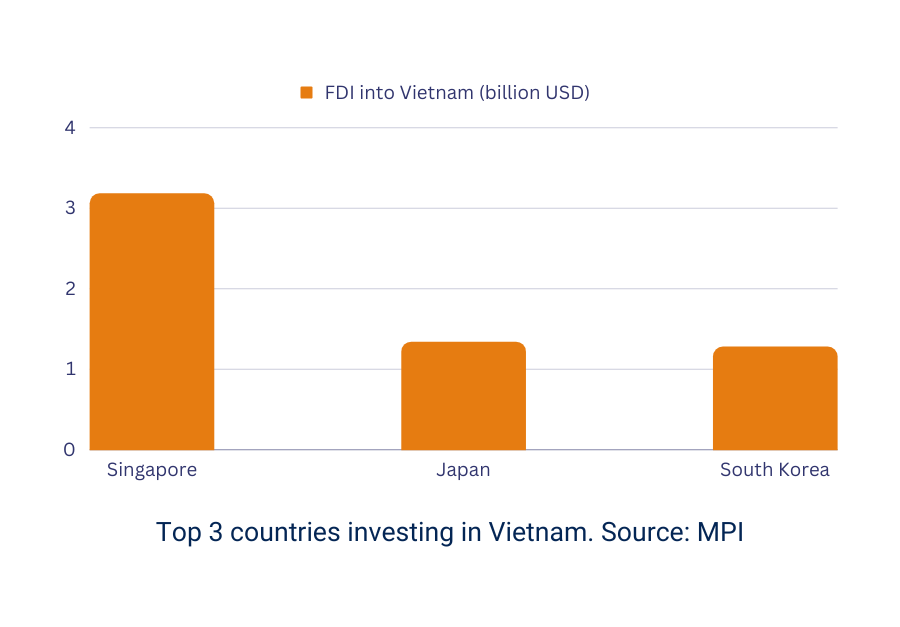
Singapore led the top 10 nations and territories investing in Vietnam with $3.18 billion, accounting for 41.6% of total FDI. Japan was second with $1.34 billion, accounting for 17.5% of total FDI, followed by South Korea with $1.28 billion, accounting for 16.7% of total FDI.
FDI Prospects and Trends
Vietnam's economy is forecast to maintain its robust growth trajectory in 2023, with GDP rising from 6.5% to 7.5%. This, combined with the country's young, tech-savvy populace and advantageous geographic location, opens up tremendous opportunities for foreign investment.
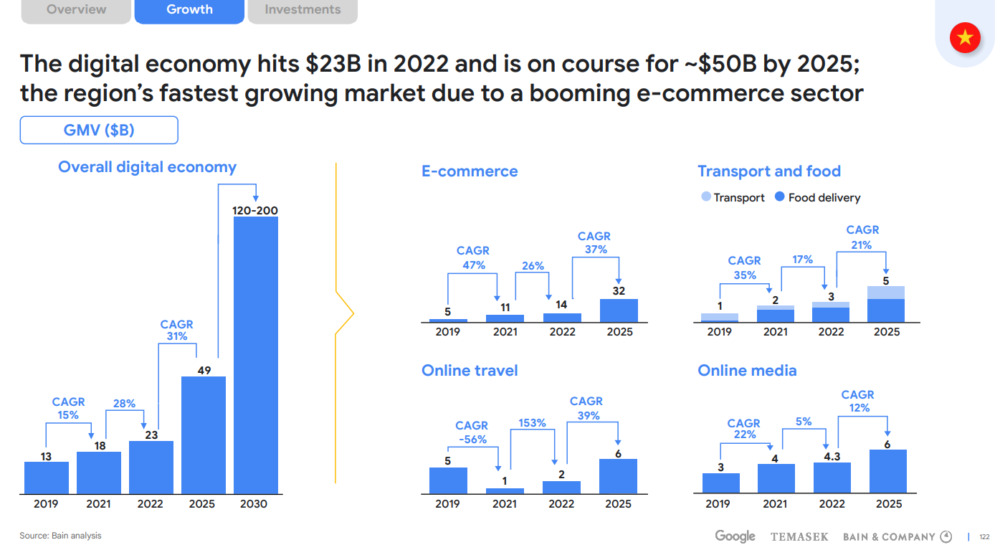
E-commerce has experienced rapid expansion in recent years. Vietnam is a promising market for e-commerce enterprises, with a population of over 97 million people and a high internet penetration rate (over 98%). Vietnam's e-commerce sector is predicted to reach $32 billion in 2025, rising at a CAGR of 37% (Google, Temasek, and Bain & Company, 2022).
E-commerce GMV. Source: Google, Temasek, and Bain & Company, 2022
Another sector that is gaining traction is renewable energy. By 2030, Vietnam aims to generate 10% of its electricity from renewable sources. To that end, the government is enacting different policies to attract FDI into the sector, such as feed-in tariffs and tax breaks. According to the International Energy Agency, Vietnam has the potential to build more than 160 GW of solar and wind power by 2045, making it one of the most appealing renewable energy markets in Southeast Asia.
Government Policy Supporting FDI
The Vietnamese government has been implementing policies to attract and support investment, focusing on infrastructure, technology, and innovation. The government announced the establishment of the National Technology Innovation Fund in 2022, which will provide financial assistance to technology-based start ups and innovative projects. This fund is meant to stimulate the expansion of the startup ecosystem and attract more FDI into the technology sector.
Furthermore, the government has been taking actions to improve the business environment and streamline administrative procedures. Vietnam was placed 65th out of 190 countries in ease of doing business in the World Bank's Doing Business 2022 report, up two places from the previous year. The government intends to improve the business environment even more by cutting bureaucratic red tape and simplifying company operations.
Challenges Ahead
The on-going worldwide turmoil induced by the COVID-19 epidemic has had an impact on both the Vietnamese and global economies. The epidemic has disrupted supply chains, caused sudden changes in demand, and restrictions on international travel, affecting the movement of people and goods. As a result, international investors may experience market demand and supply chain disruptions, resulting in production delays and increased costs.
In addition, inflation is another macroeconomic challenge foreign investors in Vietnam may face. According to the General Statistical Office of Vietnam (GSO), the country's inflation rate in the first quarter of 2023 was 4.47%, which was higher than the same period last year. This inflationary pressure could raise business input costs, reducing profitability. Furthermore, the current surge in oil prices driven by the Ukraine-Russia war may exacerbate inflationary pressures in Vietnam.
The conflict has also raised concerns for foreign investors in Vietnam. The possible effects of the conflict on the global economy, notably on oil prices, could have a ripple effect on Vietnam's economy, for example, could contribute to greater inflation rates and higher costs for existing firms.
Besides, Vietnam's infrastructure still has room for improvement, particularly in terms of transportation and energy infrastructure, which could result in increased costs and longer lead times for businesses, particularly those operating in remote areas.
Notwithstanding these challenges, Vietnam's economy has remained resilient and attracted foreign investment. To overcome the challenges and promote foreign investment in the country, the Vietnamese government has established a number of regulations and initiatives. For example, the government has implemented inflation-control measures such as raising interest rates and tightening monetary policy through Directive No. 15/CT-TTg, Decree No. 31/2022/ND-CP, among others. These measures could reduce inflationary pressures and ensure long-term macroeconomic stability.
At the same time, the government has actively promoted digital transformation and innovation to assist firms in adapting to the shifting economic situation. For example, the government has launched the "National Digital Transformation Program through 2025 and orientations towards 2030", which aims to promote the integration and usage of digital technologies in various sectors of the economy. Thus, by 2025, the digital economy of Vietnam accounts for 20% of GDP, and by 2030, this will increase to 30%.
Recently, the Prime Minister - Mr. Pham Minh Chinh - has approved Dispatch No. 238/CD-TTg on promoting business, production, investment and import-export in the coming time. In detail, the government agents are fully focusing on supporting businesses in debt liquidation and taxes compliance, access to capital, among others while boosting the implementation of investment projects.
To summarize...
All in all, Vietnam remains a desirable destination for foreign investment. While there are some micro and macro challenges, international investors can avoid these risks by completing thorough market research and building a sound business strategy that takes the country's particular opportunities and challenges into account. Meanwhile, the government's policies and activities resolving macroeconomic challenges and encouraging digital transformation create a favorable climate for international investment in Vietnam.
At Viettonkin Consulting, we are committed to helping foreign investors navigate the complex business landscape in Vietnam. Our team of experts provides a range of services to support investors at every stage of their journey, from market research and entry strategy to legal and financial advisory. Contact us today to learn more about how we can help you succeed in Vietnam.
Vietnam's economy has experienced one of the region's quickest growth rates since its introduction of market-oriented economic reforms in 1986. The country has advanced, becoming the region's top investment destination after more than 30 years of global integration and prosperity. Various investment fields expanding in magnitude, paired with diversified business types, are all explicit indicators of Vietnam's burgeoning outbound investment activities.
Overview of FDI Outflows in Vietnam
Vietnam’s total outward investment value
Accumulated as of December 20, 2022, Vietnam had 1,611 valid aboard investment projects with total registered investment capital of above $21.75 billion USD. Specifically, there are 139 projects of state-owned enterprises with a total investment of nearly 11.6 billion USD, accounting for 53.5% of the country’s total investment capital, as stated by the Ministry of Planning and Investment.
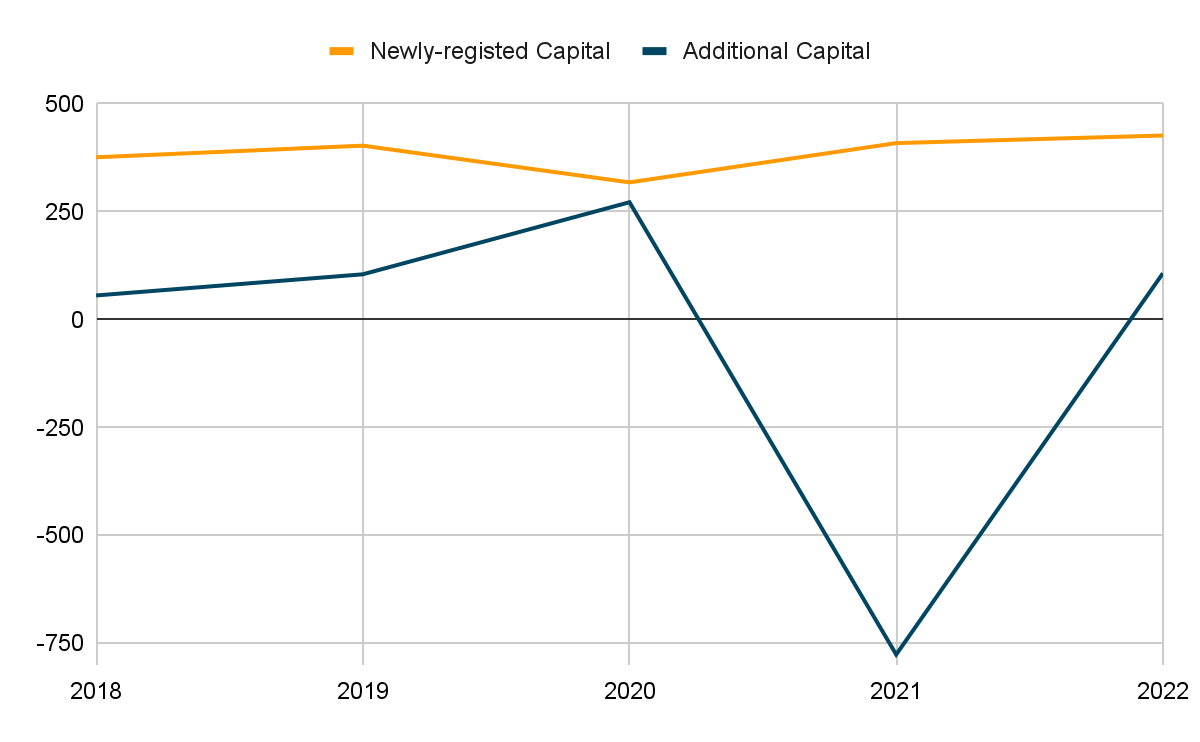
In 2022, the country’s total newly-registered and additional investment raised up to roughly $534 million. Of which, 26 projects registered for capital adjustment of $107.4 million and 109 projects were granted new investment registration certificates, with total registered capital of 426.6 million USD, representing an increase of 78.7% in projects and up 4.3% from last year.
Vietnam’s Outward Direct Investment in the period 2018-2022 (in US million) ( Accumulation of projects having effect as of December 22nd, 2022). Source: Foreign Investment Agency, Ministry of Planning and Investment
Investment categorized by market fields
There’s an emerging trend in recent years of Vietnamese investors investing in manufacturing as well as high-tech industries rather than pouring millions of capital into agriculture, forestry, and mining as they used to in the past.
As of December 2022, Vietnamese investors have invested in 14 sectors abroad. With more than $251.9 million in investment, the processing and manufacturing sector took the lead with 15 newly-registered projects, accounting for 55.2% of the total capital. Next came the real estate sector with 2 new projects and 3 times capital adjustments worth $76.8 million, equivalent to nearly 14.4%. Followed by wholesale and retail, mining sector, agriculture, forestry, fisheries, and so forth.
Investment sorted by countries
A few years ago, the majority of Vietnamese companies made expenditures in underdeveloped countries in Africa or in neighboring markets, including Laos, Cambodia, and Myanmar. However, things have changed drastically since enterprises are constantly venturing out for greater opportunities in riskier but more established economies such as the USA, Germany, and the Netherlands.
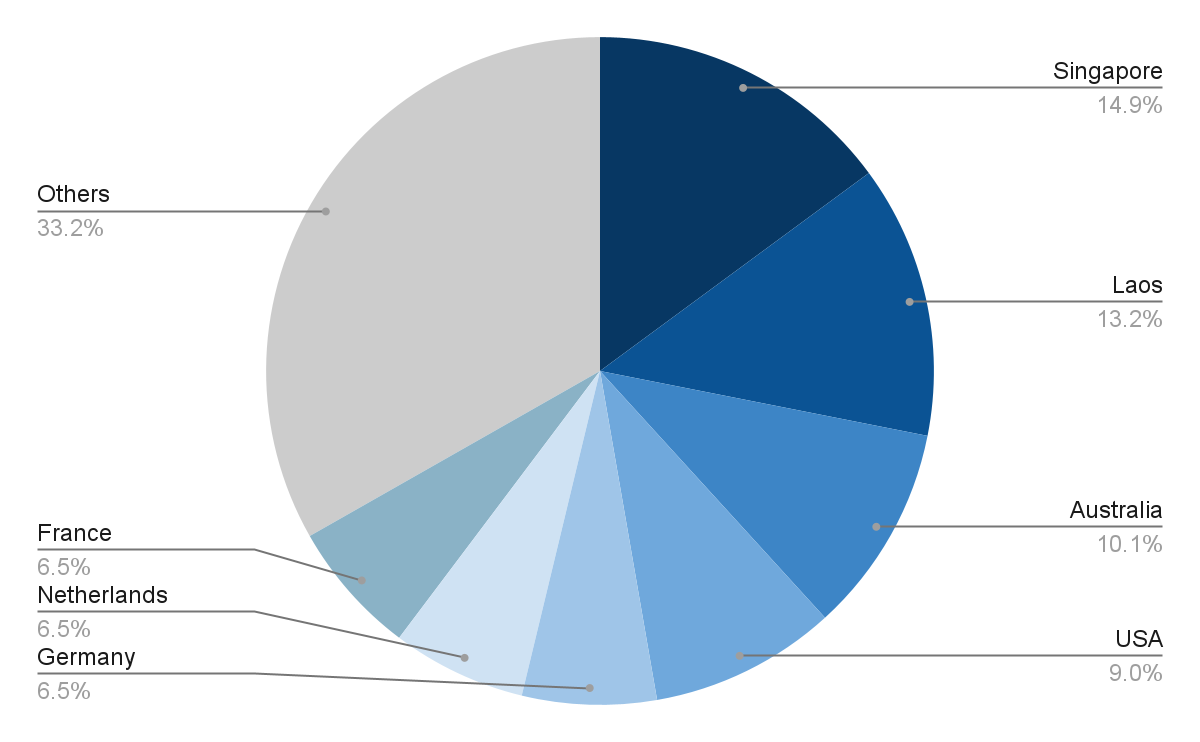
Up to this point, 29 countries and territories have recorded Vietnam’s investment, with Singapore being the biggest destination with 21 newly-registered and 3 capital-adjusted projects worth $79.5 million, accounting for 14.9% of the total investment capital. Laos ranks second with approximately $70.5 million, representing 13.2% of total investment capital. Followed by Australia, the US, Germany, and the Netherlands respectively.
OFDI of Vietnamese Enterprises by country and territory (Accumulation of investment capital as of 20/12/2022). Source: Foreign Investment Agency, Ministry of Planning and Investment
Vietnam’s giant outbound investment projects
Vietnamese enterprises’ overseas investment has been on the rise with many big projects. Many of these projects on technology, rubber, and coffee production have reaped great success and sent back profits to the homeland, helping with the balance of international payments and increasing the country’s foreign exchange reserves.
Viettel
After 15 years of operation in the global market, the juggernaut military telecom Viettel today claims to have more than 35 million users across 11 different territories and is ranked among the top 30 telecom companies worldwide by subscriber counts.
2 years after its inception in Laos and Cambodia, Viettel had become the leading telecommunication enterprise in the 2 countries in terms of user market share, which accounted for 35% and 57% respectively.
Viettel also tries its hand in much more distant countries such as Mozambique and Tanzania as well as challenging markets such as Peru or Myanmar. Being praised as the "miracle of Africa", Movitel (Viettel's brand in Mozambique) achieved the highest growth over the course of seven years of operation, reaching close to 4.5 million subscribers.
Nutrifood
On 21st September 2022, Nutifood Nutrition Food Joint Stock Company announced that its member company, Nutifood Sweden (Sweden) has successfully owned up to 51% of the shareholdings of Cawells - a well-established supplement firm in the EU. The company’s representative believed that this strategic move will allow the company to anticipate new trends and get ahead of other competitors in the food supplement industry in the Asian market.
Vingroup
The unit of Vietnam’s biggest conglomerate Vingroup has made the US market one of its primary targets - an ambitious endeavor that will pit it against established companies like GM, Ford, and Tesla as well as EV newcomers Rivian and Fisker.
The corporation announced it plans to make a total investment of $4 billion in its first U.S. factory complex. The automaker Vinfast has signed a preliminary deal to initially invest $2 billion to build a factory in North Carolina to make electric buses, and sport utility vehicles (SUVs) along with batteries for EVs.
Trung Nguyen Legend
In late September 2022, the giant Vietnamese coffee maker successfully brought the diversity of the coffee world to the vibrant cosmopolitan city of Shanghai, which is the headquarters office of Trung Nguyen Legend China and the location of its first overseas flagship store.
Since entering the Chinese market, Trung Nguyen Legend has always been committed to sharing Vietnamese coffee culture while pursuing professional quality. Its ace product, G7 instant coffee, is well-known among coffee lovers as well, with 800 million cups sold in China since the beginning of 2022.
Challenges ahead the road
Regardless of the positive figures, the investment journey of Vietnamese businesses in the global market can be grueling at times as the government report also reveals that there were up to 44 projects incurring losses, with the total cumulative loss volume reaching $1.33 billion in 2021, up 42% compared to 2020.
Up to this point, the Vietnamese government hasn’t fully developed a clear mechanism to promote or incentivize outward investment, nor does it have specific regulations on domestic investors from investing abroad. Volatilities in economic, political, social, and security aspects at investment locations; risky investment fields such as oil and gas exploration, and mineral extraction; changing and less transparent policies and mechanisms in the host countries; limited capacity with forecast and planning of local investors, among others are the reasons which have dampened the investment’s efficiency.
A boost to Vietnamese Outbound investment
To improve outbound investment efficiency, the Vietnamese government has proposed the National Assembly to facilitate state-level diplomatic relations between Vietnam and the countries which are the recipients of investment from Vietnam’s state-owned businesses as well as businesses holding state investment. In addition to that, the country is working to propose the recipient countries adopt more incentives along with consistent and transparent policies, in order to create a stable and healthy environment for Vietnamese investors jumping into their market.
Many experts believe that, in the near future, as the private enterprise grows stronger and the policy system improves, a new wave of outbound investment from Vietnam is just a matter of time.
Vietnam anticipates new waves of outbound investment
Prof. Dr. Nguyen Mai - Chairman of the Association of Foreign Investment Enterprises (VAFIE) said that outward investment of Vietnamese enterprises is changing positively with many enormous projects. In the future, the value of overseas investment of Vietnamese enterprises may exceed 1 billion USD/year from about 700 million USD/year as of present. Many technologies, rubber, and coffee projects have gained great success, repatriating great profits, contributing to the balance of international payments, and increasing foreign exchange reserves.
Economist Dr. Tran Du Lich also added that in the context of foreign firms trying to acquire Vietnamese brands, the fact that Vietnamese enterprises are consistently making moves to acquire foreign companies in order to expand their business on a global scale can be seen as a major turning point in the development process of the country's economy. Therefore, many experts and policymakers now call for Vietnam to step up outbound investments to maximize advantages from outside resources and contribute to bolstering the country’s position and status in the regional and international arena.
That being said, if you’re still looking for a safe set of hands to help you take a step further into foreign business markets, connect with Viettonkin for more in-depth, up-to-date, and personal investment advice. Here, we gather a community of reputable consultants, with highly developed communication channels along with a network of diverse connections of domestic and international businesses. Contact us now to enhance your chance of business success!
The Vietnamese government is ready to approve the "Master plan for the development of the national airport and airport system for the period 2021-2030, with a vision to 2050,". The master plan will provide the basis for attracting private funding in the development of aviation infrastructure. At the same time, Deputy Prime Minister Le Van Thanh has recently submitted Official Letter No. 1061/VPCP - CN to the Ministry of Transport with instructions on "Project direction to mobilize social resources for investment in airport infrastructure."
The policies will offer investors a plethora of investment opportunities in the sector of airport infrastructure, which has previously been the domain of state-owned corporations.
Current status of airport system capacity in Vietnam
Vietnam currently has 22 airports, including 9 international airports and 13 domestic airports. In addition, the national airport system's overall capacity is 92.5 million passengers per year.
Northern Vietnam features seven airports, three of which are international (Noi Bai, Van Don, and Cat Bi) and four of which are domestic (Dien Bien, Tho Xuan, Dong Hoi, Vinh). The Central region contains 7 airports, including 3 international airports (Phu Bai, Da Nang, Cam Ranh) and 4 domestic airports (Chu Lai, Pleiku, Phu Cat, Tuy Hoa). Meanwhile, in the South, there are 8 airports, 3 of which are international airports (Tan Son Nhat, Can Tho, Phu Quoc) and the remaining are domestic airports (Buon Ma Thuot, Lien Khuong, Con Dao, Rach Gia, Ca Mau).
Despite having 22 airports in service nationally, 20 of them were initially military airports that have been refurbished and upgraded to civil airports. Thus, their infrastructure is now degrading, causing concerns to the general public. At the same time, national major airports such as Noi Bai, Tan Son Nhat, and Da Nang are frequently overloaded. Meanwhile, geographically-inaccessible regions like the mountainous areas in the Northwest lack aviation infrastructure. Thus, the Vietnamese government is calling for further investment to improve existing infrastructure, along with establishing new facilities, namely Con Dao Airport and Na San Airport, among others.
PPP investment opportunities in aviation infrastructure construction
The Ministry of Transport has presented Report No. 14075/TTr - BGTVT to the Prime Minister for approval of the Project on Orientation to accumulate social capital for investment in aviation infrastructure.
Following the policy, tremendous opportunities through PPP are now wide open for both domestic and global investors. The project has a size of investment capital in aviation infrastructure projects of VND 479,606 billion (equivalent to … USD) within 10 years.
Recently, the Deputy Prime Minister has discussed the possibility of investing in a number of airports. Hence, there are 11 airports and airfields, including military airports being proposed for the consideration of PPP investment. The proposed list consists of the new establishment of 4 airports (Sa Pa - Lao Cai, Phan Thiet - Binh Thuan, Quang Tri, and Lai Chau). At the same time, 7 existing airports are recommended to be upgraded, including Na San - Son La, Tho Xuan – Thanh Hoa, Chu Lai – Quang Nam, Lien Khuong - Lam Dong, Can Tho, and Con Dao - Ba Ria - Vung Tau.
Long Thanh International Airport
Long Thanh International Airport is a proposed international airport in Long Thanh District, Dong Nai Province, about 40 kilometers east of Ho Chi Minh City. The National Assembly approved the Long Thanh airport investment policy in 2015, with the objective of constructing a 4F (define 4F please) airport. The goal is to become the region's worldwide air transport hub, with a capacity of 100 million people and 5 million tons of cargo per year.
The overall size of the project is 5,364 hectares, of which 5,000 hectares are for the airport and 364 hectares are for resettlement. From 2021 to 2025, the total investment capital in phase 1 is VND 109,111,7 billion (USD equivalent please)
Quang Tri airport
Component project 1 (site clearance and construction of state agencies at the airport) is executed by leveraging public funds. Component project 2 (airport building) is implemented using the PPP strategy, with a Build - Operate - Transfer (BOT) contract.
The total investment for both stages is anticipated to be VND 5,822,9 billion. Phase 1 costs VND 2,91,6 billion, with investors raising VND 2,680.5 billion and VND 233,103 billion in central government support to carry out site clearing and resettlement. Phase 2 is estimated at VND 2,909.3 billion, of which VND 2,829,6 billion is from investors and VND 79,7 billion is from the state budget.
Van Don International Airport
Van Don international airport was developed on 325 hectares in Doan Ket Commune, Van Don District, Quang Ninh Province with a total investment of around VND 7,700 billion under a BOT contract. This is a significant project in Quang Ninh's strategic socioeconomic development plans. Van Don International Airport is a level 4E airport (according to the International Civil Aviation Organization's standard code - ICAO) and a military airport of grade II, capable of accommodating large rafts.
The airport will serve Northeast Asia (Korea, Japan, China, and Taiwan) and Southeast Asian nations (Thailand, Malaysia, Singapore, and Cambodia). The first phase passenger terminal is 25,000 m2 in size, with a capacity of 2.5 million passengers per year. Capacity will be increased to 5-10 million passengers per year in phases 2 (2020-2025) and 3 (2025-2030). In the coming phases, freight terminals, aprons, and new runways will be constructed.
Cat Bi International Airport
The task of drafting and modifying Cat Bi International Airport's planning for the years 2021- 2030, with a vision of 2050, is expected to be finished by the end of 2022.
On January 24, 2019, the Ministry of Transport received a request from Hai Phong voters for the research and construction of air traffic infrastructure to support the expansion of Cat Bi International Airport, in compliance with Resolution No. 45-NQ/Central Government. As a result, Cat Bi International Airport is expected to have an annual capacity of over 13 million passengers by 2030.
Tan Son Nhat International Airport
The Minister of Transport has just approved Decision No. 1078/QD - BGTVT, which is sanctioning the local adjustment of Tan Son Nhat International Airport planning for the period 2021-2030.
Decision No. 1078 additionally specifies a total land area of 787.46 hectares under the amended master plan. Tan Son Nhat's existing land area is 545.10 hectares; the area of defense land temporarily handed over for parking is 19.79 hectares; the area of land for defense in partnership with civil aviation is 15.26 hectares; the additional planned land area in the South is 25.66 hectares; the additional planned land area in the North is 171.65 hectares.
All of the projects listed above will be carried out in accordance with the government's strategy, which emphasizes the utilization of investment programs to promote economic growth.
Opportunities for business
The outlook for the global aviation industry will improve from 2023 as COVID-19 restrictions in China and other restrictions on international travel in Asia continue to be removed. This will boost the capacity for air freight. Businesses are leading the way in the growth of airport services by enhancing service quality to keep up with the customers' modern, practical, and competitive trends of tourism-related retail activities.
Tan Son Nhat Airport Services Joint Stock Company (Sasco) is one of the largest enterprises dealing in non-aviation services at Vietnam's airports. The business of duty-free goods, business lounge services, cuisine, hotels, and restaurants at the airport has gradually expanded into catering services, resorts, and tourism… In its consolidated financial records for the second quarter of 2022, Sasco reported net revenue of roughly VND 296 billion, an increase of 216 percent over the corresponding period in 2017. While Sasco lost over 14.5 billion dongs during the same period last year, profit before tax for businesses in the period was close to 84 billion dongs.
Similar to this, Taseco Aviation Services Joint Stock Company is the owner of a chain of more than 100 Vietnamese airport retail stores, primarily at Noi Bai and Da Nang airports. After incurring losses for two years, the company has recently begun to earn a profit.
Tax-free retail, according to securities companies, will have the greatest growth potential in the airport retail market over the next few years. Tourist numbers rise as a result of the expansion of low-cost airlines, which further enhances sales of some products at duty-free shops throughout the country, including airports. The rise in international visitors visiting Vietnam is a major factor in the duty-free retail market's expansion.
The costs of every kind of product in the airport are 30 percent – 50 percent more expensive than those outside for a variety of reasons. The revenue for an international flight is two to three times greater than for a domestic flight. The re-entry of foreign airlines, which serve more than 50 international airlines, will serve as the catalyst for future company expansion and rapid growth.
Aviation construction is now an industry with high investment potential that is promoted by the government. With a solid background in this industry, Viettonkin is always delighted to provide policy updates and valuable investment advice to investors. Contact us right away to grasp your opportunity for success!
The EU-Vietnam Free Trade Agreement (EVFTA) is a new-generation FTA between Vietnam and the 27 EU member states. The EVFTA officially took effect on August 1, 2020, opening up many great opportunities and prospects for both sides.
The outstanding features of the new-generation FTA - EVFTA
Similar to the previous FTAs, the EVFTA aims to enhance trade and investment between Vietnam and 27 EU countries by eliminating customs duties and providing investment protection. On the other hand, as a type of new-generation FTA, the EVFTA has its own highlights. Notably, EVFTA, along with the Comprehensive and Progressive Agreement for Trans-Pacific Partnership (CPTPP), are the two FTAs with the widest scope of commitments and the highest level of commitment of Vietnam so far.
According to data from the General Department of Customs, the EU is currently Vietnam's greatest commercial partner, holding the positions of the country's third-largest export market and fifth-largest import market. The overall import-export turnover reached US$61.4 billion in the second year of the EVFTA's operation (from August 2021 to July 2022), an increase of 11.9% from the first year the agreement went into effect. In which exports increased by 17% to reach 45 billion USD, while imports increased by 0.2% to 16.4 billion USD.
Under the scope and conditions of the EVFTA, investors from either partner benefit from 4 distinguished features, which are tariff removal, rules of origin, mutual recognition of standards, and investment promotion and safeguard.
Tariff removal
Following the trade agreement's implementation, EU partners are anticipated to eliminate around 85.6% of import taxes on Vietnamese goods export which is equivalent to 70.3% of Vietnam's total exports to the EU. At the same time, the EU will remove 99.2% of tariffs within 7 years after the agreement's entry into force. This rate is approximately 99.7% of Vietnamese export revenues to the EU. Meanwhile, the remaining 0.3% is granted a tariff quota with an import tax rate of 0%.
In exchange, Vietnam agreed to promptly reduce 48.5% of tariff lines, approximately 64.5% of the total import turnover. In addition, Vietnam will eliminate 91.8% of tariff lines, or the equivalent of 97.1% of EU export revenue, within 7 years of the Agreement's entry into force.
Furthermore, nearly 99.8% of the overall import turnover (98.3% of tariff lines) was deleted after ten years. Vietnam will implement tariff quotas following WTO obligations or under a unique roadmap to remove tariffs appropriately for the remaining 1.7% of tariff lines.
Rules of Origin (RoO)
The two parties implemented simplified measures related to RoO definitions and procedures. When providing the required supporting documents, goods imported from the European Union into Vietnam (and vice versa) will be eligible for the favorable tariffs outlined in the EVFTA. Investors can obtain additional details about this rule. Due to this, tariff treatment for items exported under Ro0 from the EU to Vietnam will be more favorable.
Mutual recognition of standards
The agreement incorporates several mutual recognition of norms to facilitate trade between the EU and Vietnam while safeguarding the health, safety, and environment of EVFTA participants. These include Labor Standards, Geographical Indications (GIs), Sanitary and Phytosanitary Measures (SPS), and Corporate Social Responsibility.
These regulations will make it simpler for foreign investors to locate new, high-quality investment opportunities in Vietnam. The two parties' shared understanding serves as a driving force for advancing Vietnam's investment process.
Promote and safeguard investment.
In order to attract investment in the manufacturing industry, the Vietnamese government has committed to widening the economy with the passage of the EVFTA. These key sectors include food and beverage products, fertilizers and nitrogen compounds, tires, gloves, plastic products, ceramics, and building supplies. This will encourage more foreign direct investment, particularly from EU member states, in Vietnam.
The opportunities for foreign investors in the Vietnam market under the impact of EVFTA
The Foreign Investment Agency recently reported that the total amount of newly registered, adjusted, and contributed foreign investment capital for the purpose of purchasing shares exceeded 25.1 billion USD. In the past 11 months, in parallel with newly registered capital which is gradually improving, adjusted capital continued to increase by 18.9%. As of November 2022, investment registration certificates had been given for 1,812 new projects. In the first 11 months of 2022, 107 nations and territories will invest in Vietnam.
EU’s FDI projects in Vietnam focus mainly on the manufacturing and processing industry. EU enterprises have invested in 18/21 sectors in the national economic sub-sector system in Vietnam. In which, 3 main areas of interest and investment are: Processing and manufacturing industry; electricity production and distribution, and real estate business. Recent trends show that EU businesses are increasingly interested in service sectors like logistics, post and telecommunications, finance, offices for rent, retail, clean energy, supporting industries, food processing, and high-tech agriculture.
The EVFTA will support the upcoming wave of FDI flows entering Vietnam and also assist in raising the standard of FDI projects as it has the potential to be a new-generation FTA with a wide range of commitments. This is in line with Vietnam's policy as outlined in Government Resolution 50-NQ/TW on encouraging high-quality FDI.
Meanwhile, it was especially significant to sign the Investment Protection Agreement (EVIPA) between Vietnam and the European Union. In particular, it strengthens the economic and trade links between the two parties, creating an excellent potential for Vietnam to attract more foreign direct investment from EU nations.
The implementation of EVFTA and EVIPA has important implications for EU FDI flows into Vietnam. Because the EU is currently a large and potential economic partner of Vietnam. EVFTA is a new-generation FTA with commitments beyond tariff elimination. As a result, the EVFTA is anticipated to provide Vietnam with chances to attract high-quality FDI through institutional reform, legislative changes, and favorable investment conditions.
By tightening environmental rules, the EVFTA's implementation may provide the foundation for Vietnam's long-term sustainable development. The percentage of FDI spent in industries with a high risk of pollution and those still utilizing antiquated technologies, such as textile dying, tends to decline. Instead, the movement toward becoming green and using renewable resources has led to a rise in high-quality initiatives.
Since the fourth COVID-19 outbreak in April 2021, according to the newly issued Business Competitiveness Index (BCI) report, European businesses' trust in the Vietnamese economy has increased significantly. The EVFTA, in the opinion of many businesses, has benefited their operations. Some European businesses may even consider adopting Vietnam as a manufacturing alternative to China. Converting or assembling goods and providing local markets in the area are all extremely promising since Vietnam may be able to import raw materials.
What challenges remain ahead?
Vietnam has made significant strides forward in terms of human resources, technology, trademarks, the overall business environment, and the legal framework for standard enforcement. However, Vietnam still needs to make the most of some features of the agreement, such as opening up new consumer markets within the EU, requesting additional EU investment projects, improving the standard of risk governance, and fostering the export of services.
Vietnamese products are still a minor portion of the EU market and are mostly sold in a few major nations including the Netherlands, Germany, France, and Italy.
Vietnam is not now a "hub" for EU investment. Because Vietnam is still working to improve the investment environment while adhering to the EU-Vietnam Investment Protection Agreement's (EVIPA) investment protection requirements. Conditions for sustainable development as well as the protection and enforcement of intellectual property rights are essential for attracting EU FDI.
Vietnamese enterprises will face competitive pressure for domestic goods as high-quality goods from Europe are expanded into the Vietnamese market. Due to the absence of import taxes, the price of EU goods will drop significantly, creating price competitiveness in the domestic market. The quality of EU products is guaranteed to reach domestic consumers and they also adhere to stringent export rules. Vietnamese consumers are more drawn to EU items than domestic ones thanks to favorable perceptions of the developed market.
EVFTA is an opportunity, but also a challenge for many Vietnamese businesses, which are mainly small businesses with little capital and not enough energy to change technology in a short time. European FDI companies, on the other hand, have long-standing, advanced production technology, significant capital resources, and an emphasis on technology investment, innovation, and creativity in processes and production. As a result, compared to businesses in the EU, Vietnamese businesses may lose their advantages in technical innovation.
Vietnamese enterprises have not been deeply aware of EVFTA. Vietnamese businesses have not been well prepared to convert in a way that will allow them to take advantage of EVFTA potential due to a lack of awareness. Many Vietnamese businesses struggle to adapt to working conditions, make investments in new technologies, and adhere to localization standards.
Investors looking to invest in Vietnam have faced both possibilities and obstacles as a result of the EVFTA. Viettokin takes pride in its standing in this industry and is constantly available to assist investors in understanding market policies and trends. Contact us today to increase your chances of success!
Recently, the Prime Minister has announced Decision 667/QD-TTg on authorizing the Foreign Investment Cooperation Strategy (FICS) for the period 2021-2030. The plan is considered to have created several new opportunities for foreign investors.
Current FDI inflows into Vietnam
According to the assessment of the IMF, Vietnam is an economy that has and will have positive growth by the end of 2022, compared to other countries in Asia. Vietnam’s low inflation is also an exception to the general rule of the entire region.
In the World Bank's most recent study, Vietnam's GDP growth rate has increased from about 2.6% in 2021 to 7.5% in 2022. And in the first 9 months of 2022, this rate was 8.83%, the highest since 2011. Meanwhile, average annual inflation is kept under control at 3.8%. The promising growth Vietnam experienced has partly been attributed to the intensive FDI the country received.
As FDI accounts for over 20.17% of Vietnam’s GDP and 70% of export volume, it has become one of the main pillars contributing to the economic growth of Vietnam. The Secretary-General of the Organization for Economic Cooperation and Development (OECD) - Mr. Mathias Cormann also emphasized the important role of FDI inflows in the potential growth of the Vietnamese economy on his recent visit to the country.
The Foreign Investment Agency (Ministry of Planning and Investment) has just announced that the total foreign investment capital landed at over 25.1 billion USD, equivalent to 95% over the same period last year, and up 0.4% compared to 10 months ago.
At the same time, 994 projects registered to adjust investment capital, increasing by 13.3% over 2021. The total additional registered capital reached nearly 9.54 billion USD, up 23.3% over the same period in 2021. The steady growth momentum of adjusted capital shows a signal of foreign investors' confidence in Vietnam's economy and investment environment.
Out of 21 national economic sectors, foreign investors invested in 19 industries in the first 11 months of 2022. The processing and manufacturing industry maintained its lead with a total investment of more than 14.96 billion USD, accounting for 59.5% of the total registered investment capital. Recording a 4.19 billion USD investment, the real estate business ranked second, consisting of 16.7% of total registered capital. Thus, these figures provided the strongest evidence for the attractiveness and efficiency of FDI inflows into Vietnam.
Opportunities for investors from government goals in the FICS
The FICS reflects the priority of the government to attract foreign investment projects with high-level application of advanced and innovative technology, which aligns with the national plans to promote, support, and advance the Fourth Industrial Revolution. The goal is viewed as fresh and updated compared to previous tactics since the government pays more attention to the growth and development of high-tech sectors. With an emphasis on technologies and innovations, Vietnam is calling for new investment in high-tech FDI projects and offering special incentives for any comer. Prior to the new investment strategy, many high-tech firms have already selected Vietnam as their worldwide manufacturing base. Japanese investors are pioneering this activity, with the involvement of top global manufacturers namely Sanyo, Matsushita, Sony, Fujitsu, Toshiba, Panasonic, and Nidec, among others. These firms have established manufacturing bases, using cutting-edge technologies for production and distribution, and continuing to expand their investment scale.
Another highlighted example is Samsung - one of the leading smartphone and electrical appliances manufacturers in the world. Samsung Group’s cumulative investment capital in Vietnam is expected to exceed US$ 21.5 billion by the end of 2022. In 2022, the giant corp aims to achieve US$ 69 billion in export turnover while investing an additional US$ 3.3 billion. According to Mr. Roh Tae-moon, General Director of Samsung, the group will continue to further invest in Vietnam.
In addition, Jabil has pledged to invest an additional US$ 500 million in HCMC. Plus both Microsoft and LG are relocating production facilities to Vietnam.
Lego Group (Denmark) recently agreed to invest US$1 billion USD in the construction of a facility at Vietnam-Singapore Industrial Park (VSIP) 3 (Binh Duong) after careful consideration This demonstrated the extensive research and well-prepared resources of the firm before its final decision to locate the sixth production in Vietnam. Notably, this is Lego's first carbon-neutral factory, with solar energy used for associated operations.
Aside from foreign investors, domestic manufacturers with high-tech industrial products are also eligible for investment incentives in accordance with the Prime Minister's Decision No. 2457/QD-TTg, which approves the National High-tech Development Program until 2020. They are, for example, supported by high-tech research and trial manufacturing, as well as investments in expenses related to creating technical bases, training, and utilizing high-tech human resources. According to the High Technology Law 2019, the Government will prioritize investment in hi-tech development in the following technology sectors: Information technology; Biotechnology; New material technology; Automation technology.
Furthermore, the Foreign Investment Cooperation Strategy also increases the share of registered out-of-total foreign investment capital in particular countries and territories to more than 70% in 2021-2025 and 75% in 2026-2030.
In particular, the following countries are included:
(i) Asia: Korea, Japan, Singapore, China, Taiwan (China), Malaysia, Thailand, India, Indonesia, and the Philippines;
(ii) Europe: France, Germany, Italy, Spain, Russia, and the United Kingdom; and
(iii) Americas: the United States of America.
At the same time, the Government aims to increase the number of multinational corporations in the Global Fortune 500 list to have a presence and operation in Vietnam by 50%. The rise in investment capital from these nations into Vietnam will provide a chance to further strengthen bilateral economic connections while also opening up development opportunities for other industries. As a result, investors have additional options and assistance in the investment process. The big countries on the preceding list will also gain from Vietnam's policies encouraging collaboration, taking advantage of plentiful and favorable human resources in their geographical position.
FTAs play a critical part in achieving this goal. When new-generation FTAs enter into force, the elimination of restrictions on investment and services, the opening of the government procurement market, financial services, and other areas would provide significant possibilities for investment in Vietnam. So far, Vietnam has entered and signed 17 FTAs at both the bilateral and multilateral levels, enabling free trade relations with many of the world's trade partners. In such FTAs, reducing import and export tax on goods and services and limiting non-tariff barriers are considered important factors. Investors can see this as a good sign to invest in Vietnam given the improved tax and tariff advantages.
The strategy has also set a target that by 2030, Vietnam will be among the group of 3 leading countries in ASEAN and the group of 60 leading countries in the world according to the World Bank's business environment ranking. The Government prioritizes the development of innovation ecosystems in industries, agriculture, and services associated with domestic and global value chains and clusters of industry linkages. Large enterprises play a central role in leading innovation activities, while state management agencies assume the role of creating favorable policies, and promoting linkages between enterprises, research institutes, and universities. This plan intends to strengthen Vietnam's worldwide standing which leads to attracting new investment opportunities for both domestic and foreign investors.
Challenges for investors
While Vietnam's investment environment and competitiveness have improved, they still fall short of fully meeting the needs of foreign investors. Some of the current outstanding problems include cumbersome administrative procedures, inadequate infrastructure and support areas, among others. For now, the Investment Law 2020 has undergone major modifications that address some of the challenges that investors face.
Legally, Vietnam has a variety of supporting documents for innovation and high-tech initiatives, but they are not particularly clear or practical, causing implementation difficulties. There is still a lack of knowledge about policies and types of state support for innovation. Therefore, investors will find it difficult to face legal problems without the support of experts in this field.
Currently, Vietnam must pick more high-quality investment projects with high added value and minimal environmental damage, which means that FDI inflows are likely to be reduced.
Simultaneously, in the context of the Fourth Industrial Revolution, technology plays a vital role in both economic development and attracting international investment. However, limits in the industrialization and modernization processes provide a significant obstacle for Vietnam in meeting its FDI attractiveness targets. Vietnam still lacks several technological grounds to support industrial growth and expand international collaboration. Furthermore, high-quality resources have not been effectively invested to achieve high efficiency in this process. As a result, Vietnam investors require a partner's assistance in the investing process.
The Strategy for Foreign Investment Cooperation 2021-2030 demonstrates the Vietnamese leader's goal of attracting foreign investment. Investors must carefully analyze both possibilities and obstacles to make informed investment decisions in the future. Viettokin is willing to provide investors with the most reliable and up-to-date information about the Vietnamese government's policies. Contact us right now to improve your chances!
In recent years, the Vietnamese government has been making great efforts to improve the legal framework and business environment for more new waves of investment. Especially, the government has issued several critical policies to attract potential foreign investors in the high-tech sectors. In this article, you will be provided up-to-date insights in special investment incentives and several tips for claiming these benefits.
Requirements to be met for the special investment incentives
On Decision No. 38/2020/QD-TTg, the Priminister promulgated the List of High Technology which are prioritized for investment and advancement, and the List of High Technology Product which are encouraged to develop. Thus, investment projects under the aforementioned lists will receive investment incentives.
Following the Decision 38, there are particular fields foreign investors can consider for investment
Artificial intelligence technology
Big data technology and big data analytics.
Blockchain technology (Blockchain).
Virtualization technology, cloud computing, grid computing, edge computing, fog computing.
Technology for designing, integrating and optimizing telecommunications networks and systems in the national telecommunications infrastructure.
Technology for integrating telecommunications and information technology systems
Aside from the listed fields, investors need to meet several conditions as stated in the Law of High Technology and the Law on Investment. In addition to this, Decision No. 10/2021/QD-TTg specified some following conditions that investors critically follow for being qualified as a high-tech business:
At least 70% of total annual net revenue derived from hi-tech products;
At least 0.5 to 2% of total annual net revenue allocated to research and development (R&D) activities, or at least 0.5% for enterprises with total capital over VND 6 trillion (US$260.87 million) and more than 3000 employees;
Businesses with total capital of VND 100 billion (US$4.35 million) and more than 200 employees must allocate at least 1% to R&D activities; and all other businesses should spend at least 2%.
At the same time, investors are also required to hire employees with a bachelor degree or higher, which ranges from 1 to 5% depending on the total number of employees and investment amount. Yet, the number of college-level employees cannot be over 30% of the total workforce for high-tech businesses.
Special investment incentives for high-tech projects
Qualified investors and investment projects will enjoy special investment incentives.
Corporate income tax
According to Articles 15 and 16 of Decree 218/2013/ND-CP, with high-tech application projects in the aforementioned list, investors are entitled to 4-year tax exemption and 50% reduction of payable tax for the next 9 years. In addition, for projects that need large-scale and high-tech investments, investors will enjoy the tax rate of 10% for a period of 15 years, which can be extended but not exceeding 30 years.
CIT for projects in high-tech zones
With investment projects in high-tech zones, investors will receive the corporate income tax rate of 10% during the project implementation period, and be exempted from corporate income tax for 4 years from the date of taxable income. Along with that, 50% of the payable tax amount is reduced for the next 9 years (Clause 1, Article 3 of Decision 53/2004/QD-TTg)
Value Added Tax (VAT)
In Article 5 and Clause 15, Article 10 of the Law on VAT, machinery, equipment, spare parts and supplies are not subject to VAT if they cannot be produced at home and must be imported for direct use for scientific research and technological development. Additionally, several services for the purpose of technology development will be advantaged with the VAT rate of 5%.
Land rent
According to Article 19 of Decree 46/2014/ND-CP on collection of land rent and water surface rent, investors with high-tech projects are free from paying land rent for up to 15 years or even for the duration of the project.
Other offers
The Prime Minister issued Decision No. 2457/QD-TTg approving the National High-tech Development Program by 2020. Last year, Decision 130/ QD-TTg was approved and promulgated on the National Program for High Technology Development by 2030. Accordingly, for projects under the National High-tech Development Program, investors are permitted to:
Borrow up to 85% of capital at Vietnam Development Bank. Plus, the Program of full interest support will assist investors for a period of 5 years.
Support expenses for research, training, consulting, technology transfer, testing, laboratory construction, design center construction, trial production, purchase of sample products, equipment and sample lines, and test equipment.
Make a one-time settlement for the investment budget capital, supporting the investment for the Program's tasks afterwards.
In case the investment projects meet criteria on investment capital, disbursement period, and other specific criteria (for example the proportion of high technology, the participation level of Vietnamese enterprises in the supply chain, the proportion of VAT in product costs and the level of technology transfer), the investors will benefit from other special investment incentives regulated in Decision 29/2021/ QD-TTg.
How to claim special investment incentives
Based on Article 17 of the Law on Investment 2020 and Article 23 of Decree 31/2021/ ND-CP, the procedure for investment incentives are as follow:
Step 1: Determining the basis for the application of investment incentives
If investors and investment projects are granted an investment registration certificate, investment policy decision or a science and technology certificate, the investor shall carry out procedures for enjoying investment incentives based on the contents of the certificates. Otherwise, investors shall base themselves on the beneficiaries of investment incentives specified in Clause 2, Article 15 of the Law on Investment 2020.
Step 2: Submitting the application file for investment incentives at the head office of the state agency which applies investment incentives
A set of document includes
Declare/request for the application of investment incentives.
An investment registration certificate, investment policy decision or a science and technology certificate (If any)
Executive agencies are Tax offices, financial agencies, customs offices, and state agencies that have the power to apply land incentives and other incentives as prescribed by law.
Step 3: Tax offices, financial agencies, customs offices, and state agencies apply land incentives and other incentives to qualified investors.
To sum up…
High-tech corporations are eyeing Vietnam as their global manufacturing base. Japanese investors pioneered the extensive investments in Vietnam, with the participation of large well-recognized corporations namely Sanyo, Matsushita, Sony, Fujitsu, Toshiba, Panasonic, Nidec, among others. These corporations have built manufacturing plants using high levels of modern technology and are continuing to invest more for their expansion activities.
Accumulated to 2021, “giant” tech corp Samsung has invested USD$ 18.2 billion in Vietnam and by the end of this year this figure is expected to exceed USD$ 21.5 billion. In addition, the group is building their largest regional research and development center worth USD$ 220 million in Hanoi, and is also planning to expand the manufacturing activities in Bac Ninh and Thai Nguyen.
Recently, Apple relocated 11 factories of Taiwanese enterprises in its supply chain to Vietnam, while many other high-tech firms such as Foxconn, Luxshare, Pegatron, Wistron have also expanded their existing production facilities here.
In short, despite being affected by the global economic crisis, along with the escalating tension of the Ukraine-Russia conflict, Vietnam still presents its potential. With tremendous investment policies and incentives, Vietnam’s high-tech industry is among one of the attractive sectors for your considerations. This is also a favorable time for you to seek new investment opportunities in Vietnam.
Yet, to have a better understanding of the investment incentive mechanisms and policies in Vietnam, foreign investors should consult top-notch experts with local expertise. Viettonkin is one of the leading professional firms with more than 12-year experience in diverse industries and majors. Our team of well-informed professionals in Vietnamese markets and legal systems are capable of assisting you to navigate through the process of establishing a new business in Vietnam. With us by your sides, you can focus on what really matters to you. Let us be your trustworthy partner!
About Us
Founded in 2009, Viettonkin Consulting is a multi-disciplinary group of consulting firms headquartered in Hanoi, Vietnam with offices in Ho Chi Minh City, Jakarta, Bangkok, Singapore, and Hong Kong and a strong presence through strategic alliances throughout Southeast Asia. Our firm’s guiding mission is aimed towards facilitating intra-ASEAN investments and connecting investors in Southeast Asia with the rest of the world, thus promoting international business relationships and strengthening inter-nation connections.





 English