Vietnam's food trade industry is one of the most dynamic sectors in the country. Fueled by an expanding middle class, rising disposable incomes, and shifting consumer preferences, the increasing demand for high-quality food products is undeniable. From bustling markets in Ho Chi Minh City to modern supermarkets in other major cities, the opportunity for both […]
Vietnam's food trade industry is one of the most dynamic sectors in the country. Fueled by an expanding middle class, rising disposable incomes, and shifting consumer preferences, the increasing demand for high-quality food products is undeniable. From bustling markets in Ho Chi Minh City to modern supermarkets in other major cities, the opportunity for both […]
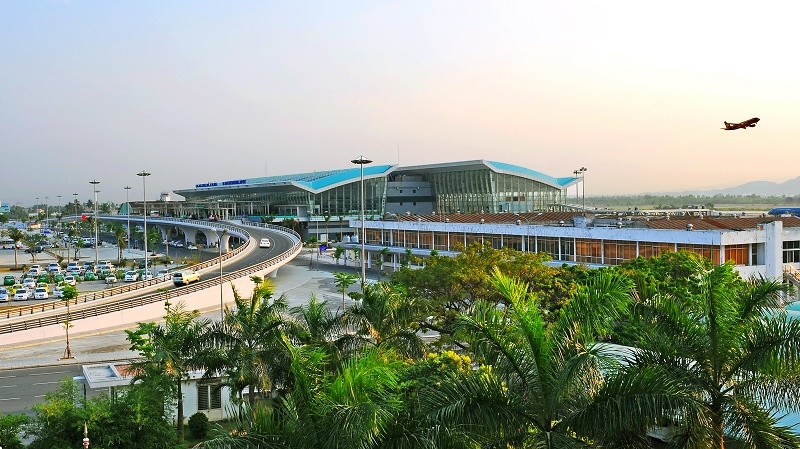
In the next ten years, Vietnam's aviation will require more than 17.1 billion USD in infrastructure investment. Private investors will have a plethora of investment opportunities in this industry, which has traditionally been the domain of state-owned enterprises. Private investors have the possibility to invest in three new airports through a public-private partnership (PPP).
Allow private businesses to invest in aviation infrastructure - Enhancing PPP in aviation
The Ministry of Transport (MOT) recently issued Report No. 14075/TTr - BGTVT, which was submitted to the Prime Minister for approval of the Project "Orientation to mobilize social capital for investment in aviation infrastructure".
The Airports Corporation of Vietnam (ACV), which is said to be exclusively exploiting the airport infrastructure investment sector, is also divesting capital in several projects. According to a report by ACV, the Covid-19 epidemic has drastically reduced ACV's predicted revenue and profit in the 2020-2025 period. With a nearly 50% shortfall in resources, ACV only prioritizes resources for Long Thanh airport phase I and airports that have been investing in, such as Tan Son Nhat, Noi Bai, Phu Bai, and Dien Bien.
This project is attracting a tremendous amount of attention from domestic and foreign investors because the scale of investment capital in the priority list of aviation infrastructure within ten years amounted to VND 479,606 billion. Also, it is an opportunity to invest in passenger and cargo terminals with very high profitability through public-private partnerships (PPP).
Furthermore, the state management agencies in charge of transportation recommended categorizing 28 airports in the national airport planning for 2021- 2030 into five groups to serve as the foundation for mobilizing social capital for investment.
Group 1 has six international airports, and the expected operating capacity by 2030 is more than 25 million passengers per year, including airports: Noi Bai, Da Nang, Tan Son Nhat, Cam Ranh, Phu Quoc, and Long Thanh (under construction).
Group 2 includes airports with military activities, regular military training, assets, and land in airfields managed by the Ministry of Defense, such as Tho Xuan, Chu Lai, Phu Cat, and Tuy Hoa airports.
Group 3 includes airports in remote, mountainous, and island areas, with a planned capacity of fewer than 5 million passengers per year by 2030. Those are the airports: Dien Bien, Na San, Dong Hoi, Pleiku, Buon Ma Thuot, Rach Gia, Ca Mau and Con Dao.
Group 4 includes airports with potential for development, capable of attracting investors, without regular military activities, and a planned capacity of more than 5 million passengers/year by 2030, including airports: Cat Bi, Vinh, Phu Bai, Lien Khuong, Can Tho.
Group 5 includes new airports such as Sa Pa, Quang Tri, Lai Chau, and potential airports such as Cao Bang, Hai Phong (Tien Lang).
The classification of airports into five sections will make it easier for investors to select appropriate segments to participate in.
The case of raising PPP capital for Na San Airport after ACV withdrew
Son La Provincial People's Committee sent an official dispatch in mid-March 2022, requesting the Prime Minister and the Ministry of Transport to approve the investment policy of the Na San Airport Project in the form of PPP, worth approximately 85.6 million USD. Currently, socialization of investment is the only option for Son La province to start the Na San Airport project early.
According to the Son La People's Committee, Na San Airport is an essential part of the Northwest region's primary airport network and the main airport in the national military airport network. Furthermore, this airport has been regarded as a critical driving force project that will significantly foster the province's socio-economic growth.
"To ensure feasibility, the People's Committee will allocate approximately 12.8 million USD from the local budget to promote investment attraction and accelerate project implementation," affirmed Mr. Hoang Quoc Khanh, Chairman of the Son La People's Committee.
Photo by the Airports Corporation of Vietnam
In July 2019, the Airports Corporation of Vietnam (ACV) submitted a study report for the Na San - Son La Airport Construction Project to the regulatory authorities for approval. With an estimated total investment of 98.3 million USD, this project will be entirely funded by ACV using corporate resources and will be implemented between 2020 and 2025.
However, by March 2022, ACV had reported to the Ministry of Transport on the review and possibilities of distributing development investment resources for airports managed by ACV for 2021-2025. In particular, for the Na San Airport Construction Project, due to the decline in profit caused by the Covid-19 pandemic, ACV has not yet planned to invest during this period and proposes to the MOT to offer and call for appropriate investment according to regulations.
Conclusion
Currently, PPP in aviation is an appropriate form of investment for accelerating the construction of critical airport projects. Private investors will also have various investment opportunities in the airport infrastructure sector, which state-owned enterprises have dominated. Some typical projects include Na San airport (Son La), Dong Hoi airport (Quang Binh), Quang Tri airport, etc.
If you are looking to invest in Vietnam airport infrastructure through a public-private partnership, contact Viettonkin for the most up-to-date and reliable information. Viettonkin and our team of specialists have over 12 years of expertise in the sectors of investment and business consulting. Contact us now.
Source: Flickr
What are non-equity modes of investment (NEMs)?
Greenfield and brownfield investments require substantial upfront costs and commitment, which might prove not suitable for investors in their early stages of market expansion. As an alternative solution, FDI investors are increasingly turning their attention towards new forms of market entry which offer a higher degree of flexibility.
Instead of contributing capital to start a new business in Vietnam, foreign investors instead have the option to enter “contractual agreements” to do business with local partners. This form of market entry is referred to as the “non-equity modes (NEMs)”, which is already stipulated in the Law on Investment 2020. Accordingly, Clause 14 of Article 3 articulates: “Business Cooperation Contract (BCC) is a type of contract signed between investors for business cooperation, profit sharing, and product co-distribution in accordance with the provisions of the law without the need to establish a business entity.”
Under NEMs, foreign investors can enter the market with ease and trigger a new cross-border FDI project. According to Vietnamplus, “this approach allows multinational corporations to coordinate activities in the global value chain through supporting domestic suppliers, thereby strengthening the linkage among Vietnamese suppliers in the value chain. With the new form, investments will be made through trade contract mechanisms between foreign investors and domestic enterprises, and they are often provisions of brands, intellectual property rights and business know-how, technologies, skills, or business processes.”
Examples and Advantages of NEMs
Photo by Forbes
Several types of contractual agreements exist and are allowed in prevalent practice under Vietnamese legislations:
Contract manufacturing or Service outsourcing is a contractual arrangement in which a MNC contracts out to a host-country firm some production, services or processing elements in its global value chain.
Contracting allows foreign investors to leverage economic arbitrages from more cost-effective local workforces and economies of scale. The investor also saves the costs of setting up a new factory and purchasing equipment, which can prove to be costly.
Licensing is a contractual agreement in which the licensor (i.e. the foreign investor with a proprietary technology, product, or brand) provides their products, services, brand and/or technology to a licensee in the host country via a contractual agreement.
This form grants the licensor affordable and low-risk entry to a new market while the licensee can tap into the competitive advantages and unique assets of a foreign firm without having to invest heavily in R&D cost. Licensing also helps the licensor to promote their brand in a new market, increasing the value and sustainable growth of the brand.
Franchising is a contractual relationship in which the right to operate a pre-existing business model is granted by a foreign investor (the franchisor) to a local business partner (the franchisee). Differing from licensing, under franchising agreements, the franchisee must pay franchise fees to the franchisor in exchange for a standardised and globally well-known brand and system that have been proven to generate profits. A popular example of this form would be global fast-food chain KFC.
Photo by How And What
Under the form of Franchising, foreign investors will always have a stable and continuous stream of profits because the terms of franchising contracts often last many years. With the profits from Franchising activities, investors can strengthen the main activities of the company or develop policies to expand and develop the business further in the future. Furthermore, Franchising also helps investors to expand the market and attract more consumers all over the world. This not only helps the investor's brand maintain a high share in the market, but also accelerate the company’s growth.
Apart from Contracting, Licensing, and Franchising, which are the three most common NEMs, others also exist for more specific business arrangements, including:
Contract farming is a contractual relationship between an international buyer and (associations of) host-country farmers or relevant intermediaries, which establishes conditions for the farming, harvesting, and marketing of agricultural products.
Management contract is a contractual relationship in which operational control of an asset in a host country is vested to an international firm, the contractor, which manages the asset in return for a fee. This structure is widely used in the hospitality industry.
Concession is a higher form of a management contract, in which the managing firm shall manage the asset in exchange for an entitlement to the profits generated by the asset. Concessions are rather complex, such as build-own-transfer (BOT) arrangements in which the foreign partner shall play the role of investor and own the asset for a period before transferring its management to the local partner. Concessions are widely used in public-private partnerships (PPPs).
Strategic alliance is a relationship between multiple firms to pursue a joint business objective which does not require the creation of a new legal entity.
Benefits of NEMs for the host country
NEMs are capable of generating significant economic and social benefits for the host country, including:
Creating a large number of jobs in developed countries: According to the UNCTAD report, it is estimated that 18-21 million people worldwide work in NEMs, mostly in the form of Contract manufacturing, Services outsourcing and Franchising. For instance, in Mozambique, contract farming has empowered more than 400,000 local small merchants to participate in the global value chain.
Generating substantial export profits: Modes such as Contract Manufacturing, Services Outsourcing or Contract Farming generate significant export value overseas and earned large foreign currency. Because the products will be produced in the country and then exported to foreign countries and domestic enterprises earn a huge profit (foreign currency).
Knowledge Transfer: Through forms such as Franchising or Licensing, small and medium-sized enterprises will have access to high-level science and technology, famous brands or even organisational structure and business secrets of manufacturers. invest. Thereby, they will learn from experience and develop their abilities more.
Helping countries participate in global value chains (GVCs): NEMs strengthen the local foundation of jobs, GDP, exports and technological development, which enables the local economy to participate more deeply and effectively in global value chains.
The electric vehicle market in Vietnam has not attracted much attention compared to other countries in the region and in the world, but this does not mean that there are no opportunities. Electric vehicles are an irreversible trend and will be the future as governments move towards clean energy and respect the environment. This means that interested investors can set up a base including manufacturing facilities, supply chains and human resources to prepare for this future shift.
With a population of more than 96 million people, about half of Vietnam's population owns motorbikes, while the rate of car owner is 23 per 1,000 people. Big cities like Hanoi and Ho Chi Minh City have suffered from increased pollution and congestion, and even several times ranked high position in pollution levels globally. An IQAir survey listed Vietnam as the 15th most polluted country in the world.
In fact, cities like Hanoi and Ho Chi Minh City has plan to gradually restrict and ban motorbikes by 2030. City officials also said that if the public transport system is improved, the ban could be implemented sooner. According to Bloomberg, the global electric car market is expected to reach more than 90 million vehicles by 2030; In particular, Hanoi is expected to have 11 million motorbikes by 2025. Vietnam is looking to use technology as it grows big cities into smart cities. Electric cars meet the criteria of the smart city concept as more and more people move to urban centers. Vietnam's urbanization rate is around 3% per year with the middle class becoming increasingly affluent and aware of their personal choices. While rising fuel prices benefits the electric vehicle market, rising electricity prices is vice versa.
Vietnam's policies towards electric cars are still lagging behind other countries such as Thailand, Malaysia and Indonesia. However, change is happening slowly but stably in Vietnam. Trams carrying tourists can be found in Hanoi, Ha Long Bay and Da Nang, while young students also ride electric scooters in Ho Chi Minh City. Ho Chi Minh. Vietnam's first domestic car producer VinFast belongs to ambitious Vingroup Group and has big plans to become a leading car manufacturer in Vietnam. While demand has not yet been ripe, VinFast sold 50,000 e-scooters in 2019. Although Vietnam has no specific incentives for electric cars, private businesses have made efforts to promote the industry. Vietnam does not have clear policies and incentives for the electric vehicle industry, the Government has proposed tax incentives for environmental friendly vehicles powered by electric, hybrid (gas and batteries), biofuel vehicles and compressed natural gas (CNG) vehicles.
Currently, electric vehicle imports are not sustainable due to high import taxes. In addition, imported electric vehicles are subject to an additional special consumption tax ranging from 15% to 70%. The Ministry of Finance has issued a draft Decree halving the registration fee for electric vehicles. If accepted, the reduction will be applied for 5 years from the date the Decree takes effect. According to current regulations, the first registration for passenger cars with 9 seats or fewer is 10-15% of the vehicle's value. The draft proposes that this fee will be reduced 5 to 7.1% for electric cars with the next registration at 2%. The Ministry of Transport is working with relevant Government agencies on the implementation of environmental friendly transport development strategies, including preferential policies for electric cars, batteries and accessories. However, government policy is to reduce CO2 emissions (-8% by 2030) and alleviate public health concerns, although this is primarily geared towards improving the public transport system in urban than electric cars. In the absence of strong support from government, private companies have stepped up and invested in this sector.
For example, in 2017, DiMora Enterprises signed a Memorandum of Understanding (MoU) on a $500 electric vehicle production project with Thanh Hoa province. Mitsubishi Motors in 2018 signed a Memorandum of Understanding with the Ministry of Industry and Trade on R&D for electric cars. In 2019, VinFast established a joint venture with LG to produce lithium-ion batteries for electric cars and scooters. As a domestic and ambitious manufacturer, VinFast is one of the leading manufacturers in terms of investment in electric vehicles. Vinfast cooperates with Kreisel Electronic to produce batteries for electric cars and buses. Vingroup also established VinBus to operate passenger cars in Hanoi, Ho Chi Minh City, Hai Phong, Da Nang and Can Tho. By 2022, VinFast is expected to produce 20,000 electric cars and about 1,500 buses. VinFast's first electric car named Klara was first introduced in 2018 and manufactured at its factory in Dinh Vu Economic Zone. Pega, a local electric motorcycle manufacturer startup, opened a factory with an annual production capacity of 40,000 units in Bac Giang province in 2017. The company also won order worth $3 million with a partner to export electric bicycles to Cuba.
Opportunities in the industry
While government incentives have not materialized yet, the presence of private companies emphasizes the market's attractiveness and shows that electric cars will play an important role in Vietnam's future. Investment businesses can gain a first-mover advantage and can reap the benefits when the market is finally ripe. In addition, electric vehicles involve a complete chain of suppliers and related services from electricity supply and distribution, charging stations and batteries including charging, recycling and disposal. This will create a complete ecosystem of buyers, suppliers, distributors and customers that contribute to jobs and the economy. In the future, Vietnam is well-positioned to be a low-cost producer of nickel sulphate for the region's EV lithium-ion battery market, with its nickel, cobalt and other mineral ores sourced from the country.
Vietnam's participation in free trade agreements is another opportunity for investors. With the recent EU-Vietnam free trade agreement (EVFTA), investors can produce and export to international markets. Most recently, the Irish e-bike startup Modmo, which manufactures e-bikes in Ho Chi Minh City, has received many orders from Europe. During the pandemic, more people in Europe bought e-bikes than used public transport. As a result, 86% of sales are from Germany. The company now plans to sell its e-bikes to the US market.
Challenges for investors
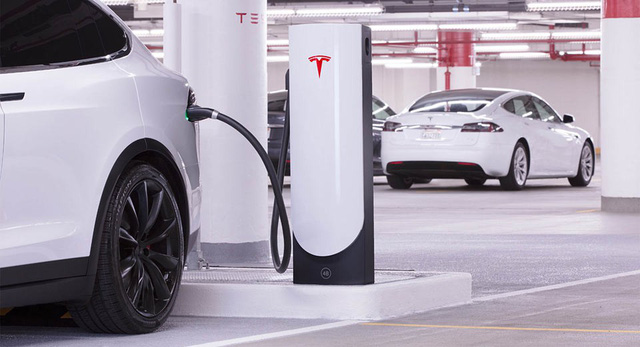
Although there are many opportunities, investors may face four challenges such as: (1) Legal issues: Vietnam still has a long way to go to form an electric car industry. The government has not introduced any specific incentives for the industry, while this may soon change - it is a barrier to market entry. However, given the benefits of the industry, the government may offer incentives such as tax reduction, land rents reduction, support for manufacturers in the industry, as well as R&D; (2) High cost: The electric vehicle industry is quite expensive. Electric vehicles can cost twice as much as the same class of gas-powered cars due to their high cost. Although this price gap is expected to narrow in the near future, it remains a concern for manufacturers; (3) Infrastructure: Vietnam's electric vehicle-related infrastructure is still limited. The number of public toll stations in the country is very limited and the implementation progress is very slow. While VinFast has announced plans to build between 30,000 and 50,000 charging stations, only about 200 charging stations have been put into operation. The company expects to have about 2,000 charging stations by the end of the year. Charging stations can be expensive with an estimation of about $200,000 per station, which could be a factor in slow rollout; (4) Electricity: As a developing economy, Vietnam's electricity demand is growing at an average rate of 9% a year according to Fitch Ratings. If public toll stations come into operation, Vietnam may experience an overload of 3 to 32% for some transmission lines.
Direction for investors
Due to the lack of infrastructure, investors may consider hybrid electric vehicles (HEVs) known for their fuel efficiency and low emissions. HEV does not need a charging station; instead, its battery is charged by the vehicle's gasoline engine due to motion. Frost & Sullivan forecasts that HEVs will account for 30% of Vietnamese car market by 2030. This will be a significant jump from the current 0.3%. While HEVs are attractive, a significant barrier to ownership is the high cost, however, this is what government incentives can help. HEVs can also bridge the gap between gasoline-powered cars and electric vehicles. Vietnam's motorcycle market will remain an attractive market for manufacturers. The e-bike does not need any additional charging stations and can be plugged in at home. The development of electric bicycles is currently hampered by cost and energy. However, Vietnam is tightening vehicle regulations and setting emission standards for new vehicles. In addition, major cities plan to restrict motorbikes in inner-city areas by 2030. This will likely be a catalyst for e-bikes and investors can take advantage of the opportunity to invest.
Eventually, as electric vehicles become more prominent, the government will likely introduce clear targets for electric vehicle numbers, emissions cuts, environmental regulations, etc. While this shift will happen gradually and possibly even slow, investors can begin to lay the foundation for this paradigm shift and gain a first-mover advantage. Analysts noticed this as investors entered the market slowly but stably. Even if Vietnam is not ready, investors can start setting up production facilities, taking advantage of Vietnam's free trade agreements and selling to the international market. Domestic production will allow investors to take advantage of Vietnam's tax incentives and free trade agreements while benefiting from a more efficient and local supply chain.
The two parties will strengthen the trade and investment promotion activities, focus on boosting the growth of trade turnover, striving to gain the stable increase from 10% or more compared to the growth of 2021.
One of the key tasks in the Agreement on the 2022 Vietnam-Laos Cooperation Plan is to link the two economies of Vietnam and Laos in terms of both institutions and infrastructure.
The Chairperson of the Vietnam-Laos Intergovernmental Committee, Nguyen Chi Dung, the Minister of Planning and Investment presented the above information at the press conference of the Intergovernmental Committee’s 44th session result on bilateral cooperation between Vietnam and Laos, held on the morning of January 10 in Hanoi.
The press conference was co-chaired by the Chairperson of the Vietnam-Laos Intergovernmental Committee, Nguyen Chi Dung, the Minister of Planning and Investment and the Deputy Prime Minister, the Minister of Planning and Investment and Sonexay Siphandone, the Chairperson of Laos-Vietnam Cooperation Committee.
In-depth information about the meeting results, Minister of Planning and Investment Nguyen Chi Dung said that at this meeting, the two parties discussed, agreed, concretize the concluding comments of the two Politburos into the Agreement on Cooperation Plan between the two countries in 2022.
The signing ceremony and the awarding of 9 cooperation documents between the two parties took place at the meeting, with the witness of the Prime Ministers of the two countries, including an agreement on the 2022 Vietnam-Laos cooperation plan; The Intergovernmental Committee’s 44th session minutes on bilateral cooperation between Vietnam and Laos; An agreement on project implementation in the field of agricultural production; 5 agreements on construction project implementation.
And that the Chairperson of the Cooperation Committee of the two countries gave the commitment between three Vietnamese and Laotian shareholders on raising the ownership ratio of the Lao Government from 20% to 60% of the authorized funds at Laos-Vietnam International Port Joint Stock Company.
Basing on the content included in the meeting documents signed by the two Chairpersons of the Cooperation Committee of the two countries, both parties expressed their implementing determination from the beginning of the year in order to boost the cooperation in all fields of politics, foreign affairs, security and defense, investment and trade.
The Chairperson of the Vietnam-Laos Intergovernmental Committee affirmed that with the motto of innovation and drastic action right after this meeting, the Government will actively direct ministries, branches, localities, enterprises, relevant units, to closely coordinate with Lao partners, immediately and effectively implement the commitments given in the meeting. The government will also set the goal to provide enterprises with the best conditions to carry out business in the Lao market.
The Chairperson of the Laos-Vietnam Cooperation Committee emphasized that the contents and orientations discussed in this meeting is very significant to concretize the senior cooperation agreements, helping the two nations’ ministries, sectors, localities, and enterprises will be more favorable during the cooperation activities, aiming at the successful implementation of the agreement on the two countries' 2022 cooperation plan.
[Forming the motivation to promote comprehensive cooperation between Vietnam and Laos in 2022]
For the economic cooperation plan in the coming time, the two parties have agreed to focus on well implementing the common statements; the two Politburo agreements and other agreements; including an Agreement at the 44th session. Particularly, the two parties will strengthen the trade and investment promotion activities in 2022, focus on boosting the growth of trade turnover, strive to achieve the stable increase from 10% or more compared to 2021.
In the investment cooperation field, the two parties agreed to strengthen the attraction of corporations and companies with financial and professional potential, to give the priority for the investment in clean agriculture, processing and manufacturing industries, to provide a potential area along the Vietnam-Laos border.
In addition, the two parties will evaluate, analyze to remove difficulties, support and promote the implementation of the large-scale investment projects such as Xekaman 3 hydropower plant, Luang Prabang hydropower plant, mining and processing bauxite ore and building Alumina factory in Dak Chung district, Sekong province, and a complex of cow raising and diary product processing in Xieng Khouang province.
Vietnam will continue to support the new projects licensed by Laos such as Cavico's mining project in Bolikhamxay province, iron mining project of COECCO... to soon deploy, contribute to the economic development of Laos.
Vietnam and Laos continue to promote the effective implementation of the Memorandum of Understanding between the Government on the Cooperation Strategy in the transport field for the period of 2016-2025, with a vision up to 2030.
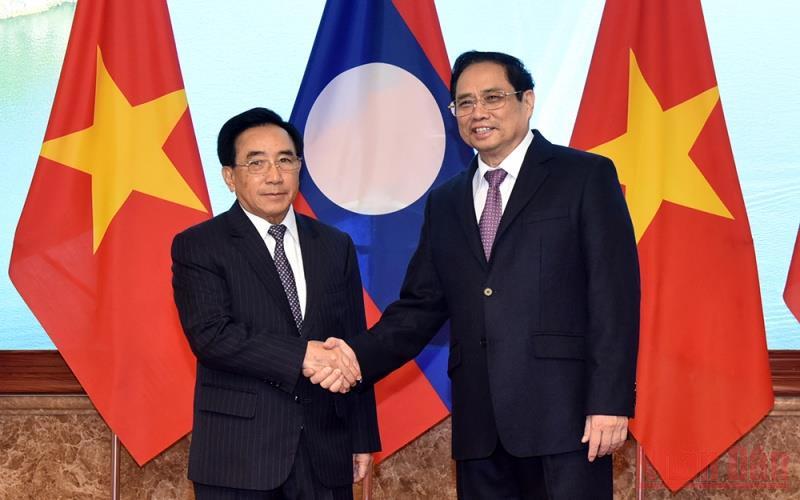
Pham Minh Chinh, Prime Minister and Phankham Viphavanh, Lao Prime Minister take a photo together at the Vietnam-Laos Intergovernmental Committee’s 44th session. (Photo: Duong Giang/VNA)
The two parties agreed to authorize the Ministry of Transport of Vietnam and the Ministry of Public Works and Transport of Laos to prioritize projects; firstly they should focus on researching, building and upgrading the route connecting the East-West economic corridor and to the region in the transport development project in ASEAN and GMS countries and Hanoi-Vientiane expressway construction project. The two parties also agreed to complete the survey items, prepare the environmental and social impact assessment report of 18B Road Upgrading Project and take the feasibility study to upgrade 18B road with Vietnamese Government’s ODA for the Lao Government in 2022. (Provigil online)
Under the agreement on the 2022 cooperation plan of the two countries, Laos agreed with the adjustment rules of BOT term for 25 years from the date Xekaman 3 hydroelectric power plant re-energize. The two parties also consider adjusting the electricity selling price in accordance with the actual situation. Besides, regarding Phu Nhuon iron mine project in Na To village, Khuon district, Xieng Khouang province, Laos undertakes to take the appropriate solutions to ensure the interests of Laos Vinacomin, which has carried out the survey and exploration.
Besides the agreement contents related to economic cooperation, the agreement on the two countries' 2022 cooperation plan also recorded many articles related to political and diplomatic relations; cooperation in defense and security; cooperation in education, human resource development and vocational training; as well as cooperation in other fields...
In 2022, Vietnam and Laos will organize the Vietnam-Laos Friendship and Solidarity Year, the 60th anniversary of the diplomatic relation formation and the 45th anniversary of Vietnam-Laos and Laos-Vietnam Friendship Treaty.
Thanks to the good results obtained in this session, the two parties believe that this will be a new motivation that make the cooperation between the two countries more and more practical and effective, an important contribution to consolidating and strengthening the traditional friendship, special solidarity and comprehensive cooperation between Vietnam and Laos./.
Part Two of the article focuses on the Indonesian business entity known as Perseroan Terbatas Penanaman Modal Asing (PT PMA) and issues related to its establishment.
Part Two: PT PMA
What is a PT PMA?
PMA Indonesia (Penanaman Modal Asing) or PT PMA (Perseroan Terbatas Penanaman Modal Asing) is also known as a Foreign-Owned Company - the legal entity through which a foreign person, foreign company, or foreign government body can conduct business (generating revenue streams and profit) in Indonesia.
The establishment of a PT PMA is regulated by Law No. 40/2007 regarding Limited Liability Companies (Company Law). Such an entity can be entirely or partially owned by foreign investors.
In general, a PT PMA company must consist of at least:
1 director: a foreigner who can work as a director in a PT PMA and obtain a KITAS (stay permit).
1 commissioner: the commissioner can be either a local citizen or a foreigner. The main duty of a commissioner is to supervise and monitor the work of the directors in the company and to ensure that every activity commenced by the company is in order and consistent with the objectives of the company;
Every PMA company should have at least 2 shareholders, be it an individual or a legal entity.
The minimum authorized and paid-up capital requirement to start a PT PMA is IDR 10 billion, or roughly USD 700,000. The paid-up capital does not have to be fully in cash. It can be in the form of pre-incorporation asset purchases and expenditures shown on a balance sheet. Something to keep in mind is that you may start a lower-scale company and upgrade it once you have more capital, but upgrading your company and making changes to the company’s capital is a complicated and costly thing. It is recommended to start your company with higher capital instead.
Business sectors in Indonesia
When you want to establish a PT PMA in Indonesia, your field of industry and business activities must be clear. It's important to note that foreign investment is prohibited in a number of sectors in Indonesia. The Indonesia Investment Coordinating Board (BKPM) compiles and regularly updates the Negative Investment List (Daftar Negatif Investasi) to determine which sectors are open to foreign investment.
Business sectors in Indonesia can be divided into three categories based on how open they are to the entry of PMAs. Business sectors are divided into open sectors, open sectors with conditions, and closed sectors.
Open sectors are business sectors in Indonesia that allow completely foreign-owned companies to exist and conduct business. There are no prerequisites for those planning to start a PMA in this sector. Bars, gyms, restaurants, sports fields, and swimming pools are examples of businesses in Indonesia that fall into this category.
Open sectors with conditions are those that allow foreign-owned businesses and foreign investment in those businesses if certain criteria are met. The amount of foreign capital in this sector varies. The foreign capital in most of these companies, however, will range from 49% to 70%. This is the largest of Indonesia’s three categories of business sectors. Energy companies, mining companies, hospitality companies, and sports facilities that are not classified as open-sector businesses are some of the businesses that fall under this category.
Closed sectors are sectors that disallow the involvement of any private businesses. The Indonesian government has complete control over the classification of closed-sector businesses. These businesses may not be started by foreigners; only Indonesian citizens may do so. Among the businesses in this category are certain companies related to travel, including some tour guide agencies. The Negative Investment List specifies which business sectors are classified under each category.
Considerations for Foreign Investors
With the help of an agency in Indonesia, it will usually take 2.5 to 3 months to set up the company and obtain all of the necessary licenses. PT PMA is fully established and legal to operate once it has its deed of establishment from a notary, Ministry Approval (SK Kemenkumham), Business License Number (NIB) from the Online Single Submission (OSS) system, Tax Number (NPWP), Business Operational License (Ijin Usaha) and Domicile Letter. Although the registration process can be quite simple thanks to the constant updates from the BKPM, it is not advised for foreign investors to do it on their own. There are so many documents and permits that you have to prepare to register your company, and making all of them by yourself will be a daunting task. Don’t risk having your application refused or delayed just because of your lack of understanding.
Speaking of hiring a local agency, you need to make sure that the local agent you use is Indonesian-owned. The BKPM issued a new regulation that only a locally owned agent or at least a local entity can help with the registration process of PT PMA. You must also be sure that the agent must also be certified by BKPM, as only a certified agent is able to help you with your PT PMA registration.
Aside from the Negative Investment List, Indonesia has a number of other regulations that govern PMAs. Among the most important of these are Law Number 25 of 2007 and the Head of Investment Coordinating Board Regulation Number 14 of 2015. These regulations define a PMA in Indonesia, mention the licenses which may be required by one, and state the fact that a PMA in Indonesia requires a paid-up capital of IDR 10 billion before it can be set up; of this 10 billion, 25% of it must be paid to the Indonesian government prior to registration.
Taxes in Indonesia may also cause trouble for foreign investors and their PT PMAs. It is compulsory that any PT PMA has to pay taxes and report the company’s financial status as per standard accounting in Indonesia, regardless of whether it has already had activities or not. Among them are monthly and annual withholding taxes; monthly and annual income taxes; Value Added Tax (VAT); Luxury Goods Sales Tax (LGST)—if any; along with the company investment plan. These taxes must be paid at the local tax office where the business is located. In Indonesia, late payment of corporate and individual taxes can result in a financial penalty. For late payments, the taxpayer should be charged 2% interest per month.
In addition to paying taxes, a PT PMA’s owner will also need to do a quarterly investment report. This report usually contains the profit and loss statement of your company, information on the number of employees, etc. This report is important as it will show the government that your company is up and running instead of being dormant. Failing to provide such a report will attract the authorities to run an audit of your company.
Local PTs and PT PMAs continue to be Indonesia’s most popular forms of corporate entities, thanks to their unique characteristics and contribution to the economic well-being of the country. Setting up a PT or PT PMA in Indonesia can be quite a challenging experience. It is best to be accompanied by a trustworthy agency, who can provide reliable consultation and help you set up the right company entity based on your needs without wasting time and resources. Here at Viettonkin, we are confident in bringing the ideal solution to our clients who are looking for an investment opportunity in Indonesia. With an office in Central Jakarta, Viettonkin offers a multitude of services, ranging from legal counsel and foreign direct investment strategy to accounting firms and tax services. Contact us now to find out more.
I. Overview of Banking Sector in Vietnam
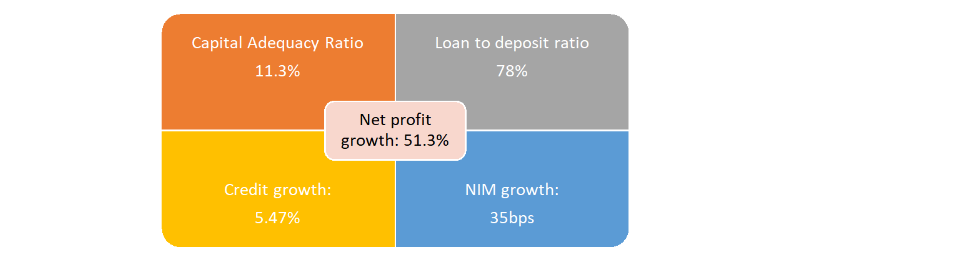
Thanks to the Government’s efforts in containing the Covid-19 situation, the first half of 2021 saw positive results from the overall banking sector:
A JP Morgan report showed that Vietnamese banks offer the best combination of growth and return on equity (ROE) in ASEAN at 18 percent, double that of other countries in the bloc.
Vietnam started opening up its banking system in 1990. Following that, the wave of foreign banks' presence in Vietnam exploded following its joining the WTO in 2007 and completing the according integration policies. HSBC, Citibank, ANZ, and Shinhan Bank currently account for the majority share of the foreign banks market in Vietnam.
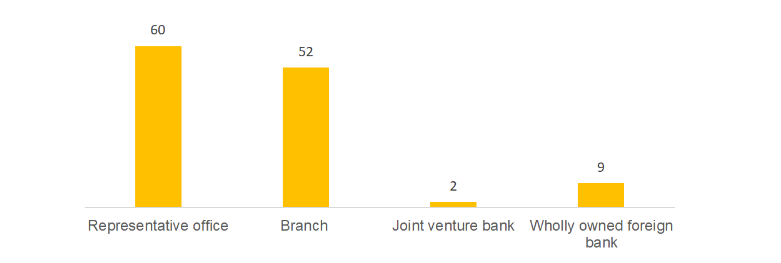
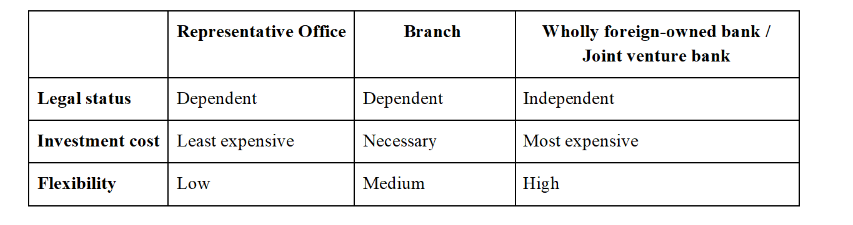
The four traditional modes of market entry for foreign banks in Vietnam are:
Representative office
Branch office
Wholly foreign-owned bank
Joint venture bank
Though popular, these licensing modes have been tightened in recent years . Nevertheless, investors can still consider an alternative approach called New forms of investment (NFI). Under NFI, a foreign bank may choose to join forces with a local partner under (i) a Business Cooperation Contract (BCC) or (ii) Strategic Partnership or partake in (iii) an M&A arrangement.
II. Guidelines on establishment of Foreign Banks presence in Vietnam
1. Modes of market entry:
a. Description:
An RO is the most limited form of setup due to its inability to perform revenue-generating activities, hence the least expensive option and usually only used at early market entry stages.
A branch office, on the other hand, can provide banking services. However, it is still heavily dependent on the parent bank for decision-making procedures and financing resources. The branches of foreign banks are subject to banking supervision from both the home country and Vietnam, with many limitations on activities as stipulated in Circular 23/2020/TT-NHNN.
Subsidiaries of foreign banks including Wholly foreign-owned and Joint ventures are legally independent of the foreign investor and utilize their own capital to do business. Thus, foreign banks will need to invest more capital abroad if they want to facilitate the same level of lending activity through a subsidiary rather than through a branch.
However, the issuance of such new licenses will likely be limited or possibly even discontinued in the future. The most recent 100% FDI bank in Vietnam is the Singaporean-invested United Overseas Bank (UOB), licensed in 2017 with a VND 3,000 billion (approximately USD 130,400,000 ) charter capital.
b. Requirements
For representative office (RO), Vietnam has no restriction in accordance with WTO commitments on services. The bank is eligible to setting up a RO in Vietnam when it meets the requirements to operate abroad in accordance with the legal system of its home country.
For branch offices, the parent bank needs to maintain total assets of more than USD 20 billion at the end of the year preceding setup application. The bank must also provide a written guarantee to be liable for all obligations and commitments of its branch in Vietnam. The minimum charter capital for a branch is USD 15 million.
In general, ROs and branch offices are the most difficult and complex forms to obtain operating licenses, and thus are not recommended by Viettonkin’s consulting team.
For wholly foreign-owned and joint ventures, the foreign partner will be asked for a written guarantee to provide financial, technological, administrative, executive and operational support. This written guarantee is to ensure to maintain the charter capital not lower than the legal amount and to comply with regulations on safety assurances. There should also be an agreement in place between a competent foreign Government authority and State Bank of Vietnam (“SBV”) on collaborative supervision of financial institutions’ operation according to international practices.
c. General guideline:
In general, there are two steps that foreign banks must go through in order to successfully establish a RO/branch/wholly-owned foreign bank/joint venture in Vietnam. First, they must obtain a banking license issued by the SBV. Specific procedures can be found under Circular 40/2011/TT-NHNN or through the consultation of legal experts. Obtaining a banking license requires specific conditions such as charter capital and years of establishment, and takes longer periods of time. For RO, it takes 30-60 days to receive the license, and for branches and corporate forms, the process could consume up to 242 working days.
Upon obtaining the banking license, foreign investors must undergo the business registration process to acquire the relevant business licenses at the local Department of Industry and Trade (for ROs and branches) or Department of Planning and Investment (for wholly-owned and joint ventures). This procedure takes 30-60 working days, followed by the compulsory seal and tax registrations.
2. New forms of investment (BCC, Strategic Partnership, M&A)
(i) Business Cooperation Contract (BCC)
Under Business Cooperation Contracts (BCC), the parties, either a Vietnamese and a foreign bank or all foreign partners, will enter a contract to formally establish a cooperative relationship in business and agree to share profits or products in ratios decided through negotiation. Utilizing this form of investment, such parties are not required to establish a new legal entity. Instead, a coordinating board will be formed to execute the BCC. Investors can freely negotiate the details of the contract and said coordinating board. There are many ways to classify BCC contracts, such as jointly controlled assets or jointly controlled operations, or earning sharing based on either revenue before tax or net profits.
b. General guideline:
The foreign investor needs to apply for an Investment Registration Certificate and depending on the size of the project, it might be required to apply for an Investment Policy Decision first. The focal point of coordination and instruction will be the local Department of Planning and Investment. After being granted the Investment Registration Certificate, investors can carry out investment activities to implement the project according to the BCC Contract.
c. Pros and Cons:
BCC enables the investor to gain speedy access to the market through domestic partners and start generating earnings immediately. This works best between a foreign partner with abundant expertise and a domestic partner with good access to local permits and real assets. Another characteristic of BCC is the lack of a separate legal entity. For many, it is advantageous for saving time and cost significantly, and sparing them the headache of dissolution once the project is completed. However, this can also be considered risky for investors, given there are no clear regulations on the implementation of the BCC contract. The parties are fully responsible for their negotiation results and can only refer to high-level guidelines from the Law on Investment and the Civil Code.
(ii) Strategic Partnership:
a. Description:
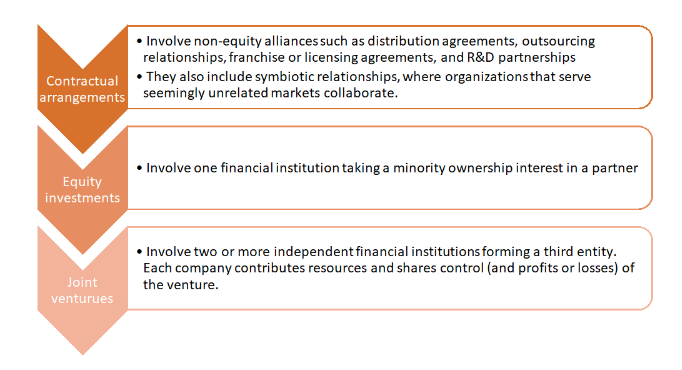
Rather than pinning down the business into a specific product or project, Strategic Partnership is a form of investment which offers greater flexibility. These engagements can be categorized into: (1) Contractual arrangements, (2) Equity investments, and (3) Joint ventures, as follows:
To qualify for this form, the foreign investor is expected to have a good credit rating by an international agency and total assets of US$10 billion (to own from 10% of shares) or US$20 billion (to be qualified as a strategic investor).
b. General guideline:
Similar to BCC, strategic partnerships operate under the provisions of the Civil Code and the Law on Investment.
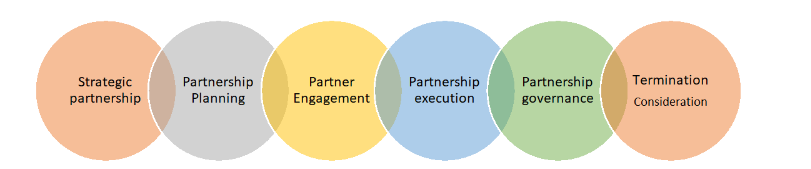
The general process of establishing a strategic partnership follows these 6 steps:
c. Pros and Cons
This could be a highly viable market entry solution for international banks or institutions. Strategic Partnerships present a wide array of opportunities for investors with different backgrounds and levels of familiarity with the Vietnam market. However, along with this flexibility comes the timeline issue. Banks will be cautious and meticulous in selection as engagement on a strategic level touches core business pillars, leading to a longer negotiation time period, which can last 2-3 years.
d. Opportunities for foreign investor
During the last Annual General Meeting of Shareholders season, many banks continued to reveal their intention to seek foreign strategic partners, including OCB, LienVietPostBank, SCB, Ban Viet Bank, Nam A Bank, VPBank, and NCB. Since the beginning of 2021, under new policies, banks have been allowed to register a maximum foreign ownership ratio that is lower than the prescribed ceiling. Taking this chance to increase their attractiveness, many banks have chosen to "lock" foreign rooms in order to retain part of the foreign ownership ratio for strategic investors. For instance, the foreign room at Techcombank is 22.5%, at VPBank is 15%, and at SHB is only 10%. With regulations stipulating the maximum cap on the shares of a foreign strategic investor being 20% of the charter capital and the total foreign ownership being 30%, it can be said that Vietnamese banks are warmly opening up to international partners.
(iii) M&A
a. Description:
Mergers and acquisitions (“M&A”) is an umbrella term that encompasses all forms of consolidation of companies and assets through various financial mechanisms including mergers, acquisitions, consolidations, tender offers, purchase of assets, and management takeover. In the current policy environment of Vietnam, M&A is one of the most recommended forms of investment, due to its alignment with recent regulations and less administrative complexity compared to traditional forms.
b. General guidelines:
Despite its relative openness, M&A is still subject to certain conditions. Circular 36 stipulates that mergers, consolidation and acquisitions between credit institutions can only be conducted under certain forms: a commercial bank or a financial institution being merged or consolidated into another commercial bank; or a financial institution being merged or consolidated into another financial institution. Other than Circular 36, in general, the banking sector is mainly regulated by the Law on Credit Institutions 2010 and relevant documents analyzed above. Regulations on M&A activities in the sector are articulated in many different legal documents such as Law on Investment, Law on Enterprise, Law on Securities, Law on Credit Institution, Law on Competition, among others.
According to SBV, ccompleting a bank M&A requires going through a process with 07 steps as follows:
Developing an M&A strategy, whereby bank managers need to define clear goals, ideas, and the expectations from the M&A;
Determine the criteria for the selection of M&A partners;
Planning: Detailed implementation, specifically from the beginning is identifying partners to approach, collect information and data, prepare legal issues, implement people (establishment) related teams and committees for implementation), time and content of valuation analysis, negotiation, preparation of capital sources, etc.;
Appraisal;
Drafting and signing contracts;
Releasing the committed capital;
Completion.
c. Pros and Cons
The biggest advantage of M&A is its alignment with the Government's direction and policies on banking restructuring. Furthermore, commercial banks are required to publicly disclose information about business performance and investment activities and to be listed on HOSE or HNX, therefore it can enhance information transparency for the investors. M&A will also promote business efficiency by upscaling. Once the deal is in place, parties in the transaction can also exploit each other's resources, increase market share, take advantage of customer relationships, thereby contributing to improving competitiveness and creating new business opportunities (Nguyen Thi Gam, 2019).
On the flipside, Vietnam has yet to develop a standard legal framework for M&A. With a plethora of laws to cross-examine, investors will have a hard time navigating through transaction and operation, while authorities also find it difficult to manage and give comprehensive instructions. Additionally, the Vietnam side of M&A is still passive and inexperienced, especially in due diligence, thus foreign investors should expect to take the lead in guiding them through the process.
d. Opportunities for foreign investor
There are many factors contributing to the growth of the banking M&A scene in Vietnam. First, from a governmental perspective, the aim is to optimize the number of credit institutions, hence domestic interbank merging is encouraged and already successfully implemented in many State-owned banks. Second, still driven by policy, Circular 22/2019/TT-NHNN stipulated that all commercial banks must declare their capital adequacy ratio (CAR) and other regulatory ratios to SBV following Basel II standards. On the other hand, the European Union - Vietnam Free Trade Agreement (EVFTA) may facilitate European financial firms to penetrate Vietnamese market. One of the key changes under the trade pact is European investors are now able to increase their ownership ratio to maximum 49 per cent in two Vietnamese banks.
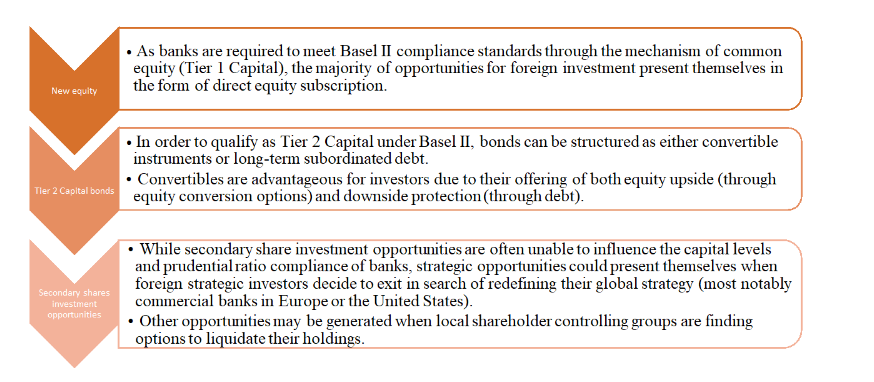
The following financial instruments are available to foreign investors:
III. Conclusion
Despite the resurgence of Covid-19 in Q3/2021, the economy of Vietnam is still set to grow at 4.8% in 2021 according to the World Bank and the banking sector is hopeful to achieve a net profit increase of 26.5% YoY per the estimation from Turicum Investment Management. The last quarter of the year and 2022 will see a significant resumption of business, and the banking sector is in dire need of international funding to meet demands.
Viettonkin offers a full range of consulting services for all NFI variations, BCC, Strategic Partnership, or M&A. Our network of international experts, local connection, and strong on-the-ground support team guarantee a holistic and systemized approach customized to your company profile and demands.
Our CEO, Mr. David Lang is the country representative of an European Bank in Vietnam. Viettonkin plays a role as third parties to help this bank enhance its presence in Vietnam through credit packages for Vietnamese businesses. Currently, Viettonkin has consulted and connected a manufacturing enterprise in Vietnam to access a large loan with preferential interest rate from this Bank so that the business can recover and continue to grow in the context of Covid 19.
Despite the global pandemic and the world’s volatile situation, Vietnam remains an attractive destination for Foreign Direct Investment (FDI) in the year 2022. After a long period of being affected by COVID-19, Vietnamese society and economy have adapted to the new normal, taking advantage of the open policies from 2021. Therefore, an increase in FDI in May in the number of new projects and investment in existing projects has shown a strong confidence of foreign firms in the country’s investment environment.
Increase in FDI in May 2022
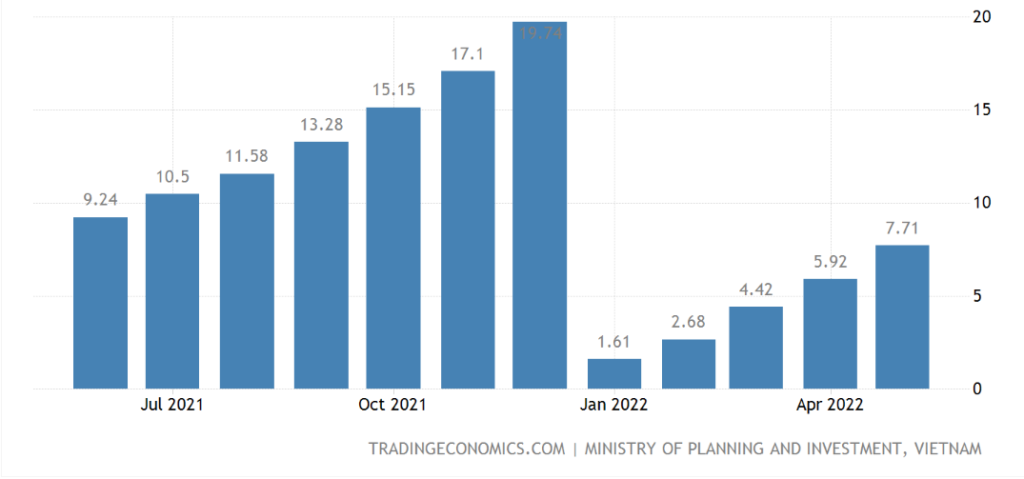
According to the Ministry of Planning and Investment, total FDI invested in Vietnam in the first 5 months of the year reached $11.71 billion, equivalent to 83.7 percent of that of the same period in 2021. While newly registered capital decreased by 53.4 percent, adjusted capital and contributed capital to purchase shares increased sharply by 45.4 and 51.6 percent respectively. A representative of the General Statistics Office claimed that this data accurately reflects the general recovery and growth trend of the economy, especially in the context of the Russia-Ukraine war and the decline in global FDI inflows.
FDI in May (2022) (Source: Trading economy, MPI of Vietnam)
Specifically, 578 new FDI projects have been granted investment registration certificates, with a total registered capital of roughly $4.12 billion. Furthermore, 395 turns of projects were registered to adjust investment capital. The total registered investment hence raised to over $5.61 billion, being 45.4 percent higher than that of the same period last year. There were also 1,339 times capital contribution buying shares from foreign investors with the total value amounting to over $1.98 billion, which was 51.6 percent greater than that of the same period in 2021.
Overall, FDI enterprises have invested in 18 industries out of 21 national economic sectors. In which, the processing and manufacturing industry was the leading field with a total investment of over $6.8 billion, making up 58.2 percent of the total registered investment capital. Following is the real estate field with a total investment of nearly $3 billion, contributing to more than a quarter of the total registered investment capital. In the next place are the information and communications industry as well as professional science and technology activities with a total registered capital of about $398 million and $374.8 million correspondingly.
Vietnam remains attractive to international investors
In the first 5 months of 2022, it is reported that 79 countries and territories have invested in Vietnam. Among which, Singapore remains the top investor with a $3-billion worth funding, accounting for 25.3 percent of the total investment in Vietnam. In second place was South Korea with over $2.06 billion, which is 17.6 percent of the total investment, higher than that of the same period by 12.6 percent.
Particularly, due to the large-scale Lego project that attracts over $1.3 billion of funding in total, Denmark continues to rank third with a registered investment capital of nearly $1.32 billion, equalling 11.3 percent of the comprehensive one.
Based on the number of projects, Korea still has the most investors making new investment decisions as well as expanding investment projects and contributing capital to buy shares in the first 5 months of 2022. To exemplify, Korean financiers account for 19.4 percent of new projects, 33.9 percent of adjustments, and 36.7 percent of capital contribution and share purchase.
Additionally, according to a recent HSBC survey, 21 percent of Indian businesses operating or intending to operate in Southeast Asia are planning to expand in Vietnam over the next two years. Likewise, 26 percent of Chinese firms have the same intention.
In the past 5 months, foreign investors have funded firms and projects in 48 provinces and cities across the country. Binh Duong has the largest investment capital inflow with a total value of $2.52 billion, equivalent to 21.5 percent of the total capital and nearly 2.3 times higher than that of the same period in 2021. Bac Ninh came second with a total investment capital of around $1.65 billion, accounting for 14.1 percent of total investment. Following is Ho Chi Minh City with foreign funding of over $1.3 billion, which is 11.3 percent of the total capital.
More than 1,500 companies from six of the world's largest economies participated in the survey and all have operations in Southeast Asia. Three out of ten companies mentioned Vietnam's skilled workforce as an advantage, while 27 percent noted its competitive wage pricing and economic resilience during the pandemic.
Currently, 39 percent of Indian companies mention the country's infrastructure as the primary reason for their interest, while 39 percent of US firms cite opportunities to develop and test new products in the market.
Future expectations
As of May 2022, it is estimated that foreign-funded projects have disbursed $7.71 billion, which is 7.8% higher than the same period last year. Meanwhile, FDI pledges, which indicate the size of future FDI disbursements, fell 16.4 percent year on year to $11.71 billion. Besides, in the future, in terms of the number of new projects, foreign investors will still focus on big cities with convenient infrastructure such as Hanoi and Ho Chi Minh City.
Furthermore, as Vietnam is rising as a global production hub thanks to the incentives given by the Government, the trend of shifting investment to Vietnam is not temporary, but strategic and long-term. Therefore, the movement of the FDI flows shows a positive picture in the upcoming years.
If you are looking for opportunities to be a part of the picture, contact Viettonkin Consulting now for more information on how to join the market. Our team of dedicated experts will provide you with more insights about ASEAN’s promising economy and guide you through the process.
Earlier this year, the Regional Comprehensive Economic Partnership (RCEP) between 15 Asia-Pacific nations came into effect. This agreement is a big deal with global influence, covering about 30% of the world’s gross domestic product, trade, and population. For instance, in 2019, the total GDP of RCEP member countries reached $25.84 million, higher than that of the United States-Mexico-Canada Agreement or the European Economic Area.
RCEP is a free-trade agreement (FTA) involving 10 ASEAN members and 5 other countries in the Asia continent. Within RCEP members, tariffs on 91% of goods will be eliminated, boosting their economies. While in a closed economy, goods, services, technology, and knowledge are limited. However, with an open economy, consumers have access to a variety of goods.
From there, there will be an increase in aggregate consumption, leading to a growth in manufacturing. To achieve that, FTAs like the RCEP were formed to reduce taxes and stimulate trade, creating mutual benefits for member countries. RCEP includes commitments on market opening in the fields of goods, services, and investment. Additionally, the harmonization of rules of origin instead of applying the 5 sets of rules like the present was also discussed. Another matter of concern is the establishment of trade facilitation measures.
Vietnam - an active member of the RCEP
As one of the most open economies among the developing countries in terms of trade, Vietnam is an active member of many FTAs, including the RCEP. While being the ASEAN Chair in 2020, Vietnam has successfully completed its mission, contributing to the agreement of ASEAN nations on the RCEP. The signing of the RCEP agreement can be considered one of the most desirable outcomes of the ASEAN Summit 2020.
How Vietnam benefits from the RCEP
The RCEP, the world's largest trade bloc, is predicted to facilitate increased development and trade through integrated markets for Vietnam. This country has already been well integrated into the region; therefore the greatest benefits are not likely to come from tariff reductions alone, but from measures that facilitate trade such as unified rules of origin. It is believed that in the most optimistic scenario, where all benefits are applied, Vietnam will have the highest gains of all RCEP member countries.
Positive impacts on trade
According to a recent study by the World Bank, Vietnam is projected to have the highest trade and income gains among all members of the RCEP. In regards to trade encouragement, Vietnam offers partner countries a tariff liberalization rate equal to or lower than the current level of the ASEAN Plus free trade area agreements.
Countries in return also apply tariff liberalization rate for Vietnam: Australia eliminates 92% of tariffs for Vietnam, New Zealand lowers by 91.4%, Japan by 90.4%, Korea and China by 90.7%. In addition, some types of goods were free from tariffs as soon as the agreement was enforced: mechanical equipment, tools, accessories, computer components, chemical products, cotton, and some agricultural products, among many others.
Beside tariff removal, the simplification of the rules of origin was implemented due to the RCEP. Regulations on harmonization and transparency of customs procedures to match international standards were discussed as well. With consistent customs laws and regulations between involved countries, businesses operating in the bloc can benefit from quick procedures and favorable conditions.
Agreements on trade-related issues open great export opportunities for Vietnamese enterprises, enabling them to export to 14 other markets of member countries with preferential tax rates and relaxed customs procedures and product requirements. As a consequence, the RCEP will help establish long-term stable export markets despite the volatile world situation causing disturbances in the supply chain.
What's more, by encouraging other countries to export products and services to Vietnam, the RCEP allows Vietnamese companies to access modern production chains, technology, and equipment from developed countries in the bloc. Moreover, it would be easier for Vietnam to import input materials for manufacturing at lower prices due to the cut in tariffs.
Vietnam as an investment destination
It is settled that the opening level of the Vietnamese market does not exceed the level decided in the CPTPP and EVFTA Agreements. RCEP also adds some TRIMs+ obligations compared to commitments to join the WTO. Furthermore, the investment chapter of the Agreement added a mechanism to assist investors with solving problems in the investment process. However, the mechanism of dispute and settlement between the state and investors will not be applied to tariff-related expropriation. Also, Vietnam reserves the right not to exercise automatic MFN clauses in the investment field.
Another point is that RCEP is built on the appropriateness of the economic development level of participating countries. Therefore, while some ASEAN countries are still in underdeveloped economic status, the dissimilar economic structure will create conditions for countries to support each other through the supply chains of goods. Consequently, businesses in Vietnam as well as in other less developed economies can compete in the market. Due to the RCEP, Vietnam and some ASEAN countries have become more attractive as investment destinations.
RCEP brings about an increase in GDP
Assuming reductions in tariff and non-tariff measures, real income in RCEP countries is expected to increase by 0.21 percent and real GDP by 0.17 percent in 2035. Particularly, in Vietnam, considering the full scenario, the income level grows by almost 5 percent, higher than that of other countries, whose average is 2.5 percent. The baseline, which incorporates long-term trends and takes into account all of the current tariff liberalization commitments within the region (except for the Regional Comprehensive Economic Partnership), predicts real income in Vietnam will grow more than 112 percent between 2020 and 2035.
Challenges and solutions
Generally, the RCEP agreement opens many opportunities for member states, especially underdeveloped countries like Vietnam. However, beside creating an environment with highly diverse economies, the new FTA can also pose challenges for Vietnamese enterprises. For example, a higher level of competition will be inevitable, not only in manufacturing but also in services. Furthermore, since RCEP has come into effect, legal matters will occur more frequently, including ownership rights, intellectual property, and e-commerce.
Hence, while this is an opportune time to consider entering the Vietnamese market, investors should be mindful of the procedures and problems. The research process can be exhausting and overwhelming without the help of a faithful partner. Therefore, Viettonkin is here to support you and tackle all your problems with experienced specialists and high-quality service. Contact us now via our website to spare yourself the hard work.
Despite the COVID-19 pandemic, Japanese FDI in Vietnam still grows sharply, reaching a total registered capital of $63.94 billion in Q4 2021. The average Japanese project size in Vietnam is $13 million per project, higher than the national average size of $11.7 million per project.
Currently, Japanese investment projects in Vietnam focus on 19 industries and fields, with the largest concentration on the processing and manufacturing industries. The section alone embraces 1,842 projects with a registered capital of $41.79 billion, accounting for 65.3% of total investment capital. Following is the electricity production and distribution sector with 19 projects and $7.4 billion of investment, accounting for 11.5% of total funds invested. In third place is the real estate industry, making up 10.9% of the total investment capital. According to statistics, Vietnam is evidently a strategic investment destination for Japanese investors.
Japanese FDI trends in Vietnam
Since its establishment in 1973, Vietnam and Japan have always been maintaining a friendly relationship. Whereby, the wave of Japanese investment in Vietnam has also been constantly increasing since, supporting Vietnam for the country’s development and innovation needs.
Mr. Shinji Hirai, Chief Representative of the Japan Trade Promotion Organization (JETRO) in Vietnam, recently shared notable points about the new investment trends of Japanese companies. Due to Hirai’s statement, Japanese investment flow in Vietnam will have a change in location as Japanese investors are looking for new possible areas besides big cities like Hanoi and Ho Chi Minh City.
Another point he made was about an expected increase in non-manufacturing sectors. The manufacturing sector in Vietnam has been the main attraction of investment for Japanese companies due to shipping and labor advantages. However, in the future, non-manufacturing sectors having great potentials like trading and services will start to receive more investment.
Finally, in concerns about the partnership between Japan and Vietnam, the Chief Representative of JETRO predicted gradual shifts in the priorities of Japanese companies. One of which is the promotion of partnerships with Vietnamese firms. To clarify, enterprises from Japan and in Vietnam will be building a strong collaboration with one another. While Vietnamese firms can help Japanese partners to understand the local market, Japanese companies can provide Vietnamese partners with technology and distribution channels.
Additionally, a noteworthy trend in Japanese FDI is the investment trend of Japanese small and medium enterprises (SMEs) in Vietnam. SMEs from Japan are high-tech firms with high-quality mechanics. They are important links between Vietnam and the global production chain and reliable partners helping Vietnam in technological transformation. Hence, the presence of Japanese SMEs in Vietnam is very critical. With their help, Vietnam can gradually upgrade its private sector and approach the higher global supply chain.
Like Hirai, Vietnamese Prime Minister Pham Minh Chinh also expressed great interest in positive and timely modifications in the Japanese investment direction. The COVID-19 pandemic has affected the trend of investment in most countries. Thus, thanks to the Vietnamese government’s great efforts in containing and controlling the outbreak, the Japanese companies operating in Vietnam can continue to expand their business with assurance. According to JETRO's survey of the current situation, roughly 65% of Japanese enterprises doing business in Vietnam have plans to extend their market share. With all this evidence, in general, recent changes in Japanese investment trends have been in line with Vietnamese orientation to attract high-quality FDI.
Potential for future collaboration
A study by JETRO shows that among nations in the region, Vietnam contains the highest percentage of Japanese companies planning to continue expanding their business. The survey took place during strict social measures implementation with many negative factors affecting the Vietnamese business environment. Nevertheless, the results show that the Vietnamese economy still receives great attention from Japanese investors. Companies in Vietnam have high hopes for increased export revenue and raised revenue in the host country.
In the field of trade and production, in the first 10 months of 2021, Vietnamese Customs reported that bilateral trade increased by 6.4% on a year-on-year basis to $34.4 billion. This outcome is an achievement of the Regional Comprehensive Economic Partnership (RCEP), the world’s biggest trade deal among 10 members of ASEAN and 5 other partners in the Asia continent. As part of the agreement, tariffs will be eliminated on 91 percent of goods. In addition, common rules will be established on investment and intellectual property to encourage trade.
With this new deal, business exchange between Japan and Vietnam has been taken to a new level. Japanese brands, including Toyota and Mitsubishi, were the biggest sellers among imported cars in Q1 2022. Toyota sold 11,661 completely built units, while Mitsubishi imported 7,797. Following were Honda, Mazda, and Suzuki. Particularly, in the past year, Toyota’s sales reached more than 69,000, leading the Vietnamese passenger car market. Furthermore, components and accessories export also hit $70,8 million, increasing by 38% compared to the year 2020. Toyota Vietnam in the last year alone contributed more than $1 billion to the state budget.
Beside mentioned accomplishments, Vietnam's non-manufacturing industries such as retailing, education, healthcare, energy, finance, insurance, transport, and among others saw an increase in Japanese investments. While input costs and labor costs have risen in Vietnam over the past few years, they are still relatively low compared with those of Japan. As a result, many Japanese firms in the IT and retailing sectors, which generally post higher labor costs, are growing and intending to expand their business in Vietnam. Moreover, Vietnam's fast-growing population, strong economy, and improved standard of living make services, equipment, and consumer goods industries have great potential for growth.
As a response to the positive changes in economic cooperation between Vietnam and Japan, Vietnamese Prime Minister Pham Minh Chinh and Japanese Prime Minister Kishida Fumio agreed that the opportunities for collaboration between Vietnam and Japan are unlimited. The two economies are highly complementary and compatible in many aspects, especially in technology innovation, digital transformation, and supply chain diversification. Accordingly, in the near future, the Vietnamese government will continue to implement policies supporting and attracting Japanese enterprises to scale up investment in Vietnam.
Dynamic and fertile as the Vietnamese business environment is, Japanese SMEs entering Vietnam’s market sometimes face challenges due to the inability to access investment property or to predict future policy amendments. Understanding these challenges, Viettonkin Consulting was founded with the aim to navigate foreign enterprises through this inspecting and adapting process. If you are an investor looking for new opportunities in the Vietnamese global economy, contact us now to get help from a team of experts in the field.
Dubai’s thriving creative economy drew Dh4.9 billion foreign direct investment in 2021 to rank first in the region and fourth globally in terms of creating jobs from FDI in the sector.
Dubai attracted 233 new projects in the creative economy in 2021. Surpassing other major cities such as New York, Singapore and Berlin, Dubai improved its rankings from fifth in the previous year, according to the Dubai FDI Monitor report, published by the Dubai Investment Development Agency (Dubai FDI), an agency of the Department of Economy and Tourism (DET).
The rise in FDI inflow and rankings reflect the enhanced attractiveness of the emirate’s creative economy. In terms of the number of new jobs in the creative economy, Dubai held on to its top rank regionally and fourth globally with 6,204 new jobs created from FDI, according to the report that was based on data from the ‘FDI Markets.’
Sheikha Latifa bint Mohammed bin Rashid Al Maktoum, Chairperson of the Dubai Culture and Arts Authority (Dubai Culture) and member of the Dubai Council, said the emirate consolidated its status as a global cultural hub and investment destination, ranking first in the Mena region and second in the world in attracting foreign direct investment (FDI) in the cultural and creative industries (CCI) in 2021.
“These results reflect the maturity and stability of the investment environment in the emirate’s creative economy. Dubai has created outstanding FDI opportunities in the sector by building a robust ecosystem and an advanced business-enabling infrastructure for creative entrepreneurs,” Sheikha Latifa said.
“By fostering an environment that promotes learning, development, and innovation, Dubai has developed a vibrant global creative community. Its unique social fabric that has evolved out of the emirate’s remarkable cultural diversity and its comprehensive human-centred development process has further supported the growth of Dubai’s creative economy,” she said.
Sheikha Latifa said Dubai has witnessed a remarkable rise in FDI capital flows in the creative economy during the past five years. In the 2017-21 five-year period, the emirate’s creative economy witnessed FDI capital inflows of Dh50.9 billion across 787 projects. “This increase follows the directives and initiatives of Dubai’s wise leadership to make the emirate a destination for creativity and talent through innovative infrastructure, laws and legislation. The results are now a tangible and sustainable reality in the development journey, as envisioned by the leadership.”
According to the Dubai FDI Monitor report, these projects created 32,542 new jobs during the five-year period. Dubai ranks fifth globally in terms of projects, eighth in terms of FDI capital flows into the creative economy, and fourth in terms of jobs created during the past five years.
“Dubai’s success in continuously enhancing the well-being of its citizens, residents, and visitors and elevating the quality of services provided to them has raised the global creative community’s confidence in the emirate and made it a preferred global business, lifestyle, and entertainment destination,” said Sheikha Latifa.
Hala Badri, director general of Dubai Culture, said the Authority continues to reinforce the foundations to open new horizons for the various components of the emirate’s creative economy and cement its position on the global scene as an ideal investment destination.
Helal Saeed Almarri, director general of the Department of Economy and Tourism in Dubai, stressed that Dubai’s regional and global pre-eminence in FDI attraction stems from the vision and guidance of the leadership to build a diversified economy based on knowledge and innovation. Fahad Al Gergawi, chief executive officer of Dubai FDI, stressed that Dubai’s cultural and creative industries sector has increased its attractiveness to all forms of FDI, including greenfield FDI projects, FDI Reinvestment projects, Mergers and Acquisitions, Joint-Ventures, and New Forms of Investments, in addition to Venture Capital Backed FDI.
According to ‘Dubai FDI Monitor’ data, Greenfield FDI accounted for 71 per cent of the total FDI projects in Dubai’s cultural and creative industries in 2021, followed by Mergers & Acquisitions projects (12per cent of the total), Reinvestment FDI projects (9.0 per cent), New Forms of Investments (5.0 per cent) and Joint Venture (2. per cent).
Founded in 2009, Viettonkin Consulting is a multi-disciplinary group of consulting firms headquartered in Hanoi, Vietnam with offices in Ho Chi Minh City, Jakarta, Bangkok, Singapore, and Hong Kong and a strong presence through strategic alliances throughout Southeast Asia. Our firm’s guiding mission is aimed towards facilitating intra-ASEAN investments and connecting investors in Southeast Asia with the rest of the world, thus promoting international business relationships and strengthening inter-nation connections.





 English