Vietnam's food trade industry is one of the most dynamic sectors in the country. Fueled by an expanding middle class, rising disposable incomes, and shifting consumer preferences, the increasing demand for high-quality food products is undeniable. From bustling markets in Ho Chi Minh City to modern supermarkets in other major cities, the opportunity for both […]
Vietnam's food trade industry is one of the most dynamic sectors in the country. Fueled by an expanding middle class, rising disposable incomes, and shifting consumer preferences, the increasing demand for high-quality food products is undeniable. From bustling markets in Ho Chi Minh City to modern supermarkets in other major cities, the opportunity for both […]
In a global race towards zero greenhouse gas emissions by 2050, attracting finance from the private sector by further involving different sectors participating in green growth will help countries increase their financial, technological, and engineering resources significantly. Therefore, Vietnam has established a legal system to promote private enterprises engaging in the implementation of sustainable development goals and green growth investment.
Thus, experts evaluated that the government can do better. Supporting policies must be more open, direct, and effective.
The definition of Green Growth
The definition of green growth varies depending on each country and organization. The different meaning of green growth reflects the vision, condition, mission, and orientation of the states and societies.
In Vietnam, green growth is defined by modifications in the growth model, reconstructing the economy in order to make the most of current comparative advantages. Moreover, improving the competitiveness of the economy through the application of advanced technology and modern infrastructure systems is another matter of concern in Vietnam. The country's goals are reduction in greenhouse gas emissions, poverty alleviation, and sustainable economic expansion.
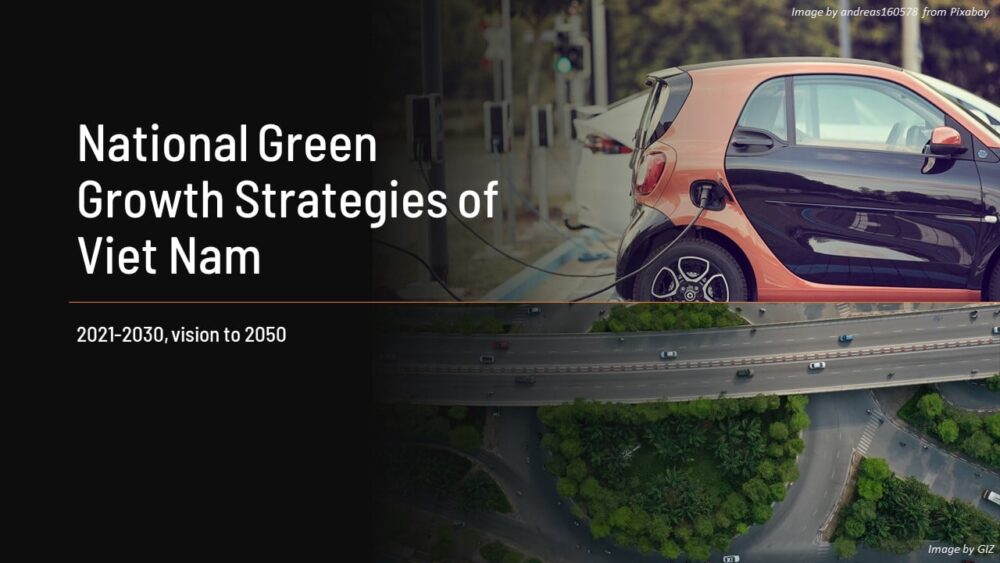
Photo by by andreas160578 Pixabay
The Vietnamese Green Growth Program is concretized through the “National Strategy for the period 2011 to 2020 and vision to 2050.” To ensure sustainable development and green growth, the Government is determined to promote the widespread application of environmentally friendly production processes. Furthermore, authorities want to improve the efficiency in the utilization of national resources, reducing emissions and limiting the increase in pollution.
If the strategy goes as planned, human health and sustainable economic development will be simultaneously guaranteed. Vietnam aims to build a civilized, harmonious, and climate-friendly consumer culture through the gradual implementation of eco-labeling, green shopping, and market development for ecological products.
State of development policy
One of the most noteworthy legal documents on green growth is Resolution No. 24-NQ/TW of the Party Central Committee on a proactive response to climate change. The Resolution strengthens resource management and environmental protection, with the focus on promoting the transformation of the growth model associated with economic restructuring.
This proposal has set the stage for a series of adjustments, amendments, and supplements to green-growth-related laws. With support from the Ministry of Planning and Investment, many ministries and localities have developed and implemented their Green Growth Action Plans. Additionally, several cities have become typical models of green economic development: Da Lat, Hoi An, Hai Phong, and Ha Long.
Before that, the government has enforced the national strategy on green growth in phases. For example, Decision 1393/ QD-TTg in 2012 approving a program on ecological development for the 2011 to 2020 period with a vision to 2050 suggests 17 solutions to a more sustainable economy. Proposed resolutions include technological innovation, ecological urbanization, international cooperation to promote technology transfer, and human resource development, among others. In 2021, the decision was substituted by Decision 1658/ QD-TTg for the same period.
Vietnam also finalized and approved its green growth program before the 2021 United Nations Climate Change Conference (COP26). At COP26, Vietnam showed its commitment to achieve “zero net emissions" by 2050, reduce methane emissions by 30 percent by 2023, and gradually eliminate coal power during the 2030 to 2040 period. To accomplish set targets, the Vietnamese government must accelerate its Green Growth Strategy and concretize contents in the Green Growth Action Plan following its affirmations.
Evidently, efforts toward a more environmentally friendly economic growth in Vietnam have become more comprehensive in the past few years. Today, green development in Vietnam has been applied to a wide range of socio-economic aspects such as manufacturing, energy, technology, architecture, and so forth.
Current state of Vietnam green growth
Achieved results
After nearly ten years of implementing the Green Growth Strategy, the awareness of Vietnamese people about the importance of an ecological economy has been raised remarkably. Hence, Vietnam’s society has been gradually changing its manufacturing and living behaviors. Furthermore, safe and civilized production and consumption models appeared, imbued with the national identity and friendly with nature.
Photo by VietNam News
In addition, measures to actualize green growth goals have brought about outstanding results: 08 ministries, as well as 34 central-affiliated cities and provinces, have issued action plans to execute new development. Among those programs, much content has been thoroughly studied and integrated into resolutions, laws, decrees, and circulars of the Party, National Assembly, and ministries.
Along with that, some of the main goals of the strategy for the 2011 to 2020 period have received positive results. To exemplify, solutions to reduce greenhouse gas emissions have been widely deployed in all fields.
Statistically, greenhouse gas emissions in energy activities decreased by 12.9 percent compared to the normal development plan. Also, energy consumption as a percentage of GDP fell by 1.8 percent per year on average. Plus, the percentage of industrial enterprises with awareness of resource-efficient has grown from 28 percent in 2010 to 46.9 percent in 2020. On top of that, climate-friendly production activities ensuring natural capital investment and development as well as active pollution prevention and treatment also received enormously more attention. Since awareness of green growth has been raised, the government attracted a wave of green investment in fields such as wind energy, solar energy, and garbage power.
Some challenges
Beside bright spots in green growth achievements, the transformation of the economy towards new development also faces some difficulties. One of the challenges is the unclear policy mechanism, especially in finance, lacking appeal to the private sector while public investment capital is still limited. Plus, while green growth is now interested by many localities and applied in many businesses, its importance is still not as appreciated as that of economic growth.
Despite some current remaining issues, the government has been directing the implementation of national and local green growth programs, prioritizing energy transformation to fulfill Vietnam's commitment to COP26.
Converting the traditional economic model to a green economy is a trend that many countries around the world are aiming for. Vietnam is setting many priorities to actualize this new development and hence needs to attract investment capital for sustainable development projects.
To learn more about opportunities and challenges investing in Vietnam's new growth model, contact Viettonkin Consulting now via our website. With our deep knowledge of the Vietnamese economy and geography, Viettonkin can provide you with insights into this novel and promising field for your decision process.
Agricultural products are a major export industry in Vietnam, contributing significantly to the country's entire export turnover. Despite the difficult condition caused by the Covid-19 pandemic, Vietnamese farmers continue to do their utmost to provide agricultural products to the global market.
Overview of agricultural product exports
General situation of agricultural product exports
Photo by fistenet.gov.vn
According to the Ministry of Agriculture and Rural Development (MARD), agricultural, forestry, and fisheries export turnover was assessed at almost 17.9 billion USD in the first four months of the year, up 15.6 percent over the same period the previous year.
Coffee, rice, vegetables, shrimp, and wood products were among the five product groupings with export values exceeding one billion USD in the first four months of the year. Coffee, rubber, pepper, cassava and cassava products, pangasius, shrimp, wood, and wood products all had increased export values compared to the same period the previous year.
Specifically, coffee export value reached nearly 1.7 billion USD (up 59.4 percent); rubber reached about USD 869 million (up 10.9 percent); pepper about 367 million USD (up 29.6 percent). Cassava and cassava products reached USD 574 million (up 29.5 percent). Meanwhile, timber and wood products reached nearly 5.5 billion USD (up 4.5 percent). Rattan, bamboo, and sedge mats reached 339 million USD (up 22.7 percent).
Agricultural export markets
In terms of export markets, Asia accounted for 41.0 percent of the market share, followed by the Americas at 29.7 percent, Europe at 12.8 percent, Africa at 1.8 percent, and Oceania at 1.7 percent.
Vietnam has earned almost 4.9 billion USD in the US market through the export of agricultural, forestry, and fisheries goods, and this market accounts for 27.3 percent of the Vietnamese agricultural export market share. The export turnover of wood and wood products, in particular, accounted for 68.2 percent of Vietnam's agriculture, forestry, and fisheries export turnover to the US market.
China is the second-largest market for rubber-based agro-forestry-fishery products in the world, with an export value of over 3.2 billion USD (accounting for 18.1 percent of the market share). The third-largest market is Japan, and the fourth is the Korean market.
Opportunities for agricultural exports
Growth in world market demand
The worldwide market's demand for agricultural goods has grown. According to the OECD-FAO prediction, global agricultural product consumption would rise by an average of 1.5-3 percent each year between 2019 and 2028. Vietnamese agricultural goods sold to more than 180 markets worldwide have been well received, particularly in major markets such as the EU, the United States, and China... Many Vietnamese agricultural goods, such as coffee, rice, tea, and cashew nuts, are global leaders in exports.
Government’s policies
Furthermore, the government has implemented policies to encourage professional growth in agriculture, a transition from "agricultural production" to "agricultural economy," create large-scale agriculture, and sustainable agriculture are being developed on a broad scale in order to improve agricultural product quality. The Ministry of Agriculture and Rural Development (MARD) is currently developing a program targeting specific agricultural production areas, such as Quang Ninh Province and Can Tho City.
Development of science and technology
The advancement of science and technology, as well as the wave of the 4.0 technological revolution, provide several chances to assist the agriculture business in improving its competitiveness and meeting the rising demands of export markets. The most visible uses of the 4.0 technological revolution, such as digital technology (AI, Bigdata, Internet of Things IoT, Remote sensing technology...), efficiently cut costs while increasing quality and productivity. The advancement of technology 4.0 has boosted online commerce marketing efforts. According to Ministry of Industry and Trade (MIT) research, online trade promotion activities have assisted Vietnamese exporters in saving trade promotion expenditures while maintaining and creating solid connections with overseas partners all over the world.
Support of trade agreements
Vietnam has ratified 17 Free Trade Agreements so far, the most notable of which are the European Union–Vietnam Free Trade Agreement (EVFTA), Comprehensive and Progressive Agreement for Trans-Pacific Partnership (CPTPP), and Regional Comprehensive Economic Partnership (RCEP). The unifying goal of these generation FTAs is to open up new export markets, allowing Vietnamese agricultural goods to have greater access to the global market. Tariff incentives assist to lessen price competitiveness while exporting while also facing increased rivalry in the home market. In addition to tariff agreements, commitments to the business and investment environment were acknowledged. Vietnam and its FTA partners both declare the application of essential principles such as non-discrimination between local and international investors, as well as the absence of specific measures. influencing investors, etc. Furthermore, Vietnam is extending the areas in which FTA partners can invest and do business in Vietnam.
Challenges for agricultural product exports
Competition due to international economic
International economic integration fosters fierce rivalry in both domestic and international markets. FTAs also face significant competition in both export and domestic markets. Sugar cane, livestock products, raw materials for animal feed, and other commodities with minimal competitive advantages would face significant competition from imported items.
Variations in global market demand
Market demands are changing, and quality standards are becoming more stringent. Energy-saving and environmentally friendly items are becoming more popular on the market. This is also a significant impediment to the export of Vietnamese agricultural, forestry, and fishing goods. Despite the fact that the system of traceability and exploitation management has not been fully established, many new agricultural companies are being renovated to integrate with the world.
Logistics system underdevelopment
Vietnam's logistics costs remain high, accounting for 13 percent of the cost of seafood, 23 percent of the cost of furniture, 29 percent of the cost of vegetables, and 30 percent of the cost of rice. Vietnam's transportation infrastructure is outdated, and no national gateway port system has been defined. The warehousing system and cold supply chain are still restricted and ineffective. Infrastructure and logistical services for border commerce are limited, warehousing is simple, logistics services supporting cross-border import and export are basic, and Vietnamese agricultural goods have yet to gain additional value.
Variations in country export policy
Changes in nations' import policies will have a significant impact on agricultural product exports. The United States has launched many anti-dumping tax charges against Vietnamese shrimp and pangasius goods in recent years. Alternatively, the EU applies for a "yellow card" to Vietnam's seafood imports into the EU; a change in China's border trade management policy creates difficulties for exporting agricultural products in Vietnam.
Negative impacts of climate change and disease
Natural catastrophes and epidemics have long posed several difficulties and challenges to the agricultural business, influencing the production and trading of agroforestry-fishery goods. The recent emergence of acute respiratory illnesses caused by a novel strain of Covid-19 has hampered developments and significantly impacted all socioeconomic activities and the commercial situation in agricultural export in Vietnam and global markets
Viettonkin is glad to say that we have extensive market and legal experience in exporting Vietnamese agricultural goods. Foreign investors and domestic exporters who want to import and export goods or services to other nations should contact Viettonkin right once to increase your chances of success. We are dedicated to providing the highest quality to our consumers!
According to Finder, Vietnam is one of the five countries with the highest NFT ownership rate globally, up to 17% of the population. This Southeast Asian country is also home to the most prominent NFT startups in Asia and even the world. Then should you invest in the NFT market in Vietnam?
What is NFT? Why is everyone talking about it?
To put it simply, NFTs (Non-fungible token) are digital assets that represent tangible or intangible items, built on existing or newly-created blockchain networks. They can be a digital representation of anything from artwork, songs, and game items to real estate or hotel reservations. Unlike cryptocurrencies with fungible features, each NFT has a different encoding, rendering its denomination dependent on the limit and uniqueness of each item.
For example, you spend some money to buy a new piece of artwork from an artist in the form of NFT. Immediately, you will receive a certificate file approving that you and only you now have the ownership to this digital work. You have the full rights to use this NFT and may resell it for a price you consider appropriate, just like a standard physical artwork.
Although NFTs have been around since 2014, along with the development of blockchain and cryptocurrencies, it is only in the last few years that this type of digital asset has exploded in popularity, especially in the field of arts and entertainment. Recently, the NFT market has witnessed the participation of many artists from various fields, from amateur to professional, and a variety of high-value digital works. In particular, the NFT work named Everydays: The First 5000 Days by American digital artist Beeple was sold for $69.3 million in 2021. At the same time, the market also has the participation of many "big names" in the technology industry and many prominent fashion and sports brands such as Adidas, Gucci, and Louis Vuitton.
The rise of NFT in Vietnam
Despite its status as a developing country, Vietnam's NFT trading sector remains active and catches up to other countries in the region. With the release of the global success NFT game Axie Infinity, the Vietnam NFT market gradually expanded into other fields like art, entertainment, real estate, and tourism.
Axie Infinity is a Vietnamese NFT game developed by Sky Mavis, a game studio based in Ho Chi Minh City in 2018. According to CryptoSlam, this game has become the first NFT series to reach $4 billion in revenue, and the total Axie Infinity market capitalization is now approximately $1.4 billion. In simple terms, Axie Infinity players will buy NFTs of adorable creatures and then put them against one another in combat. During gaming, players may earn tokens that can be traded for fiat money on an exchange.
In addition to games, a few Vietnamese artists have also uploaded their works on NFT platforms and reaped substantial profits.
This song's copyright is split into NFTs with four distinct classes, corresponding to four different revenue copyright share rates. Musician Nguyen Van Chung has also applied a similar revenue-sharing form through NFT to his 200,000-subscribed Youtube channel.
Several other industries also have their own projects and plans on NFT. In addition to NFT projects to partition real estate for joint purchase, the tourism sector has established an NFT travel platform named Crystabaya that allows users to buy, sell, and trade bookings.
Although NFT projects have only proliferated recently, and many are still in the developing phase, the NFT trading market in Vietnam has been very active as a significant number of people participate in NFT gaming. Along with that, several people are spending money to acquire NFT items and sell them for a profit.
Opportunities and challenges of NFT market in Vietnam
Opportunities
Blockchain is a priority technology area: In Decision No. 2117 of the Prime Minister of Vietnam in 2020, blockchain technology (the basis of NFT) is one of the sectors on the priority list of research, development, and application. On May 17, the Vietnam Blockchain Union was established as the first formal legal body specialising in blockchain technology.
Lots of room for development: Vietnam has seven firms among the top 200 blockchain companies in the world. In particular, Vietnam is in the midst of a digital transformation process, and some technologies, such as blockchain and NFTs, will offer a good start for the future process if applied early on.
Many potential NFT projects: Billions of dollars have been raised and profited through blockchain-based games like Axie Infinity and finance apps like Coin98 Finance. Along with that, a series of projects and NFT exchanges are being planned and developed in the Vietnamese market, attracting many foreign investors.
Challenges
No specific laws and regulations on NFTs and cryptocurrencies yet: Despite being a priority field, there are presently few, if any, laws or regulations governing blockchain and NFT in Vietnam. All NFT trading actions are not legally protected, and you must bear all consequences if there is a problem.
Pump and dump schemes in some NFT projects: With the weak regulatory framework in Vietnam and the easy creation of NFTs, multiple NFTs can be created just to trade back and forth between certain wallets to create artificial value and solely generate profits for their creators.
Lack of infrastructure and human resources: According to the report of Navigos Group, Vietnam lacks an abundance of high-credential blockchain professionals. Furthermore, organizations are increasingly focused on application development, implying a restriction in infrastructure for developing blockchain projects. This can create barriers to market growth as well as increase the danger of cyber attacks.
Should you invest in the Vietnam NFT market?
According to a recent analysis by the Markets and Markets research organization, blockchain-related businesses in Vietnam are predicted to reach approximately $2.5 billion by 2026, more than five times the value in 2021. This demonstrates, in part, the immense growth potential of the cryptocurrency and NFTs sectors in Vietnam.
Moreover, a survey conducted in Southeast Asia by Statista and Milieu (November 2021) has pointed out that 68 percent of Vietnamese respondents expect the value of NFTs would improve in the next five years. This is also the most optimistic figure among the six nations studied, including Indonesia, the Philippines, Thailand, Malaysia, and Singapore.
With the growing demand for NFTs and the development of many potential blockchain projects, Vietnam is an attractive location for you to invest in NFTs, especially in the long term. Along with it, government backing is a driving factor for stable and long-term growth in this sector.
However, to invest in an area not yet protected by the law, you must also prepare yourself with a good understanding of how blockchain works, as well as the local cryptocurrency and NFT markets. From there, make investment plans and scenarios suitable for your financial ability and risk appetite.
Some of the most potential Vietnam NFT projects in 2022
Aura Network
Aura Network is an NFT-specific blockchain technology platform built on the Cosmos ecosystem. Aura Network offers an open system, improves NFT interoperability across various blockchain ecosystems, and builds an infrastructure layer that integrates NFT into Metaverse.
Aura Network has recently received funding with a capital flow of 2.5 million USD in a seed round with the involvement of various well-known blockchain investment funds.
ASPO World
ASPO World is a blockchain-based startup that develops tactical mind games, and it has introduced players to a world of 3D graphics with a character system based on the Japanese style.
This NFT game development startup has raised investment capital of up to 3.5 million USD after more than four months of project implementation. The ASPO token trade volume has hit approximately 24 million USD (according to CoinMarketCap figures) just one day after its initial listing. The total trading volume is expected to have exceeded $1 billion.
Poriverse
Similar to ASPO World, Poriverse is an NFT game development startup that belongs to the play-to-earn game model that allows users to play games for money. A unique feature of Poriverse is that game players are allowed to rent or borrow NFT (characters, in-game items) to join the game instead of spending a large amount of up-front money to make the first purchase like in other games. All these transactions are done publicly and are secured by blockchain technology.
In March 2022, Poriverse just announced the establishment of a strategic partnership with the branch of Polygon (MATIC), one of the world's leading Blockchain platforms. Previously, this game has raised $600,000 from global investors.
To summarize, NFTs and Blockchain are relatively new areas in Vietnam, yet they offer significant development potential and investment prospects. If you still have questions regarding the NFTs market, contact Viettonkin for the most up-to-date and reliable information. Viettonkin and our team of specialists have over 12 years of expertise in the sectors of investment and business consulting. Contact us now.
Vietnam views investing in infrastructure development as the key to a sustainable socio-economic growth. Despite certain challenges hindering the development of infrastructure, Vietnam has taken substantial measures and is seeking more private investment to stimulate its growth.
Vietnam Government gives top priority to infrastructure development
After more than two decades since the launch of Doi Moi, Vietnam has entered the stage of development which requires more strategic investments in infrastructure.
Over the past decade, the Vietnam Government has put considerable effort into improving infrastructure. They stressed that infrastructure played an important role in Vietnam’s development strategy. According to automatic data processing, in 2019, Vietnam spent about 5,7% of GDP on infrastructure. This number surged to 6% by 2020.
For strategic planning in the 2016-2020 period, the Government allocated VND 2,000 trillion (US$87 billion) for investment to over 1,100 projects, nearly half of the number of the previous five years. During this period, the average disbursement rate was estimated at 83.4%, the highest being 97.46% in 2020.
Indeed, the close relation between infrastructure investment and economic growth has always been top of mind for the Government, especially as Vietnam is among emerging nations in the world. In addition, developing public and transport infrastructure is one essential step of Vietnam to build smart cities and smart urban areas in the future.
While investment is always important in infrastructure development, the efficiency cannot be overlooked. The recent years have seen several major problems in the planning and execution of some large-scale projects in Vietnam, that led to prolonged delays and cost overrun. Therefore, Vietnam is seeking more foreign investment in the infrastructure and construction industry.
A large-scale project faces prolonged delays
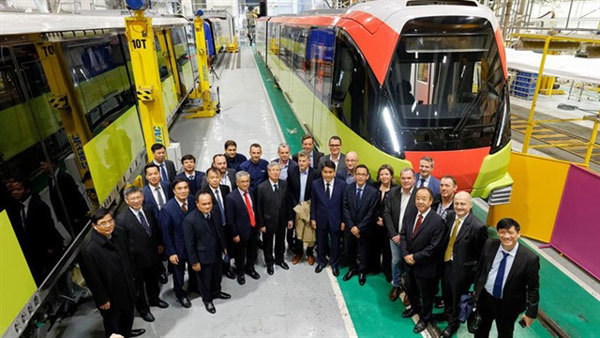
Hanoi's second metro line known as Nhon - Hanoi Station metro line has been Hanoi’s ambitious metro strategy for the past 13 years. The Project will establish an integrated sustainable public transport system in six districts of Ha Noi by constructing 12.5 kilometers of a dual track rail metro line from Nhon to Hanoi railway station. Notably it includes a combination of elevated and underground sections. The route passes through eight elevated and four underground stations.
Nhon-Hanoi metro line - an important infrastructure project in the city development
Once completed, the Nhon - Hanoi Station metro line will facilitate public transport connectivity, enhance access in six big districts in Hanoi, and be an important integral part of an advanced public transport system of Vietnam.
Despite its significance, the project has been delayed four times since it was approved in 2006. First, the project was expected to finish in 2010. However, until December 2022, only about 95% of the elevated section has been accomplished. Meanwhile, the underground section is still under construction with only 33% accomplished. While the elevated section is expected to be put into commercial operation in December 2022, the implementation of the underground section was delayed by nearly a year.
There are several factors that hampered the project’s progress. Among these are land clearance, the impacts of Covid-19 pandemic, inappropriate policies and conflicts with international contractors over extended contracts and increased costs.
The Government is well aware of the impact of an extended infrastructure project on socio-economic growth. Therefore, recently they have actively responded to all problems of this project.
On August 13, 2021, the Hanoi People's Committee decided to establish an inter-agency task force group to strengthen their coordination and handle difficult issues during implementing the project in order to speed up the progress of the Nhon - Hanoi Station metro line.
Most of the issues under Hanoi’s jurisdiction have been resolved. For instance, Ba Dinh and Dong Da district have been resolving land clearance issues. Other issues outside the city’s authority have been handled by the national task force group formed by Prime Minister Pham Minh Chinh.
Effort to combat constraints
On the one hand, the Government attributed the extended progress to poor master planning and project design, lack of capability in site management and supervision, financial difficulties and even inappropriate policies.
On the other hand, they also acknowledged that this situation might hinder Vietnam from further growth in the future. Therefore, in recent years, Vietnam has taken considerable measures to promote infrastructure development.
For instance, on June 18, 2020, the National Assembly of Vietnam passed the new Law on Public-Private Partnership (PPP) replacing its previous version under Decree 63. Taking effect on June 1, 2021, the law aimed to establish an umbrella legal framework for all PPP projects and attract more private investment to the development of Vietnam’s infrastructure.
The appeal of this law stems from government support, government guarantees and investment incentives. The government support can come in many forms such as support for the construction of works and infrastructure systems for a PPP project; payment for land clearance, compensation and resettlement. In addition, investment incentives include tax incentives, rights to mortgage project assets, rights to utilize public services, rights relating to the purchase of foreign currency and foreign currency balancing, etc.
In the post-pandemic period, the Government views public infrastructure as an economic driver that can help overcome the pandemic's negative effects. Promoting infrastructure development can be the key to fast track economy recovery. Therefore, they have taken immediate action to eliminate impediments during implementing infrastructure projects.
Pham Minh Chinh, Prime Minister of Vietnam, has approved Decision No.548 to establish six task force groups to urge Government agencies and localities to accelerate infrastructure progress. The task force groups' responsibilities include identifying bottlenecks and difficulties of major projects and proposing measures to improve state capital management efficiency.
Furthermore, the National Assembly issued Resolution No.43/2022/QH15 in early 2022. The Resolution authorized monetary and fiscal support programs worth a combined total of VND350 trillion (US$15.4 billion) to aid socio-economic recovery and adaptation to the new normal. It will take effect in the 2022-2023 period.
Together with the Resolution No.43, the Prime Minister also sent a directive No.126/CD-TTg to ministers and leaders in provinces and cities. The directive aimed to urge them to ensure swift and effective implementation of that US$15.4 billion socio-economic recovery program.
“The goal would be to fully disburse 100% of the allocated funds in 2022 with high quality and efficiency,” stated the directive. There would also be strict punishment for a suspended infringement during the disbursement of public funds.
In addition, the Government also asked certain agencies to support businesses to attract more private investment. For instance, the Finance Ministry has reduced value-added tax for businesses. The State Bank of Vietnam (SBV), the country’s central bank, is drafting a decree on subsidizing loan rates for businesses and households.
All of these above actions demonstrate Vietnam’s significant effort to prevent and eliminate impediments which cause a delay in capital allocation, implementation, and disbursement.
Undeniably, the significant investment and effort from the Government has yet to unlock all potentials of Vietnam’s public infrastructure. The development of this sector is still in the nascent phase. Due to Vietnam’s integration into the world market, the Government will pay more and more attention to infrastructure and create more favorable conditions to attract domestic and foreign investment. With insightful knowledge about the state of development regarding infrastructure and its related policies, Viettonkin can give you valuable guidance to make wise investment opportunities.
Esports in Vietnam are gradually demonstrating that it is more than just video games by contributing in the development of a complex digital entertainment ecosystem capable of attracting long-term investors and generating billions of VND. With esports being included as a medal event in the 31st Southeast Asian Games, and the Vietnamese teams winning four gold and three silver medals, the industry is beginning to receive the attention it requires to thrive, despite long-held public opinion and limited regulations.
What is Esports?
In addition to differing opinions about the market’s boundaries, there are many definitions of the term "esports." Newzoo, one of the most trusted sources for game market insights and analytics, defines esports as “professional or semi-professional competitive gaming in an organized format (tournament or league) with a specific goal/prize, such as winning a championship title or prize money.” With this definition, esports market sizing will only include revenues and viewership from professional competitive gaming content.
Esports industry. Photo Credit: Newzoo
Esports has become mainstream, with its own superstars and leagues, celebrity athletes and owners, and tournaments that sell out stadiums around the world and award millions of dollars in prize money. Although it will be some time before esports is included in the Olympics, Asia has taken the lead in recognizing esports as a sport, with esports being introduced as an exhibition event at the Asian Games 2018 in Jakarta and as a medal sport at the SEA Games 2019 in Manila.
As the esports industry gains popularity, especially in Vietnam, we also see the development of other relevant industries, such as event organizing, streaming, content creation, and so on. They have aided in the development of a complex digital entertainment ecosystem in Vietnam, which has the potential to attract long-term investors and generate billions of VND.
The Esports Scene in Vietnam
Despite the fact that it is still a nascent industry that just went through a devastating period due to Covid-19, esports in Vietnam has a promising future with positive figures on active players, viewers, prize pools, and so on.
Data from the Vietnam eSports Guidebook 2021 indicates that the number of domestic players has risen to nearly 18 million in 2020. Smartphones have surpassed PCs/Laptops as the most popular eSports devices in the Vietnamese community, accounting for 58.3% of the total.
Popular devices used by esports players in Vietnam
Officially released by the Vietnam Recreational and Electronic Sports Association (VIRESA), this “whitebook” aims to become a guideline for investors and businesses to have a better understanding of the Vietnamese esports industry, enabling them to foster the digital games industry in the future.
Of the nearly 18 million esports players in Vietnam, Gen Z players (age 13 to 22) make up 75.8%. Despite not having stable incomes, they are willing to spend on eSports at a rate of 51-57%. This is not a bad number when compared to the Millennials (64%), implying that the potential for revenue generation from Gen Z is enormous in the future.
Percentage of players who have spent money on eSports by age group
Although no eSports investor has yet announced sales in the Vietnamese market, with an estimated 26 million viewers, the increasing demand for entertainment is creating conditions for content creators, media channels, and eSports event organizers to enter the market. Streamers, content creators, casters/commentators, and professional players (pro-players) are emerging, with their personal accounts being followed by hundreds of thousands, making eSports a very effective brand promotion channel in Vietnam.
The total prize pool for eSports in Vietnam has reached $4 million USD as of December 2020. This is an impressive figure considering Vietnam has only recently entered the esports industry.
Total esports prize pool from Southeast Asian countries as of 12/2020 (Unit: Million USD)
Also, according to the whitebook, esports in Vietnam thrived in 2020 and became a form of entertainment mainly due to the Covid-19 outbreak. Specifically, during the social distancing period, 80 percent of players said they spent more time on esports, with 52.5 percent of them playing games daily for an average of 2 hours and 55 minutes. Broadcasting platforms in Vietnam saw an unexpected increase in esports content, with the number of views on Facebook Gaming increasing by 81.37%. The amount of interaction and coverage increased by 50% and 79.6%,
Number of hours Vietnamese players spend on esports every day
Furthermore, seeing Vietnamese players compete in the global esports arena has captured the attention of many Vietnamese people, particularly the young. In October 2020, when the COVID-19 epidemic was still hindering the organization of many domestic and international tournaments, many Vietnamese and viewers around the world were watching and cheering for the inspiring journey of Vietnamese prodigy Le Quang Duy at the 2020 League of Legends (LoL) World Championship. With an aggressive and eye-catching playstyle, Duy, known internationally as "Style of Me" or SofM, helped his team Suning reach their first LoL Worlds Finals. This also marks the first time a Vietnamese player has ever reached the final round of this prestigious tournament.
At the time, SofM's annual salary from Suning was around 20 million yuan, or about 5.8 billion VND per month. Despite not being able to return home as champions, SofM and his teammates' heroic journey will be remembered for a long time as an inspirational story of the young generation conquering the world. The interest and love of Vietnamese people for esports will continue to increase thanks to the continuous efforts of the national teams over the years. Moreover, with esports being included as a medal event in the 31st Southeast Asian Games, and the Vietnamese teams winning four gold and three silver medals, the industry is beginning to receive the attention it requires to thrive, despite long-held public opinion and limited regulations.
Obstacles to the development of esports in Vietnam
Social norms
Despite being gradually recognized by national and regional organizations, the majority of the Vietnamese population still does not take esports seriously. Because the majority of esports players begin their careers at a young age, many parents misinterpret their children's passion and dismiss video games and esports as "useless entertainment." Meanwhile, esports players continue to become a popular profession in many developed countries, bringing fame and fortune to those who are now idols to many.
The profession also faces other challenges in Vietnam, including low average wages, short career lengths, and a fiercely competitive environment. As a result, Vietnam will need a strong socialization strategy in order for esports to gain widespread acceptance. Only then will the "gamer" profession be supported and pursued, allowing esports to flourish in Vietnam.
Legal barriers
From an economic standpoint, Mr. Nguyen Quang Dong, Director of the Institute for Policy Research and Media Development, stated, "A strong push from the policy and regulatory environment promises to transform digital sports into a key industry in Vietnam's digital economy, during and after the Covid-19 epidemic."
According to the Vietnam eSports Guidebook 2021, in order to create a more favorable environment for esports to thrive, management agencies need to facilitate 4 issues, including: content control; licensing issues; better protection of intellectual property rights; and industry cooperation contracts.
Currently, the legal basis for eSports content (managed by the Ministry of Information and Communications) and eSports licensing issues (managed by VIRESA) are being handled well. However, the criteria in the industry's legal documents will need to be completed and concretized. Roles, responsibilities, and communication channels for e-sports content management must also be defined.
In terms of intellectual property rights, video game software, performances, sound recordings, video recordings, and broadcasts on OTT platforms (YouTube, Facebook, etc.) are all protected, but the gameplay of video games is not. There are no specific rules for eSports content creators or players. This necessitates an amendment to the Intellectual Property Law.
Investment Opportunities
Esports has already become a massive industry in some countries, contributing to $1 billion in global revenue. However, in Vietnam, esports is still at its early stage of development. Under the impacts of the Covid-19 pandemic, new industries such as video games and e-sports are expected to become "lifesavers" for the economy, and businesses. Vietnam, with its young population and developing Internet infrastructure, will be a fertile and potential land for these new industries to thrive.
Currently, investors looking to invest in esports in Vietnam can consider the following options:
Investing in esports teams or organizations
Investing or sponsoring in an esports team is no longer an unfamiliar concept in Vietnam. We have already seen the success of many teams invested by foreign organizations, such as EVOS Esports (Indonesia), Team Flash, Impunity eSports (Singapore), and GAM Esports. It is possible to start a new organization from the ground up. However, building a brand will be too difficult, and investors will have to devote a significant amount of time and effort to finding, recruiting, and training talent. As a result, in Vietnam, investing in a pre-existing organization is the best option.
In the summer of 2021, CMG.ASIA and NRG Esports, an American professional esports organization, announced the acquisition of GAM Esports, a powerhouse in Vietnam's highest level League of Legends tournament. Under the management of a new owner, GAM Esports was crowned champions of the VCS 2022 Spring Playoffs, claiming the 400 million VND prize, and then proceeded to win the gold medal for Vietnam in the 31st SEA Games with an unbeatable 10-0 record.
This successful investment decision by NRG is expected to pave the way for foreign investors with deep pockets to enter the Vietnamese esports market and provide opportunities for the country's young talent.
Investing in the development of esport games
It's difficult enough to create an enjoyable video game, let alone turn it into an esports title that attracts a lot of sponsors and has spawned a slew of national and regional tournaments. To compete against other international studios that develop and publish games, the game will need a lot of selling points and trending content. However, this is not entirely impossible.
At the end of 2017, Free Fire was released by 111dots Studio, a small game studio in Vietnam. The game was later acquired by Garena, which gave it a spectacular makeover and helped it become a worldwide sensation. As the leading distributor of online games in Vietnam today, Garena helped Free Fire reach over 1 billion downloads on Google Play (as of 2021) and over 100 million downloads on the App Store, making it the most popular mobile battle royale game. In 2021, Free Fire reached 1.23 billion hours watched across Twitch, YouTube Gaming, and Facebook Gaming, and generated 1.1 billion USD in revenue.
Investors can also try to form a partnership with well-established industry stakeholders to benefit from their market advantages. For example, Appota offers a variety of solutions for game developers, esports organizations, and gaming communities, aiming to innovate the Vietnam esports ecosystem. VIRESA, on the other hand, focuses on establishing competition rules and official regulations for esports, as well as establishing regulations for national eSports tournament systems and training.
Conclusion
Despite ongoing challenges, Vietnam presents significant opportunities for the future development of eSports in digital entertainment as a vibrant country that ranks second only to Singapore in terms of market dynamics in Southeast Asia. It takes meticulousness and care in investment for any capital to be placed in the right place at the right time, creating the right environment for Vietnamese talents and the development of the esports industry. For more detailed insights on the industry and current trends, feel free to contact Viettonkin, the leading consulting firm and business consultant in Vietnam.
Vietnam has the potential to develop electric vehicles, but there are still concerns about the infrastructure, standards for electric vehicles, the safety of electricity and batteries during use. 3 scenarios of electrification in traffic
Online seminar: "The future of electric vehicle development in Vietnam" has just taken place, Dr. Nguyen Quoc Khanh, energy expert, representative of the research group "Electric vehicle development: Trend forecast and implications for Vietnam", in the period 2010-2019, the number of passengers in circulation increased by 9%/year. In the period 2014-2020, each year, on average, 5.14 million motorbikes, 255,000 cars and 250,000 electric motorbikes are newly registered,
Of which, traffic energy consumption accounted for 21.4% of total national consumption in 2014, an increase of 4.9% in the period 2014-2019, faster than the growth rate of the whole industry at 3.4%. Total emissions were 33.2 million tons, accounting for 19.3% of emissions from the energy sector.
"However, in the traffic development planning and strategy, it only regulates the infrastructure, without viewingthe means of transport," said Dr. Nguyen Quoc Khanh. For the electrification scenario in traffic, Mr. Khanh said that there are 3 main scenarios: the base scenario, the medium development scenario and the high scenario.
Under the base scenario, the penetration of electric vehicles will be low, mainly electric motorbikes, the proportion of electric motorbikes will account for 18% of new motorbikes sold in 2030 and 40% in 2050.
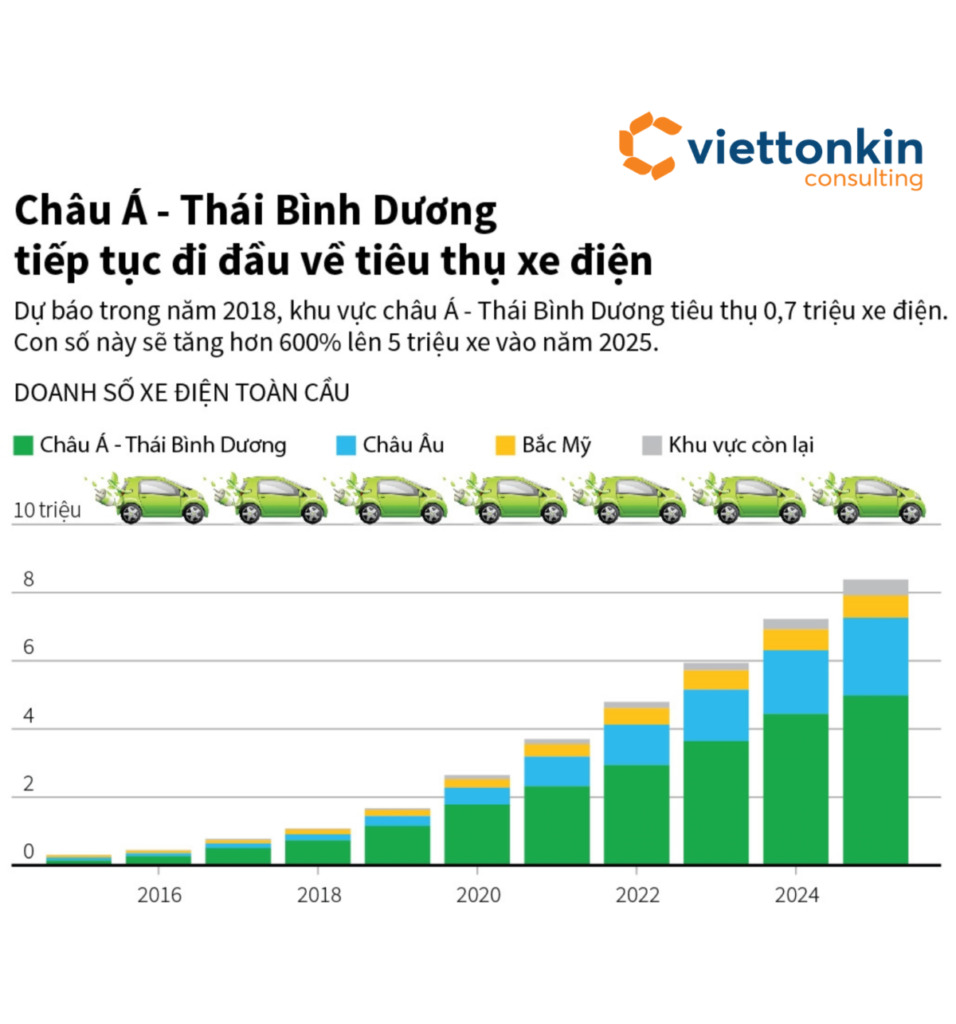
2018 sales and market forecast for the next years
In the medium development scenario, the proportion of electric motorbikes will account for 34% of new motorbikes sold in 2030 and 65% in 2050. Electric cars will account for 30% of new cars sold in 2030.
In the high scenario, electric vehicles will account for 72% of new vehicles sold by 2030, 100% by 2050; cars will account for 30% by 2030, 70% by 2050; buses account for 10% by 2030, 30% by 2050; pickup trucks, light and medium-duty trucks account for 5% by 2030 and 30% by 2050.
The demand for electricity in the near future is really huge
Also according to the analysis of Dr. Nguyen Quoc Khanh, with scenario 2, the electricity demand in 2030 in the transport sector is about 3.99 billion kWh, equivalent to the electricity output of half of Hoa Binh Hydropower Plant; by 2050, it is 17.57 billion kWh, equivalent to 2 Hoa Binh hydropower plants
With scenario 3, the electricity demand for the transport industry is about 8.48 billion kWh by 2030, equivalent to Hoa Binh Hydropower Plant; this number increases to 71.87 billion kWh by 2050, equivalent to 10 Hoa Binh Hydropower plants. Regarding the results of greenhouse gas emissions, according to the research team's calculations, with scenario 2, greenhouse gas emissions will be reduced by 1.8% by 2030 and 4.7% by 2050 if the power source structure as in the Electricity Master Plan VIII remains the same. Scenario 3 will reduce greenhouse gas emissions by 3.3% by 2030 and 13.6% by 2050 if the power source structure as in Electricity Master Plan VIII remains the same.
Speaking of infrastructure for electric vehicles, according to Dr. Nguyen Duc Tuyen (University of Science and Technology), currently, apart from 200 charging stations of Vinfast, Vietnam has almost no infrastructure for electric vehicle development; Vietnam's standards for the development of this type of vehicle are neither available nor consistent.
To have a basis to promote the development of electric vehicles in Vietnam, Mr. Tuyen said, it is necessary to complete technical standards, such as technical requirements and electrical safety with a fast charging, battery and accumulator replacing system...At the same time, optimizing charging stations and battery charging locations by using clean power sources, renewable energy, and managing grid capacity balance.
"Besides, there should be policies to directly support the vehicle purchase price, tax, charging costs, and installation of home charging stations, high tax on emissions. Even, it is necessary to have a dedicated area for electric vehicles, like for current BRT vehicles", Mr. Tuyen said.
A few years ago, electric cars were still quite a strange concept, now it is considered a new wave in the future car market. Startups and private companies in Vietnam are driving the growth and adoption of electric vehicles through a variety of solutions.
At the end of August, VinFast and Gotion High-Tech Co., Ltd. (China) - one of the world's leading names in the field of clean energy - signed a Memorandum of Understanding. The focus of agreement is LFP batteries supply project and study the plan to build the first Giga factory to produce LFP battery cells (Lithium Iron Phosphate) in Vietnam.
Under the agreement, VinFast and Gotion High-Tech will jointly research, develop and produce LFP batteries. LFP batteries are currently the most popular battery technology in the global electric vehicle market, with outstanding points in safety, long life, without rare materials, limited supply, or being exploited under unsafety labor conditions causing environmental impacts such as cobalt, manganese, etc. In particular, LFP batteries have competitive costs, which help reduce production costs and are suitable for small and medium electric cars.
The study and construction of an LFP battery factory in Vietnam is one of VinFast's efforts to establish a clean energy ecosystem, contributing to the localization of supply, thereby promoting the development of electric vehicle market in Vietnam.
Mrs Thai Thi Thanh Hai, Vice President of Vingroup, shared that "Cooperating with Gotion High-Tech - the world's most prestigious battery manufacturer - is one of VinFast's important action plans in developing smart electric cars and self –controlling supply chain. Our common goal is to establish a clean energy ecosystem, reduce carbon emissions in Vietnam as well as contribute to this great goal in other market in which VinFast participates in business activities".
This partnership is also a big step forward in awareness and acceptance of electric vehicles in Vietnam. According to Bloomberg, the global electric car market is expected to reach more than 90 million vehicles by 2030 - and in Asia, one of the world's largest auto markets, the expansion of the electric vehicle market in Southeast Asia is very important. Currently, right in the ASEAN region, a number of countries such as Thailand and Indonesia are racing to produce, gradually changing appropriate mechanisms and policies to develop electric vehicles. Meanwhile, in Vietnam, in general, electrified vehicles are not yet popular.
According to the statistics of the Vietnam Registry, the number of electrified vehicles (hybrid, plug-in hybrid and pure electric vehicles) in Vietnam is still very small, 140 electric vehicles in 2019 and 900 vehicles in 2020 and by the end of the first quarter of 2021, there will be 600 vehicles, all of which are imported cars and almost are hybrids, electric vehicles are quite rare. This number is too small to calculate the proportion of total car sales over 300,000 vehicles.
Vietnam Auto Market
According to a report on the auto market called AutoCare Factbook 2022, the number of motorbikes in Vietnam is larger than passenger cars by an amazing ratio of 30:1 in 2020. If compared to the same period in countries having income similar to Vietnam, currently, the domestic market still consumes less cars because their cost is higher than in other countries, plus several high taxes and fees, leading to higher selling price. Therefore, motorbikes are still easier to own for Vietnamese people and suitable for conditions and traffic infrastructure in big cities.
The domestic passenger car market is growing at the rate of 18.3% per year from 2015 to 2019. With a population of nearly 100 million people and a growing middle class, more and more middle-class families are starting to buy a car, together with the popularity of shared vehicles has caused the number of vehicles in urban areas to increase rapidly. That leads to a common situation in urban centers of Vietnam: environmental pollution.
Motorcycles are still a popular means of transport in Vietnam
An IQAir survey listed Vietnam as the 15th most polluted country in the world. Along with poor road conditions and outdated urban planning, cities in Vietnam are facing a traffic crisis, resulting in high levels of air pollution and traffic congestion. To solve this problem, in reality, cities like Hanoi and Ho Chi Minh City have plan to gradually restrict and ban motorbikes by 2030. City officials also said that if the public transport system is improved, the ban could be implemented sooner. That makes the adoption and use of electric vehicles much more urgent across the country.
Opportunities and potentials for Vietnamese electric vehicle market
Although the electric vehicle market in Vietnam has not attracted much attention compared to other countries in the region and globally, this does not mean that there are no opportunities. Electric vehicles are an irreversible trend and will be the future as governments move towards clean energy and respect the environment. Vietnam is looking for way to use technology as it develops big cities into smart cities.
Electric cars meet the criteria of smart city concept as more and more people move to urban centers. Vietnam's urbanization rate is around 3% per year with the middle class is becoming increasingly wealthy and aware of their personal choices.
Vietnam's automobile industry development strategy to 2025, vision to 2035 approved by the Prime Minister in Decision No. 1168/QD-TTg dated July 16, 2014 clearly defines "Encouraging production of environmental friendly vehicles (fuel-saving cars, hybrid cars, biofuel-powered vehicles, electric vehicles...), meeting the requirements for emission standards according to the approved roadmap" and "Developing the automobile industry in sync with the development of transport infrastructure".
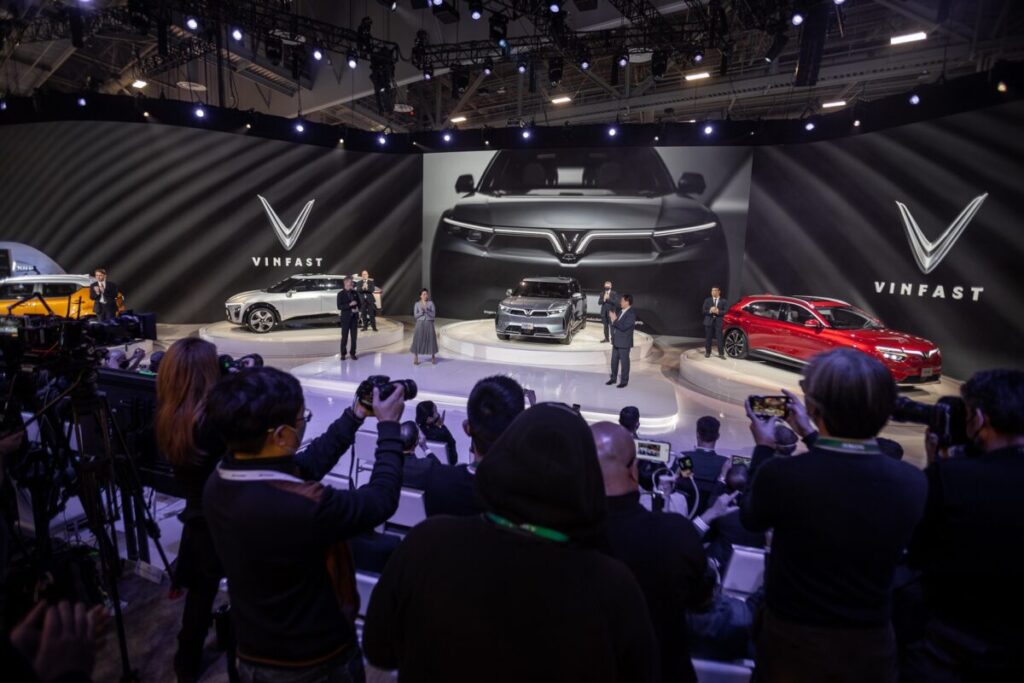
Catching this trend, enterprises manufacturing and importing cars and motorcycles such as VinFast, Mitsubishi, and Honda have begun to test, produce and launch environmental friendly vehicles such as hybrids, electric motorbikes, electric cars... go ahead and wait for the roadmap on policies and infrastructure for commercial production.
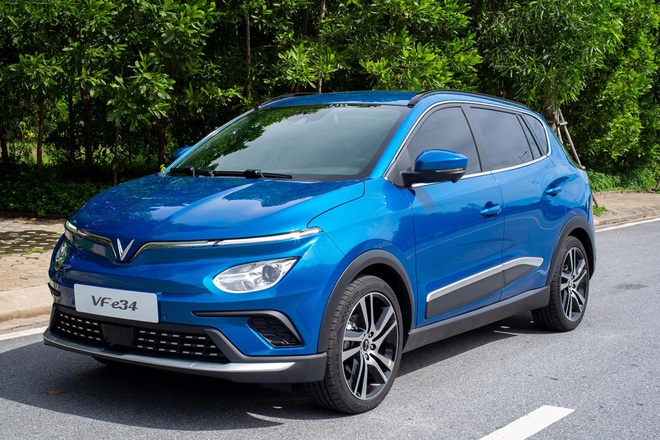
VinFast - Vietnam's first domestic automaker is gradually changing the acceptance and perception of electric vehicles in Vietnam through the launch of its first electric car model in 2021, the VF e34. This product has set a record in Vietnamese market when it received more than 25,000 deposit orders after only a short time of opening for sale. VinFast is also currently producing many models of electric motorbikes and electric buses for Vietnamese market.
In parallel with product development, VinFast also develops a system of charging stations in localities, electric vehicle battery rental workshops. These are the essential infrastructure for electric vehicles to operate. It is expected that by the end of 2021, VinFast has planned 2,121 charging station locations in 63 provinces, with more than 2,000 charging stations providing about 40,000 charging posts for car and electric motorbike for users across the country. Previously, VinFast announced plans to build from 30,000 to 50,000 charging stations.
Although, Vietnam currently does not have specific incentives for electric cars, but private enterprises have made efforts to promote this industry. Startup companies are also trying to promote electric motorbikes as the initial foray into electric vehicles for people in the country. Dat Bike, the only electric motorcycle startup recognized as "originating in Vietnam", has recently called $2.6 million in A pre-series round from a foreign fund group, led by investor Jungle Ventures. . Normally, this fund rarely pours capital into fledgling startups like Dat Bike. This is considered an "exception". The goal of this startup is to create low-cost and locally produced motorcycles having equal or higher capacity than gasoline motorcycles.
Currently, Dat Bike's first electric motorcycle model has the same capacity and distance as gasoline motorbikes. This vehicle has a 5,000 W motor and can accelerate from 0 - 50km/h in 3 seconds, 3 times higher than other electric motorcycles on the market. With a full battery charge, this vehicle can run for a distance of 100 km, twice the actual performance of other electric vehicles on the market. Without using lead batteries, this startup's vehicles use lithium ion batteries, the same chemical composition as the battery cores used in Tesla's electric cars and have a lifespan of up to 10 years. This type of lithium ion battery is also non-toxic and can be disposed of in landfills.
That shows the attractiveness of the market and the potential that electric vehicles will play an important role in the future of Vietnam. Investment companies can gain a first-mover advantage and can reap the benefits when the market is finally ripe. In addition, electric vehicles involve a complete chain of suppliers and related services from supply and distribution of electricity, charging stations and batteries including charging, recycling and disposal. This will create a complete ecosystem of buyers, suppliers, distributors and customers contributing to jobs and the economy.
Enterprises participating in the Vietnamese electrified vehicle market are also promoting the application of digital and technology solutions to serve the specific needs of Vietnamese people through AI, blockchain and even solar energy. However, these efforts will be futile if appropriate policies and legal regulations for electric vehicles are not adopted in Vietnam. The support from the Government will be needed to encourage people to switch to electric vehicles.
In order to be able to develop the electric vehicle market and the larger target of the electric vehicle industry, clearly, there is a need for a framework of preferential policies for electric vehicle users, manufacturers and infrastructure of related industries such as electricity and electronics. As such, Vietnam can promote and exploit the potential of the electric vehicle market in the future.
Vietnam will reduce special consumption tax and registration fee for electric cars, these policies are expected to become a lever for Vietnamese electric vehicle market - currently at the starting line, to quickly develop. Vietnam has policies to "wait in front" for the wave of electric cars.
After a period of research, Vietnam has had stronger policies to encourage the development of electric cars. Recently, the Government has issued a Decree regulating registration fees, in which, battery electric cars are exempt from registration fees for 3 years from March 1, 2022. The first registration fee shall be paid at a rate equal to 50% of the fee for petrol and diesel cars with the same number of seats over the next two years. The new policy attracts the attention of a group of users in Vietnamese market who are intending to own electric cars.
Previously, the National Assembly also agreed to reduce the special consumption tax for electric cars in an attempt to encourage investment in production and promptly seize opportunities to develop electric cars, thereby, contributing to reducing environmental pollution from vehicle emissions.
Specifically, from March 1, 2022 to the end of February 28, 2027, battery-powered electric cars with 9 seats or fewer will be subject to tax rate of 3%; From March 1, 2027, the tax rate will be 11%. The type that carries people from 10 to under 16 seats is 2%; from March 1, 2027 is 7%.
Electric cars carrying people from 16 seats to less than 24 seats will be subject to tax rate of 1%, from March 1, 2027, the tax rate is 4%. Meanwhile, the type that carries both people and goods has the special consumption tax rate of 2% and from March 1, 2027, the tax rate will be 7%.
Other types of electric cars will bear special consumption tax rates ranging from 5 to 15% depending on the type. In which, cars with less than 9 seats will be subject to a tax rate of 15% and those designed to carry both people and goods are 10%.
Two important preferential policies for electric cars will take effect at the same time, which is expected to bring many benefits to the "budding" electric vehicle market in Vietnam.
Previously, Vietnam had a number of tax reduction policies for assembling components and producing electric cars, but it was not attractive to manufacturers. New policies encouraging both domestic consumers and manufacturers are expected to be leverage, helping the market to catch up to the general trend of the auto industry, when battery-powered electric car industry of Vietnam and ASEAN countries have almost similar starting points.
Although it is not really attractive compared to some countries in the region, the implementation of preferential policies to attract investors earlier than other countries in the region will create great opportunities for domestic businesses producing battery-powered electric cars in Vietnam.
Policy is only a short-term solution
In the face of the development trend of electric vehicles, many countries around the world are promoting electric vehicles through a variety of measures, including direct subsidies for both manufacturers and consumers, tax exemptions, and support for the development of electric vehicles. China is known as one of the most successful countries in promoting the production and sales of electric cars.
According to China Association of Automobile Manufacturers (CAAM), in 2011, only 5,000 electric vehicles were sold in China. By 2019, the number of electric vehicles consumed in this country has reached more than 1 million units. Although it only accounts for about 8% of consumption, it helps to make China the largest market and producer of electric vehicles in the world. This is thanks to stronger policies for electric vehicles made in China.
In 2009, Chinese government began to apply generous incentives for the production and use of electric vehicles. Manufacturers receive subsidies to reduce prices to encourage sales. This allowance is calculated according to the number of moves per charge. State spending on R&D, direct investment in electric vehicle companies and charging infrastructure. In addition to direct discounts, the state also has preferential policy to access license plate registration (for large cities that are restricted to control traffic).
According to experts, these policies have boosted faith of consumer and business, and spurred rapid electric vehicle penetration. This plays an important role in helping Chinese electric vehicle market to flourish.
Meanwhile, in ASEAN, Thailand, Indonesia or Malaysia have all expressed their ambitions with electric cars. With the ambition to become a major electric vehicle manufacturing "base" in the world, Thailand is giving many privileges to electric vehicle manufacturers in addition to incentives for users.
Thailand offers three-year tax exemption for plug-in hybrid vehicle manufacturers and a maximum eight-year corporate income tax exemption for battery electric vehicle manufacturers, subject to certain conditions. Manufacturers in the supply chain also enjoy incentives. Thailand adds many important components and spare parts of electric vehicles to the list of incentives; Manufacturers of equipment and components will be exempt from corporate tax for 8 years.
Researcher said that to be able to develop the electric vehicle market, incentives for users, manufacturers and building infrastructure are important conditions. However, policies from the Government are still only seen as measures to promote the market in the short term.
Although it is still being maintained as a market-boosting measure, some European countries are also considering phasing out these subsidy programs. Many car manufacturers expressed their concern that these are short-term measures and cannot create a sustainable electric car market.
Experts say that governments should focus more on developing infrastructure for electric cars such as car charging stations, or support the construction of battery factories to reduce vehicle costs. Government subsidies have boosted demand for electric vehicles in many areas. However, subsidies, especially cash subsidies, are seen as costly and what has happened in China serves as a warning that this is not a sustainable policy.
Vietnam is not on the “edge” of the global electric vehicle revolution. However, Vietnamese electric vehicle market still has many bottlenecks that need to be resolved in order to truly "gallop"...
Few options for consumers who want to buy electric cars
VinFast VF e34 seems to be the only model that users can choose to buy today. In fact, the market does not have many products for consumers to choose, although, global automakers have all announced plans to electrify and launch the first electric car models, but no plan to bring back to Vietnam. In the previous year, Thaco Auto has also made a "statement" about bringing the Kia EV6 electric car - the first pure electric vehicle (BEV) of KIA brand, to Vietnam, but the detailed plan has not been announced. .
A luxury car company - Porsche has sold Porsche Taycan electric car in Vietnam. However this is a model with a high price tag, not aimed at mass users. Porsche Taycan electric car is over 5 billion VND.
Mercedes-Benz once attracted attention of Vietnamese electric car market in April. The homepage of Mercedes-Benz Vietnam appears more Mercedes-EQ electric cars in the product portfolio. Some other automakers such as Nissan also show interest, but they have not brought concrete results in the Vietnamese electric car market.
Solution for electric vehicle charging station coverage
Buying and using electric vehicles, one of the major concerns of consumers is the system of charging stations, or more specifically, how they will charge electric cars, is it convenient and cost effective? Currently, VinFast is the only electric car manufacturer in Vietnam. According to the plan announced by VinFast, the company will deploy more than 2,000 charging stations with more than 40,000 charging ports for electric motorbikes and electric cars in parking lots of central locations of provinces and cities such as apartments, office buildings, commercial centers, supermarkets, bus stations, public parking lots, universities, colleges, hotels...
Specifically, at parking lots, bus stations, VinFast electric vehicle charging stations usually provide at least 5 electric car chargers with capacity of 30kW, at least 5 electric car charging stations with a capacity of 11kW. In apartment buildings and offices, VinFast plans to deploy from one to two DC30kW car charging posts and six to seven AC11kW charging posts (total can charge 9 electric cars simultaneously). At commercial centers, it is expected that VinFast will deploy mixed charging stations including: 6 to 8 fast charging posts for electric cars with capacity of 30kW, 2 to 4 posts for charging electric cars with capacity of 11kW.
The electric car charger deployed along highways and national highways is DC60kW fast charging post, with 2 charging ports that can serve 2 cars at the same time. At each charging station at rest stops and petrol stations, VinFast plans to deploy 10 DC60kW charging posts.
Also in December, the People's Committee of Ha Tinh province and Vingroup officially kicked off VinES battery factory in Vung Ang economic zone (Ha Tinh province). The factory has a scale of phase 1 is 8 hectares and total investment is 4,000 billion VND. This is an important activity in VinFast's strategy of autonomous battery production, ensuring diversified supply, meeting international standards for each types of electric cars of the Vietnamese automaker.
At an event on "Infrastructure for electric vehicles in Vietnam" in September 2021, Mr. Vo Quang Lam - Deputy General Director of Electricity of Vietnam (EVN), said that the construction of charging stations will cause certain impact on Vietnamese power system, such as increasing the load, affecting the operation of power grid, and overloading the regional power grid if there are no timely coping solutions.
According to EVN Deputy General Director Vo Quang Lam, currently, there are two main directions of technological solutions to overcome the influence of electric vehicles that are being researched and directed by countries. It is smart charging that allows shifting the charging time to low load, with a cheaper charging price. The second is the Vehicle to Grid (V2G) solution, particularly, with a large capacity, the batteries of electric vehicle can reverse the capacity and support the grid when needed.
In fact, electric car charging stations are not only a headache for Vietnam but for most countries around the world when entering the era of electric vehicles.
Expectation of a series of preferential policies for electric vehicles
In 2021, a series of policy proposals has been made to facilitate the construction and development of electric car industry in Vietnam.
In mid-May 2021, Vingroup proposed a pilot preferential policy aimed at encouraging businesses to produce and stimulate consumers to use environmental friendly electric cars. It is recommended to focus on preferential policies on electric car tax such as special consumption tax and registration fee for electric vehicles in the next 5 years. At that time, the Ministry of Industry and Trade affirmed that the pilot application of the preferential policy of not collecting special consumption tax and registration fee for 5 years as proposed by Vingroup was "considerable".
Vietnam Automobile Manufacturers Association (VAMA) has also proposed the Government on preferential special consumption tax and registration fee for electric vehicles; supporting customers to buy electric vehicles and supporting electric vehicle manufacturing businesses, especially in the period from 2021 to 2030.
At the meeting held on December 8, 2021, the Government submitted to the National Assembly Standing Committee a proposal to reduce special consumption tax. Accordingly, the Government proposes to reduce special consumption tax rate by 5-12 percentage for battery electric cars in the first 5 years after the revised law takes effect, from the 6th year onwards, the tax rate will increase for both imported and domestically produced vehicles. Specifically, for electric cars with 9 seats or less, the special consumption tax rate is currently 15% and is proposed to be reduced to 3% in the first 5 years, increased to 10% from the 6th year. Meanwhile, electric cars from 10-16 seats, the proposed tax incentive will be only 2% and up to 5% from the 6th year, from the current tax rate of 10%.
The above proposals are all aimed at encouraging investment in the production and development of battery-powered cars, contributing to reducing environmental pollution. The price of electric cars is still higher than the price of petrol and diesel cars, but the price is expected to decrease thanks to the advancement of technology and electric vehicle batteries. Experts predict that the electric car market in Vietnam will develop more strongly if there are appropriate incentive policies.
It can be seen that in 2021, the electric vehicle industry in Vietnam has had certain strong development marks, but for the market to develop further, there are still many problems to be solved, from the variety of choices for electric vehicle models for consumers, to the construction of reasonable charging station system and decisions to encourage and develop the industry...
Transport and Communications Magazine - With great potential, the electric car market in Vietnam has “prepared” to launch with the strong participation of Vinfast. However, limited infrastructure conditions and users' usage habits are considered to be significant "barriers" in the race to the success of this type of car.
The first electric car with a Vietnamese brand produced by VinFast
Electric cars - a global trend
In the context of increasingly serious air pollution, electric cars (EVs) - a line of plug-in vehicles with thrust from one or more electric motors, use energy stored in rechargeable batteries for cars from more than 10 years has been recognized as an environmental friendly transportation solution. This technology began to appear in the world from about 2008 and there are more and more great steps in battery technology.
According to the US Department of Energy, compared to internal combustion engines, EV cars are quieter, have no rear end emissions and generally produce lower emissions. As a result, a number of national and local governments have introduced tax reduction, subsidies and other incentives to promote mass-market introduction and adoption of EV cars.
In Southeast Asia, many countries such as Thailand have also soon had a roadmap to promote this vehicle line when announcing a roadmap with a target of producing 250,000 electric vehicles by 2025, including 3,000 electric buses and 53,000 electric motorbike vehicles in March 2020. Not only providing a roadmap, Thailand also has many moves towards taking advantage of the available auto industry resources to develop into a major electric vehicle manufacturing center of the world such as training staff, prepare facilities as well as preferential policies to attract investors or develop research and manufacture fuel cells and electric motors.
Before these moves of Thailand, following the direction of the Prime Minister, the Government Office sent a document to the Ministry of Industry and Trade to consider and study the project to become a center of electric cars and electric motorbikes production in the ASEAN of Thailand. With this message, the Government is expressing its wish that Vietnam will develop the electric vehicle manufacturing industry in the future.
In fact, in Vietnam, there are also businesses investing in the production of electric vehicles. In 2019, Vinfast launched electric motorbikes products and achieved sales of up to 50,000 units. In 2021,VinFast opened for sale the first electric car line VinFast - VF e34 with the announced price of 690 million VND. Nearly 4,000 successful orders on the first day of sale show the eagerness and interest of consumers with this new vehicle. Along with the sale, this business also applied for a series of incentives for the development of electric cars in Vietnam, including a proposal to exempt special consumption tax and registration fees for electric vehicles for 5 years.
Before VinFast, a number of companies also imported electric cars and hybrid petrol cars (Hybrid) to Vietnam. Last August, Toyota brought to Vietnam the first Hybrid models from Thailand, with gasoline fuel consumption of only 4.6 liters / 100 km.
Another foreign car company has also brought the i-MiEV electric car model into the Vietnamese market for exploration. They built some electric charging stations in several localities, but then stopped this plan because it did not meet the target.
Potential but also many “barriers”
One of the strengths in the Vietnamese market is a young population, along with a strong Internet connection speed, and a very high number of Internet users via smartphones. Vietnamese people's interest in electric vehicle technology has gone beyond current limitations such as high cost and time-consuming battery charging. However, the lack of infrastructure is the biggest obstacle for Vietnam.
Currently, Vietnam does not have a widespread system of charging stations or battery exchange, so it’s difficulty for electric vehicles to develop. Along with that, electric vehicle development policies are not synchronized. Specifically, electric cars are currently only entitled to a special consumption tax of 15% and are exempt from import tax on components for assembly, not to mention technological problems such as time consuming battery charging and short travel distances.
With current technology, the time to fully recharge an electric vehicle is quite long. For example, an electric car that can travel 300 km will run out of power and need about 6 hours to fully charge the battery. Therefore, for electric vehicles to operate normally, it is necessary to have a system of charging stations and battery exchange on the road. If there is no good infrastructure, the driver will have to be very economical such as: cannot use the air conditioner, keep the speed range stable, do not accelerate, emergency brake... If unfortunately there is a traffic jam and it is impossible to turn off the engine, there is a risk that the vehicle will stop in the middle of the road.
Meanwhile, according to calculations, to invest in a battery charging station, the cost is even greater than a current petrol station because it must use modern technology. Therefore, developing a large battery charging or rental network is not easy, requiring a lot of capital and time. Moreover, the current price of electric cars is still higher than gasoline cars, so it is difficult to encourage the choice of consumers.
Currently, the production and assembly of electric cars in Vietnam entitle the import tax rate of 0% for components and the special consumption tax of 70% compared to conventional gasoline-powered cars. These policies are considered to be not attractive enough for businesses and consumers. Therefore, it is necessary to have policies to encourage and support businesses to develop a network of charging stations. Otherwise, electric cars, if they run, will only go around for a short distance. Without infrastructure, electric cars are just for "show".
Regarding to Vingroup's recent proposal to exempt special consumption tax and registration fees for 5 years with electric cars under 9 seats, Deputy Minister of Industry and Trade, Do Thang Hai said it "can be considered" for a pilot application. , because it will encourage production and support consumers to use environmental friendly electric cars.
Founded in 2009, Viettonkin Consulting is a multi-disciplinary group of consulting firms headquartered in Hanoi, Vietnam with offices in Ho Chi Minh City, Jakarta, Bangkok, Singapore, and Hong Kong and a strong presence through strategic alliances throughout Southeast Asia. Our firm’s guiding mission is aimed towards facilitating intra-ASEAN investments and connecting investors in Southeast Asia with the rest of the world, thus promoting international business relationships and strengthening inter-nation connections.






 English