Vietnam's food trade industry is one of the most dynamic sectors in the country. Fueled by an expanding middle class, rising disposable incomes, and shifting consumer preferences, the increasing demand for high-quality food products is undeniable. From bustling markets in Ho Chi Minh City to modern supermarkets in other major cities, the opportunity for both […]
Vietnam's food trade industry is one of the most dynamic sectors in the country. Fueled by an expanding middle class, rising disposable incomes, and shifting consumer preferences, the increasing demand for high-quality food products is undeniable. From bustling markets in Ho Chi Minh City to modern supermarkets in other major cities, the opportunity for both […]
Vietnam's market is expected to receive a number of new electric car models in 2022 from VinFast, Kia and Mercedes-Benz.
Vietnam's electric vehicle market is promised to be more exciting in 2022 as from March 1, the first registration fee for battery electric cars will be 0%. Meanwhile, the excise tax on battery electric cars with less than 9 seats will be reduced from 15% to 3%. With these policies, electric car prices will drop significantly.
At the same time, Vietnamese consumers are expected to have more electric car options this year with some SUV and sedan models from VinFast, Kia and Mercedes-Benz.
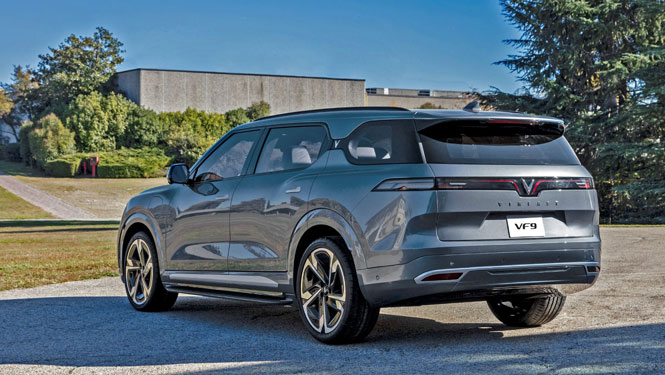
VinFast VF 8 and VF 9
After VF e34, VF 8 and VF 9 - formerly known as VF e35 and VF e36 - are the next two electric car models that VinFast receives orders in Vietnam and is expected to deliver those cars in 2022.
When not including the cost of battery subscription, VinFast VF 8 has a starting price of 1.057 billion to 1.237 billion VND. The price of VF 9 is 1.443 billion to 1.572 billion VND.
VinFast positions VF 8 in the D-class SUV/crossover group, the segment of Hyundai Santa Fe, Toyota Fortuner or Ford Everest. However, the VF 8 has 5 seats instead of 7 seats like the above models.
VF 9 belongs to the large SUV group of models such as Ford Explorer, Volkswagen Teramont or Hyundai Palisade.
VinFast VF 8 and VF 9 both use electric motors with a capacity of 402 horsepower, 640 Nm of torque and AWD drive system. The operating distance of the VF 8 on a full charge is 460 km or 510 km depending on the version, that of the VF 9 is 485 km or 680 km.
In addition, these two models are also equipped with intelligent services, a package of safety features and driver assistance with a monthly battery subscription policy.
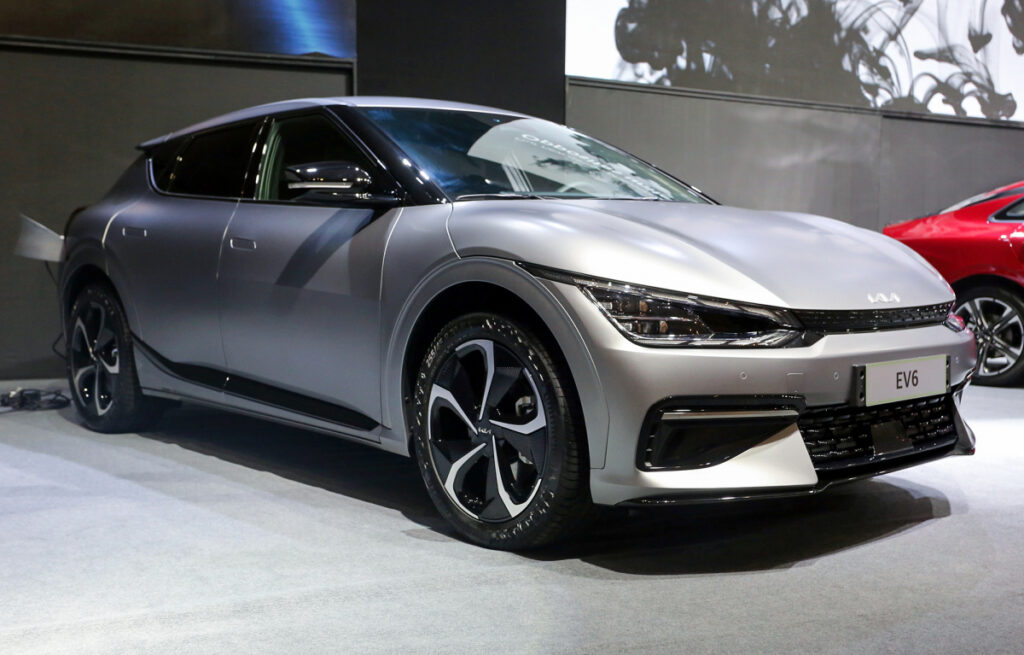
Kia EV6
According to Thaco (Kia assembler and distributor in Vietnam), the Kia EV6 electric crossover will be sold from the second quarter of 2022. Specific pricing and configuration have not been announced.
As the first Kia model to use an all-electric motor, the EV6 is introduced globally in March 2021. The car has a length x width x height of 4,695 x 1,890 x 1,550 mm, respectively, with a wheelbase of 2,900 mm. This parameter is not much different from VinFast VF 8 model.
In the international market, depending on the version, the electric motor on the Kia EV6 produces 168 - 577 horsepower and 350 - 605 Nm of torque. The vehicle is equipped with rear-wheel drive or AWD and has a travel distance of 510 km per full charge with a 77.4 kWh battery pack.
Kia EV6 has many advanced amenities and safety features such as Meridian speaker system, Nappa leather seats, interior lights, head-up display (HUD) with augmented reality support, intelligent driver assistance package, etc. In the UK, the car costs about 56,500 - 71,700 USD.
Mercedes-Benz EQS and EQB
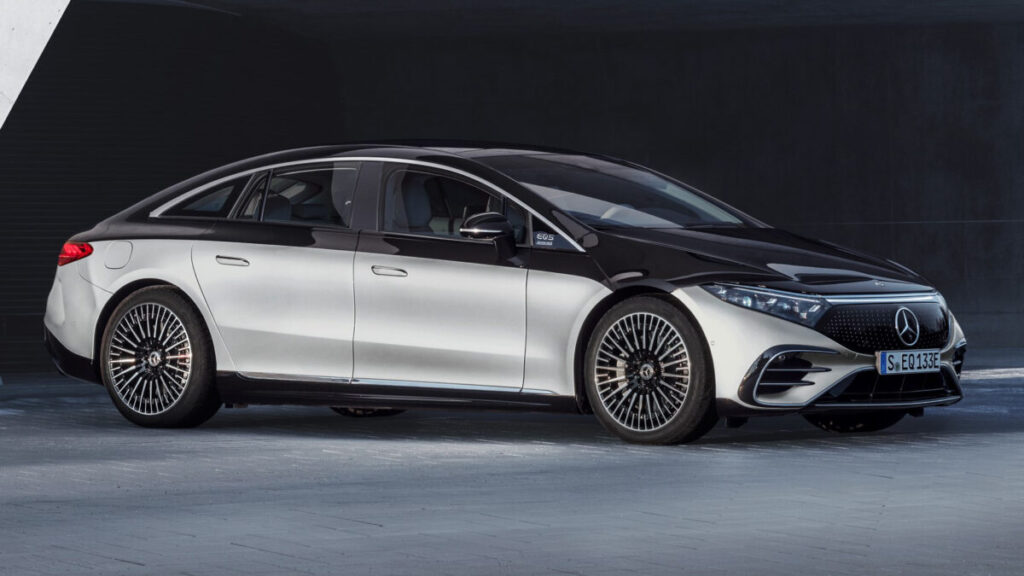
In the online event taking place at the end of November 2021, Mercedes-Benz introduced a large pure electric sedan EQS, and said that this model will be sold in Vietnam.
At the same time, EQS also appears on the Mercedes product catalog in Vietnam, with 2 versions: 450+ and 580 4MATIC.
In particular, the Mercedes-Benz EQS 450+ has an electric motor in the rear axle, capacity of 329 horsepower and torque of 568 Nm. EQS 580 4MATIC uses 2 electric motors, capacity of 516 horsepower, torque of 855 Nm. Depending on the version, the EQS can go 640 - 785 km per full charge.
In ASEAN, Thailand is home to the Mercedes-Benz EQS production and assembly plant. It is possible that the EQS sold in Vietnam will be imported from this country.
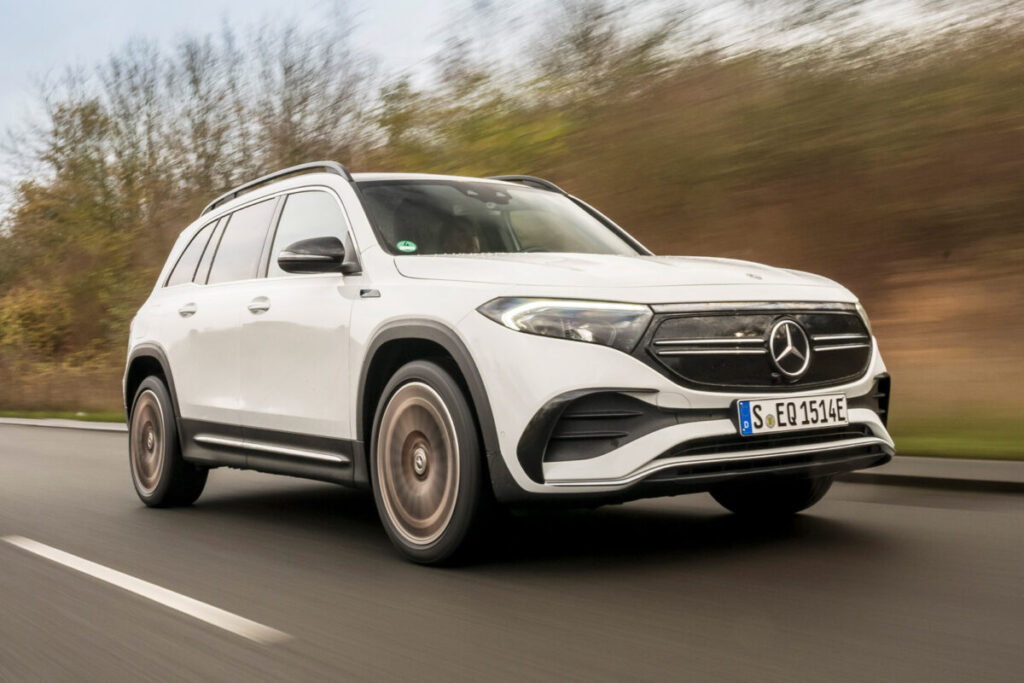
Besides EQS, the official website of Mercedes-Benz Vietnam also has information about EQB, an all-electric 7-seater SUV. However, the list of versions and configurations has not been published.
Mercedes-Benz EQB was launched at the 2021 Shanghai Motor Show with 2 versions, namely EQB 300 and EQB 350. The car has a wheelbase of 2,829 mm, equivalent to the GLB model.
In particular, the highest version of EQB 350 is equipped with 2 electric motors with a total capacity of 288 horsepower, full-time 4-wheel drive and 300 km operating distance per full charge.
Vietnam's sea, with its long coastline and abundant natural resources, shows enormous development potential. Having a long-standing strategic mindset and vision, Vietnam is determined to pursue its development plan of marine economy to turn the country into a strong maritime nation.
Conditions for Vietnam’s marine economic development
In Vietnam, the economy of the sea and coastal provinces and cities accounts for around 47-48% of the country’s gross domestic product (GDP), in which the GDP of the marine economy alone is already about 20-22%. The main marine economic sectors in Vietnam include marine renewable energy, oil and gas, seafood, tourism, shipping, environment, biodiversity, and ecological services. The numbers are not too surprising, as Vietnam is gifted with abundant resources and other favorable conditions to develop its marine economy.
Geographical features
As a coastal country, Vietnam has a coastline of over 3,260 km, an area of territorial waters under sovereignty, sovereign rights, and jurisdiction of over 1 million km2, and more than 3,000 islands and archipelagos. More than 50% of the country’s population lives in 28 coastal provinces and cities with rapid urbanization rates, creating the positive momentum needed to develop Vietnam’s marine economy. This resulted in the diversification of service industries, particularly high-value industries like export and import services, tourism, oil and gas services, transportation, and so on.
Vietnam possesses 114 estuaries, around 52 deep-water bays along the central coast (pools, bays, and lagoons account for 60% of the coastline), and more than 100 locations where large seaports can be built. Vietnam's sea is located in an area with high economic development and is a bridge between many economic and political powers in the world. This presents favorable conditions for Vietnam to develop its maritime industry, shipbuilding industry, and logistics. The country also has favorable conditions for the development of many economic zones, thanks to its convenient location for traffic and its closed bays and bays of great depth.
Diverse resources
Surveys show that there are 35 different types of minerals found in Vietnam’s waters, consisting of petroleum, metals, construction materials, precious and semi-precious stones, and liquid minerals. In addition, Vietnam has a huge potential for marine resources, with a variety of marine energies such as burning ice, tidal energy, wave energy, nuclear energy, and heavy water.
Vietnam's waters have a plethora of seafood resources. More than 2,000 different species of marine fish have been discovered, with about 100 of them having economic value. The annual fish catch is estimated to be around 2.3 million tons. Aquaculture is another strength of Vietnam's marine economy, providing significant benefits to tens of millions of coastal residents while also offering significant potential for marine economic development.
People gather at a fish market in Mui Ne, Vietnam, after fishers bring ashore their morning catch. (Source: Huy Thoai/iStock)
The most important resources in Vietnam's marine economy remain oil and gas, with an estimated reserve of 3-4.5 billion m3, primarily gas (accounting for more than 50%) and concentrated on the continental shelf. The discovered oil and gas resource reserves are approximately 1.365 billion m3, accounting for 30-35% of Vietnam's total current oil and gas reserves and forecast potential, with natural gas accounting for more than half.
Future plan for the development of Vietnam’s marine economy
There is no denying the value that Vietnam’s current marine economic development strategies bring. But along with that are many problems, such as signs of overheating and inefficient and unsustainable development. Although Vietnam is a maritime nation, so far it still cannot be considered as a strong maritime nation.
Understanding the urgency of the problem, the Government of Vietnam has made it very clear about its future plan for the country’s marine economic development. “Sustainable development” and “Blue economy” have become the keywords for Vietnam's long-term strategy. A Sustainable blue ocean economy depends on realizing the full economic potential of the oceans through integrated management, protecting and conserving ocean resources for future generations. Climate change adaptation requires effective leadership and integrated efforts involving all stakeholders.
In 2020, the Government issued Resolution No. 26/NQ-CP on promulgating the 5-year plan to implement Resolution No. 36-NQ/TW of the eighth plenum of the Party Central Committee, the XIIth Congress, on the Strategy on sustainable development of Vietnam’s marine economy through 2030, with a vision toward 2045.
The overall goal is to "turn Vietnam into a strong maritime nation; meet the criteria for sustainable development of the marine economy; form a marine ecological culture; proactively adapt to climate change and sea level rise; reverse the trend of pollution, degradation of the marine environment, coastal erosion, and sea erosion; and restore and conserve important marine ecosystems. New, advanced, and modern scientific achievements will become direct factors in promoting sustainable development of the marine economy.”
Tourism and marine services are prioritized for development, followed by maritime economy, oil and gas extraction, and other marine mineral resources, aquaculture and fishing, coastal industry, renewable energy, and new marine economic sectors. It can be seen that economic sectors that consume a lot of resources are losing ground to industries that use natural resources more efficiently, such as tourism and shipping.
In 2021, the Vietnamese Prime Minister issued Directive 31/CT-TTg on innovating and enhancing the implementation of the Strategy on the sustainable development of Vietnam’s marine economy through 2030, with a vision toward 2045. According to the Directive, the Government and related bodies in Vietnam must work together to enhance the application of information technology and rapidly implement the digital transformation of marine economic sectors.
Coastal localities need to both promote the spirit of self-reliance (using internal force), while taking advantage of "external forces'' for development; and encourage the formation and development of large economic groups investing in marine economic sectors/fields, especially the six marine economic sectors identified in Resolution No. 36-NQ/TW. These are key economic sectors with the potential, advantages, and room to serve as a driving force for socioeconomic development.
In May 2022, at the International Conference on Sustainable Ocean Economy and Climate Change Adaptation held in Hanoi, Deputy Minister of Natural Resources and Environment Le Minh Ngan reaffirmed the five following commitments from the Vietnamese Government:
Create an international regulatory and policy environment that promotes a sustainable and climate-resilient marine economy.
Establish a comprehensive database system managed by the UN on the multidimensional impacts of climate change, sea level rise, and plastic waste to aid in the development of global response policies.
Address climate-related security challenges and risks by promoting and constructing practical and effective regional and global security cooperation mechanisms that take economic, social, psychological, and gender factors into account, among other things.
Strengthen the resilience of sustainable marine economic development following Covid-19, as well as the adaptability of vulnerable countries, communities, and stakeholders, in order to build and develop customs economic sectors such as marine transportation, aquaculture and fishing, marine/coastal tourism, and renewable energy sources.
Encourage investment in marine technology research, development, and transfer, shift to new blue sea renewable energy sources, and monitor the management of sustainable marine resource use, raise awareness, and broad stakeholder participation in decision-making and policy on sustainable marine economy.
The government announced on Wednesday that the construction of Vietnam's first green hydrogen plant will begin next month, as the Southeast Asian country aims to increase the use of cleaner energy while reducing its reliance on coal in its power mix.
The plant will be built by TGS Green Hydrogen in the southern province of Ben Tre, with trial operations set to begin in the first quarter of next year, according to the government.
When hydrogen is collected from water using electrolysis powered by renewable energy, it is classified as "green," and it is considered critical to helping industry decarbonize, despite the fact that the technology is still expensive and in its early stages of development.
According to the government, the VND19.5 trillion ($840 million) plant will create 24,000 tonnes of green hydrogen, 150,000 tonnes of ammonia, and 195,000 tonnes of oxygen per year at first, with capacity more than doubling afterward.
Vietnam, a regional manufacturing powerhouse, aims to nearly quadruple its total installed power generation capacity to 146,000 megawatts by 2030, with a focus on renewable energy and coal reduction.
At the United Nations Climate Conference in Glasgow (COP26) in November last year, the country pledged to become carbon neutral by 2050.
In recent years, e-commerce has cemented its position as one of the most popular forms of purchasing for the Vietnamese public while the digital industry continues to play a significant role in Vietnam’s economy. With such impressive potential, Vietnam e-commerce has risen to become an attractive market in Southeast Asia. Vietnam’s potential to foster e-commerce was strongly demonstrated through the tremendous growth despite the unprecedented pandemic, the reasons behind that growth and the predicted trends for the year 2022 are also worth considering to further its development.
The Potential – How did Vietnam e-commerce unanticipatedly thrive despite the Covid-19 pandemic?
When thousands of people across Vietnam entered a lockdown in 2020, a ripple effect throughout the economy was inevitable. Despite those difficulties, the e-commerce sector in Vietnam seems to be in a pretty good place amid the pandemic.
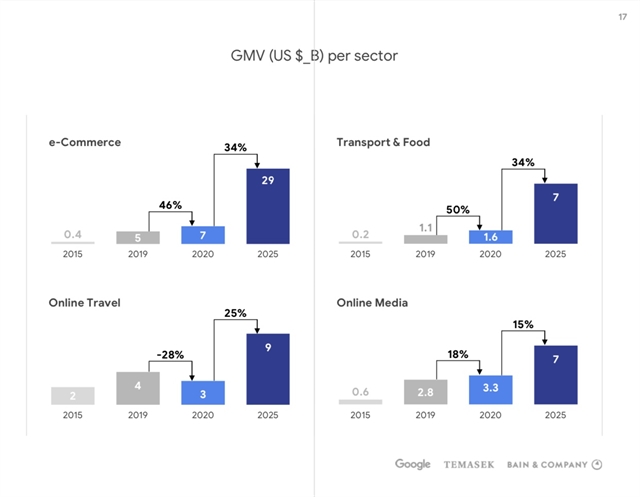
According to the Vietnam E-commerce White Paper 2021 issued by the Ministry of Industry and Trade, the Vietnamese e-commerce market has seen a steady growth over the past 5 years, the value of this market started at 5 billion USD in 2016 then significantly doubled to reach over 10 billion USD by 2019. This upward trend continued in 2020, with 11.8 billion dollars, a rise of 18% over 2019. In the light of the Covid-19 pandemic, there has been a significant growth in the digital economy in general and e-commerce in particular. According to a report by Google, Temasek and Bain & Company, the total merchandise value (GMV) of the e-commerce industry in Vietnam grew dramatically from 8 billion USD in 2020 to 13 billion USD in 2021.
Figure 1: GMV of Vietnam ecommerce (Source: Google, Temasek and Bain & Company)
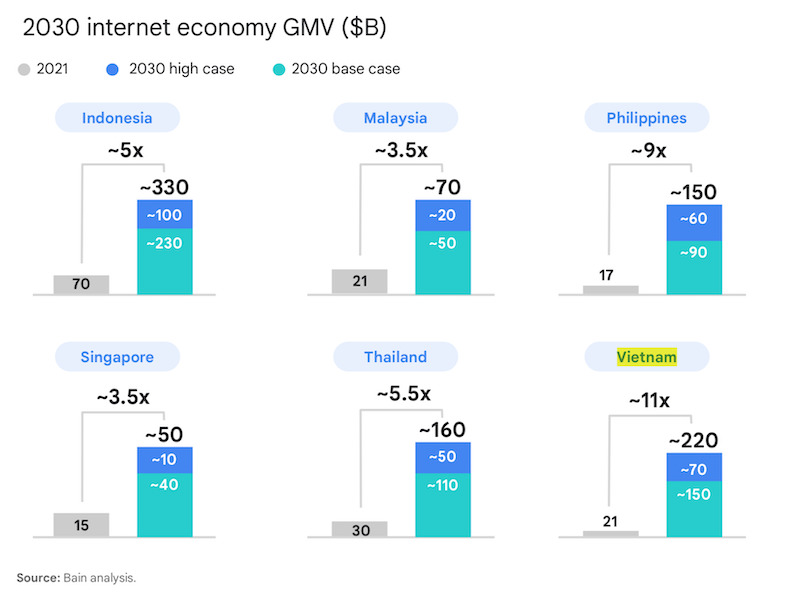
Figure 2: Esimation of GMV of Vietnam 2030 (Source: Google, Temasek and Bain & Company)
These figures clearly prove that Vietnam's e-commerce sector has surmounted the challenges posed by the Covid-19 and is predicted to prosper in the "new normal". This growth is even more astonishing than the period before the pandemic, placing Vietnam second in Southeast Asia in terms of e-commerce market growth and third in size, behind Thailand and Indonesia. This makes Vietnam’s e-commerce a great investment opportunity.
The reasons behind – Why is e-commerce in Vietnam thriving?
The pandemic has impressively opened previously untapped customer desires for online purchases of food, necessities, and even entertainment. Lockdown restrictions boostled demand for industries that help people stay busy while social distancing and caused them to spend online more than ever before. According to Adsota and SOL Premier's study, e-commerce platforms in Vietnam have seen a 41% increase in new users since the outbreak of the pandemic.
Even if the pandemic comes to an end and shoppers are returning to physical stores, there is no sign of a decline in online shopping thanks to the tremendous effort in marketing activities of such e-commerce platforms as Shopee or Lazada, and it is considered to continue to thrive further as online shopping has become a habit of consumers.
Besides, the significant growth of e-commerce also stems from the staggering rate of foreign investment and international partnership. The success of national platforms such as Tiki and Thegioididong demonstrates Vietnam’s potential to foster e-commerce. These platforms have grown into big e-commerce powerhouses thanks to investments from foreign countries like Japan, Germany, the United States, South Korea and China.
The adoption of digital payments is another contributor to the growth of e-commerce while it has replaced the conventional cash-on-delivery method. With just a few clicks on an e-wallet platform installed in ones’ mobile phone, customers now can easily pay for their lunch or even electricity and water bills. Consumers' preference for using digital transactions has risen as a result of the prolonged lockdowns that kept them at home for months.
According to a survey of 15,000 retailers, cashless payments in 2021 made up 72.8% of total transactions, up 9% year-on-year. The government has also put significant effort in promoting the usage of digital payments when signing a decision to approve a project on developing Vietnam’s non-cash payment for the 2021-25 period which aims to accelerate the growth of cashless payments in Vietnam and make cashless payment methods more popular to people in both urban and rural areas.
The trends in 2022 – What will shape the growth of e-commerce in Vietnam in 2022?
The B2C market in Vietnam is fairly huge and has a lot of potential. E-commerce websites, e-commerce trading floors, online promotion websites, and online auction websites are the most common forms of B2C in Vietnam. Thanks to the rise of social media, social commerce as a sub-sector of e-commerce in Vietnam is likely to continue growing, contributing to further growth in the e-commerce industry. Even though social commerce has grown significantly, not enough effort has been put into growing supply chain and other operation support for this sector, which is an opportunity for investors to get involved at an early stage.
In recent years, the B2B e-commerce marketplace in Vietnam has gained momentum. Reaching 13.2 billion in 2020, the growth rate of Vietnam’s B2B e-commerce market is the highest in Southeast Asia. It is expected to grow at a CAGR of 43% by 2025. Various B2B organizations opt to expand their network and collaboration with dealers, VARs, wholesalers, e-commerce platforms, etc. to offer products and services. This demonstrates their ultimate goal of maximizing business potential and achieving extensible development. The COVID-19 pandemic has accelerated this trend, making digital commerce the number one priority for manufacturers, distributors, and brands that hope to thrive.
Several successful B2B e-commerce businesses predict strong growth for the B2B e-commerce market in the coming years. EI Industrial is Vietnam's first industrial-focused B2B marketplace, with the goal of accelerating the country's digital procurement. They created the platform eiindustrial.com where purchasers can easily source from multiple suppliers and identify the best deals available.
The Vietnam-EU e-commerce platform (VEFTA) was launched with the view to helping Vietnamese businesses access the European market more conveniently and boosting Vietnam’s exports to Europe. Telio, with the mission of connecting businesses with retailers, has received funding of 22.5 million USD from Vietnamese tech unicorn VNG, raising its total investment to 51 million USD.
Niche e-commerce market is another leading trend of 2022 and the coming years ahead. Because the market has been full of big players, it is hard for young businesses to seek a landscape to flourish. Therefore, targeting niche markets is a wise strategy which allows them to avoid confronting big players who have powerful financial capability.
Vietnam’s thriving e-commerce sector creates a diverse ecosystem which covers various areas such as mobile payment, virtual assistants, operation management, logistics, selling trending products and services,… These are areas that big players pay little attention to. Taking advantage of it, young enterprises are developing strategies to build businesses that have a good chance of succeeding – without going up against the big companies.
According to IPrice Insights' ranking of the top 50 largest e-commerce sites in Vietnam, up to 80% of these are specialized on a certain type of product or service such as luxury goods, imported cosmetics... In addition, by going deep into a particular niche, they are able to offer a variety of related services to both individual and corporate customers. This results in a relatively large revenue.
Nguyen Tuan, Deputy Director of the Investment and Trade Promotion, said that targeting niche markets was appropriate for small businesses in the fiercely competitive situation now. It could help businesses reduce costs for product promotion, lessen competition and even stand out in the market. By learning deeply about the culture and consumption habits of the Vietnamese to identify a niche, small businesses could gain great benefits for future development, he added.
Another trend which can be easily seen is the growing adoption of digital payments, which also refers to the growing collaboration between e-commerce and fintech sectors. According to the Vietnam Investment Report, fintech and e-commerce together accounted for 70% of total venture capital of Vietnam in 2021, and this trend is predicted to continue in 2022.
The figure demonstrates that the pandemic has tremendously triggered major changes in customers’ behavior that leads to the shift of online shopping and digital payments. Offering such same benefits as accessibility and minimized contact for customers, these two sectors will be not only complementary but also intersecting. Therefore, it is advisory for investors to pay attention to the chance of overlapping between these sectors to further business opportunities.
According to the Statista Report, revenue in the e-commerce market of Vietnam is projected to reach US$14.81bn with the user penetration reaching 58.2% in 2022. With thorough research and applicable innovations regarding these trends, Vietnam’s e-commerce is likely to grow tremendously, exceeding these above figures. Though the market is fiercely competitive with multiple big players, the growing demands of Vietnamese create more and more potential niche markets that can provide golden investment opportunities.
The professional service industry in Singapore is one of the most developed industries, becoming the service center in not only Asia, but also the world. As it stands, Singapore professional services industry made up 6.5% of the nation’s GDP at 25 billion USD value-added worth in 2016. The industry created jobs for over 230,000 people, constituting 6.4% of its total workforce.
The industry amid destructive Covid-19 pandemic
Since 2018, the Singaporean government has revealed a national roadmap for further developing the professional services industry in the city-state. Thus, the roadmap aims to generate an additional 5,500 occupations annually, pushing the industry’s value-add out to 31 billion USD in 2020 at a 4.6% average growth rate.
Prior to Covid-19 pandemic, the professional services sector and the administrative & support services sector outperformed the Singapore economy. The real value-added of the professional services sector grew by a CAGR of 4.4%, outstanding real GDP growth of 3.1%. This figure shown Singapore’s continued development as a global professional service hub. Among the various segments of the sector, the highest CAGRs were seen for the (i) head offices & business representative offices; (ii) business & management consultancy; and (iii) other professional, scientific & technical services segments.
Figure 1: Real VA Growth of the Segments of the Professional Services Sector (Source: MTI, 2021)
Regarding the administrative & support services sector, its real value-added expanded at a CAGR of 5.6%. Both segments of the sector experienced at a faster growth pace than the overall economy during this period. However, when compared to the decade as a whole, their growth during the more recent period was not really strong.
Figure 2: Real VA Growth of the Segments of the Administrative & Support Services Sector (Source: MTI, 2021)
Yet, the Covid - 19 pandemic has unprecedentedly had a widespread devastating effect on the whole global economy. As a result, Singapore experienced a sharp plunge in the construction works and contracts in 2020, while also saw a decline in demand for advertising and market research activities. Businesses cut back their expenses on professional services during the downturn period. This has negatively impacted the professional services sector. An overall contraction of 9.7% was recorded due to contraction in the architectural and engineering, technical testing and analysis (-16%), and the other professional, scientific and technical services segments (-14%) in the same year.
Meanwhile, the sinking in the real value-added of the rental and leasing segment weighed down the administrative and support services sector. The reason behind this decline lies in the global travel restrictions, the slower work progress at construction sites and weaker domestic economic conditions. In short, the real value-add of these sectors has still remained below pre-Covid-19 levels (Ministry of Trade and Industry, 2021)
Singaporean government give boost to professional services industry
Even before Covid-19, the Singaporean government has made a nation-wide effort to take Professional Services to the next level. Mrs Indranee Rajah, Singapore’s Second Minister for Finance, articulated that “The Professional Services sector is a growing industry with tremendous potential for job creation”. This period signals the right conditions for Singapore professional service companies to innovate world-class business solutions and forge cross-disciplinary partnerships. Thus, the government launched an industry transformation map (ITM) that will enable firms in the industry to scale, innovate and increase their productivity. Along with that, the plan prepares Singaporeans to take on exciting new jobs such as digital product developers, data modelers and risk advisory professionals.
The Singaporean government also planned several initiatives to reskill and upskill professionals, managers, executives and technicians (PMETs), developing new competencies. Thus, the government launched further Professional Conversion Programmes (PCPs) under the Adapt & Grow project with additional programmes relevant to the professional services industry.
Additionally, the government has fostered the collaboration between higher learning institutes and firms within the professional service industry. This initiative aims to ensure relevant training and education as well as facilitate coordinations between corporations, start-ups and research institutes to strengthen and drive innovation.
Furthermore, Mrs Indranee Rajah emphasized the professional service sectors in Singapore take steps to seize the growth opportunities. She also urged firms in the professional services industry to seriously pay attention to job redesign and the well-being of employees. Under the context of Covid-19, the digital transformation has experienced a rapid acceleration. Therefore, redesigning jobs and ensuring updated skills among employees are of importance to develop the professional service industry.
Viettonkin as one of the leading local professional service firm in Singapore
Credited by multinational corporations (MNCs), Fortune Global 500 companies, as well as international non-governmental organizations (INGOs), Viettonkin has been positioned among the prestiged local professional service companies in Singapore. In alignment with the initiatives of the Singaporean government, Viettonkin has always upgraded the skills of its staff, ensuring the high quality of the provided services.
Understanding the difficulties foreign investors have gone through and will experience in entering the Singapore market, Viettonkin is on its mission to help and support investors along their business journey. We provide a wide range of professional services, guiding you with the accuracy, professionalism and detailed insights in the Singapore market and legal system. Unfamiliar with the new environment, you can make undesirable mistakes. Yet, our team of top-notch experts in the industry can stand by your sides, ensuring the best support you can receive. With our assistance, you can focus on what really matters - doing business in Singapore! Let us be your reliable companion!
Due to the growing concerns about environmental awareness, many countries in the world have paid more attention to incentivising electric vehicles (EVs) adoption. EVs will play a key role in achieving the goal of zero emissions by 2050. The EV market is growing tremendously over the last few years. As a result of the booming demand for new energy vehicles (NEVs), multiple players are joining the market, making the EV industry fiercely competitive than ever before.
Electric vehicles industry overview in the global market
What is the current situation?
The worldwide electric vehicle industry has grown significantly in response to rising fuel prices, increased demand for fuel-efficient, low-emission, and high-performance automobiles, and stricter regulatory regulations on vehicle emissions.
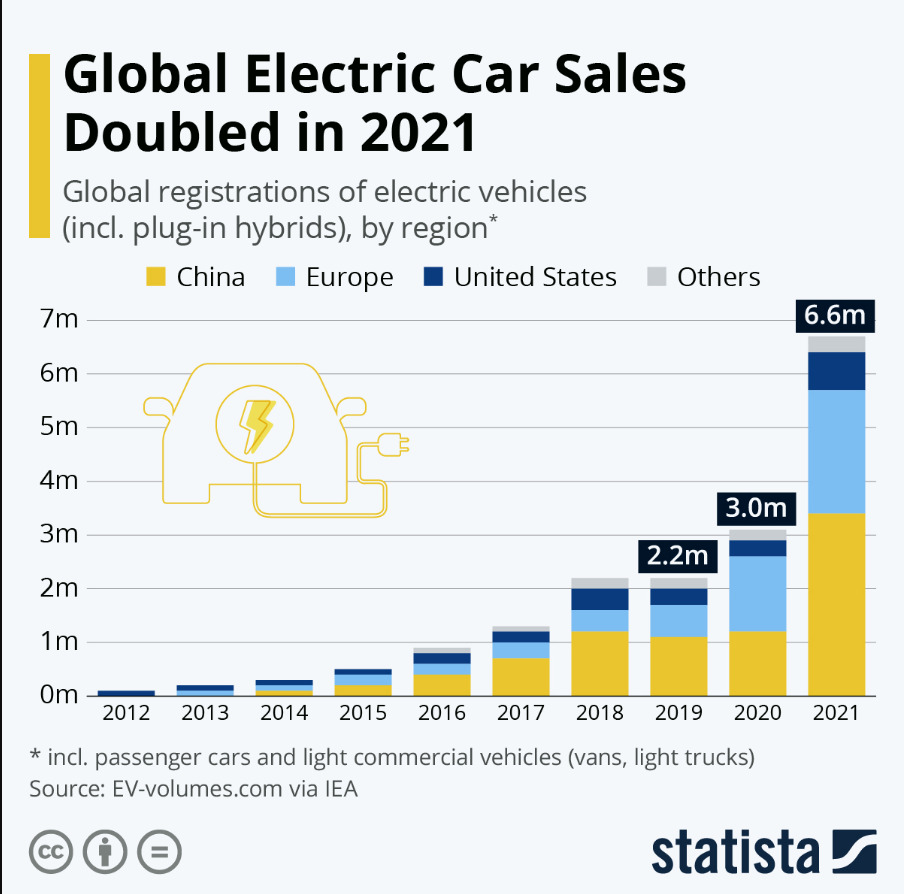
The growth of EVs has been impressive over the last three years, despite the supply chain bottlenecks caused by the global pandemic. According to the International Energy agency, in 2019, 2.2 million electric automobiles were sold worldwide, accounting for only 2.5 percent of total vehicle sales. Then, the global cars market shrank in 2020. However, electric car sales bucked the trend, reaching 3 million units and accounting for 4.1 percent of total vehicle sales. Electric vehicle sales rose to 6.6 million in 2021, accounting for over 9% of the global auto industry and more than tripling their market share from only two years before. Noticeably, in 2021, all the net growth in global car sales came from electric cars.
Figure 1: Global electric vehicles in 2021 (Source: Statista)
According to Allied Market Research, the global electric vehicle market was valued at $163.01 billion in 2020. The figure rose to roughly USD 185 billion in 2021 and is expected to surpass USD 980 billion by 2028. Electric car sales powered through 2021 and have remained strong so far in 2022.
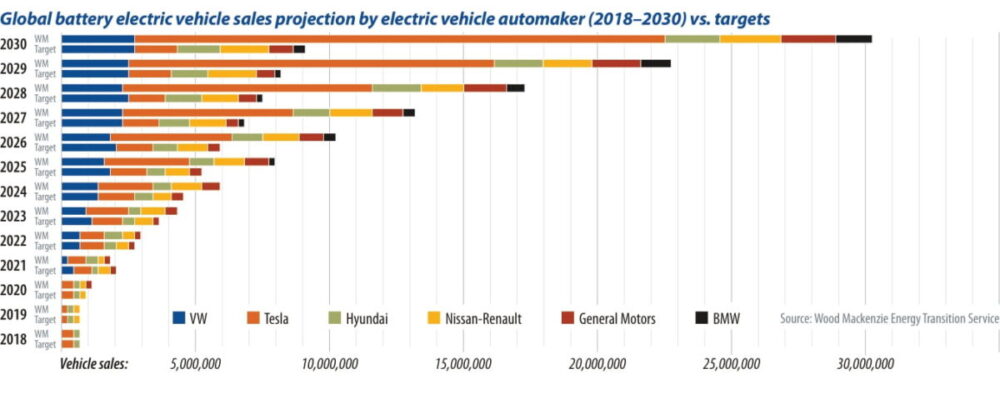
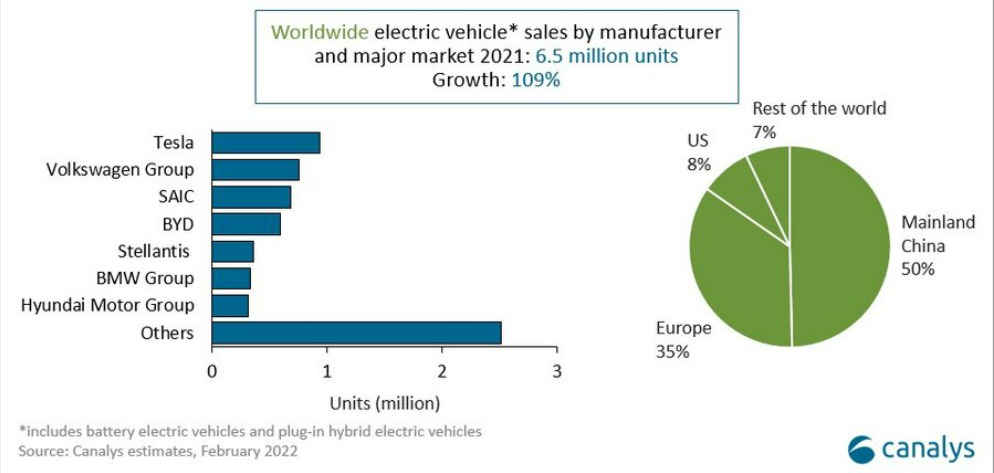
Established firms such as Tesla (US), Volkswagen AG (Germany), SAIC Motors (China), BYD (China), and Stellantis (Netherlands) dominate the electric vehicle industry. These companies have extensive global distribution networks and invest greatly in R&D to develop new products.
Figure 2: Electric vehicles sales of key players in the world
What are the dominant markets?
These days, China, Europe and the U.S are the 3 biggest EV markets in the world. Europe and China are leading the way with 16% and 14% EV market share respectively, while the US is at 4.5%.
2021 was a breakthrough year for China’s EV sector. According to the China Passenger Car Association, with about 3.2 million electric vehicles sold, China saw the most rapid growth in the EV market. This was an increase of 2 million EV units compared to 2020, more than the combined increase of all other regions taken together. Thus, electric vehicles accounted for over 16% of the automotive market in China in 2021, and 53% of the global market share. This made China regain its dominance in the global EV market - the biggest market for electric vehicles in the world.
Figure 3: electric vehicles sales by major market in 2021 (Source: Canalys)
China continues its great performance in 2022. In March 2022, plugin vehicles hit 26% China’s market share while full electrics (BEVs) alone accounted for 21% of the country’s auto sales. China is forecast to be the world leader in terms of electric vehicle production over the next few years.
Consumer behavior is a great contributor to the development of China’s EV market. Because many Chinese have no previous car ownership experience, they can easily adapt to EVs. Besides, many Gen Z and millennial buyers would love to take their new purchase to the next level by customizing their electric vehicles as a form of self-expression. Therefore, many EV start-ups are putting great effort in innovating their products with the view to driving a transformational change towards electrification.
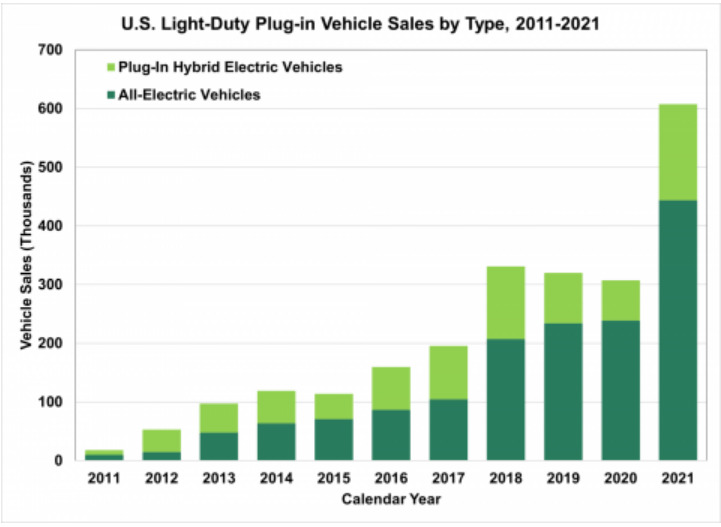
In the US market, there is also a growing demand in vehicles which are carbon-neutral, high performance, economical and practical. The US’ EV market broke records in 2021, estimated at approximately 607,000 sales. This was an 83% increase compared to 2018 – the year marking the beginning of a strong demand for a popular EV product Tesla’s Model 3. The US’s electric vehicle market is projected to grow from $28.24 billion in 2021 to $137.43 billion in 2028 at a CAGR of 25.4%.
Figure 3: US electrical vehicles sales (Source: Department of energy, the US)
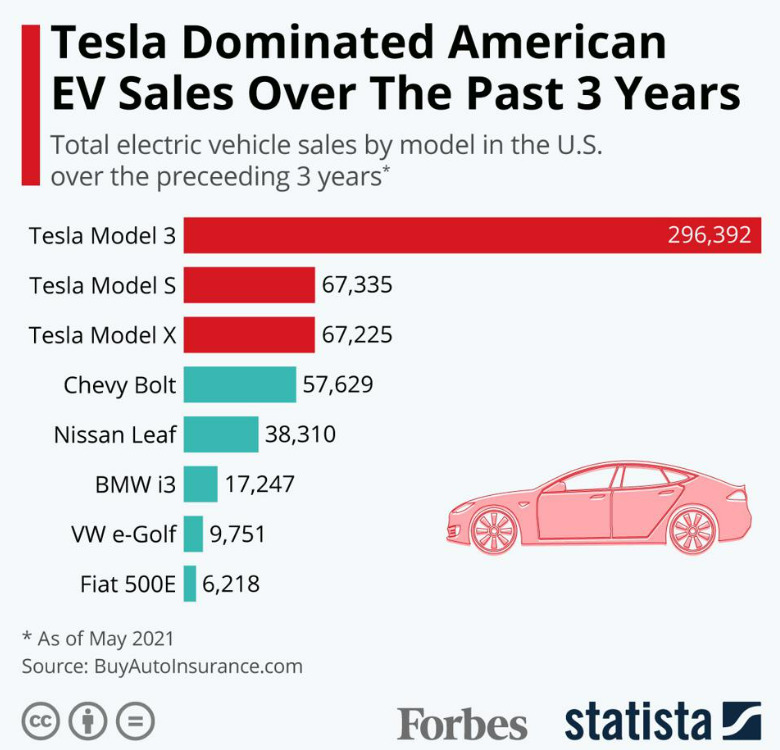
Figure 4: Tesla electric vehicles dominates US EV market (Source: Forbes, Statista)
In the European market, people widely accept electric vehicles. As charging infrastructure improves, production costs decrease, and governments take action to reduce carbon emissions, electric cars have seen an increasing trend of acceptance throughout Europe. According to the Guardian in 2020, car manufacturers sold over 500,000 electric cars in Europe. The sales of EV in Europe have increased steadily since 2010, with annual growth of roughly 50% over the last 5 years. According to the International Council’s report on Clean Transportation, Europe is currently the world's second-largest electric car market by volume, after China but ahead of the United States. This tremendous growth in demand for electric vehicles is expected to bring further development to Europe's EV market.
China and the US’s policies to incentivise EVs adoption
Boosting demands
When it comes to boosting demands. According to the China Association of Automobile Manufacturers, in 2009, the Chinese government started granting incentives of around US$ 15 billion. The funds were used to strengthen its commitment to stimulate EV development, generate employment, and reduce urban pollution and dependence on oil imports.
The very first action was launching the pilot program called The Thousands of Vehicles, Tens of Cities to subsidize Chinese cities to implement EVs. Initially, the program concentrated on public procurement, but they were eventually expanded to include private procurement.
Nowadays, almost all major cities in China are enacting stricter regulations. Beijing, for example, only provides 10,000 registration licenses for combustion-engine vehicles every month in order to encourage residents to switch to electric vehicles. EVs have been exempted from traffic and vehicle ownership control in several large cities. Some cities even allocate dedicated parking space for EVs.
Moreover, the Chinese government has actively promoted the electrification of public transportation vehicles. Many Chinese cities have set specific objectives for fully electrifying taxis and online hailing cars. For example, China's Ministry of Transport set a goal in 2018 to replace all buses in large cities with electric vehicles by the end of 2020.
Meanwhile, the United States was said to take a less supportive approach to EVs than China. However, the US Government has put more effort into promoting EVs recently. At least 47 states and the District of Columbia offer incentives to encourage the deployment of EVs. The incentives include measures that provide high-occupancy vehicle lane exemptions for EVs, financial incentives for purchasing EVs, vehicle inspection or emissions test exemptions, parking incentives and utility rate reduction.
Utilities also offer incentives, rebates, and grants for transportation electrification. Price reductions for charging electric vehicles during off-peak hours are one of the most prevalent incentives. Several electric utilities provide cheaper off-peak prices per kilowatt-hour. Other utilities provide subsidies to encourage people to buy electric vehicles and equipment.
The US Government also offers tax credits for anyone who purchases EVs from certain manufacturers. However, this system is not permanent and is dependent on sales by the model of cars.
Facilitating manufacturers
The Chinese government has provided a variety of policy support for the development of EV-related infrastructure. They include financial assistance for the construction and operation of charging stations and regulatory provisions to streamline charging infrastructure planning processes. By 2020, such policy assistance will boost the number of charging and battery exchange stations to 12,000, as well as the number of charging heaps to 4.8 million.
Monetary consumer subsidies help the China government cultivate the EV industry. This results in a gradually decreasing amount of cost as the supply chain and manufacturing matures while scale is gained. In addition, the government also provides tax reliefs and monetary subsidies for research and development expenditure for companies throughout the EV manufacturing supply chain.
The main reason why EVs are costly is that their batteries are expensive. China’s solution was to invest greatly in battery production. Five Chinese EV battery suppliers entered the global top ten ranking of battery suppliers in 2015. The significant investment in battery production made China become dominant in this stage of the supply chain. Recognizing the potential market of EV batteries, international battery suppliers are entering China's market.
In the meantime, US automobile manufacturers are pouring money into developing a net-zero carbon powertrain for future models that does not rely on third-party technology. The US Government has granted great subsidies to these corporations as part of a large energy investment incentive to help them begin their research and development for American markets.
When it comes to battery supply, recently, the US Department of Energy has announced to invest $3 billion into battery manufacturing and supply chain to promote the transition to EVs. The funds came from last year's massive infrastructure bill.
Encouraging customers to purchase
Both governments introduced subsidies to bolster sales of electric vehicles. The Chinese government has either exempted or reduced taxes on the purchase of electric vehicles. These programs have attracted a large number of purchasers to acquire electric vehicles in this country.
Meanwhile, in the US, consumer rebate programs are launched in multiple states. They can cover small costs associated with purchasing new electric or alternative fuel vehicles, such as immediate cash down rebate payment. These incentive programs might also be temporary, or may be allotted more funding in the future to provide higher incentives.
Electric vehicles are the key to a sustainable future and will gain more popularity in the future. Our experienced experts will help companies to receive in-depth knowledge about the present scenario of certain markets so that you can adopt the necessary strategies accordingly. We are confident to help you seize ample opportunities ahead. Let us be your trustworthy companion!
At the end of the two-day meeting in early May, the Federal Open Market Committee (FOMC) decided to raise the operating interest rates by 50 basis points to the new margin from 0.75% to 1.0%.
The decision to raise the operating interest rates by 0.50% marks the strongest increase realized in a single meeting since May 2000. The US Federal Reserve (Fed) officials also hinted that they will continue to raise the operating interest rates this year with the inflation restraining effort.
According to a survey by CME Group, Fed is said by the market to raise the operating interest rates by 175-200 basic points in the final months of 2022 to a new margin in the range of 2.5% to 3.0%.
Fed officials also decided to reduce the size of the Fed's balance sheet from June 2022, it starts with $47.5 billion a month ($30 billion in US Treasuries and $17.5 billion in mortgage-backed securities), which will increase to $95 billion a month after three months ($60 billion in U.S. Treasuries and $35 billion in mortgage-backed securities).
With this plan, Fed may shrink its balance sheet size by about $427.5 billion in half of 2022. This size is relatively small (only 5% of the Fed’s current balance sheet size), so the impact on global financial market liquidity is minimal.
5 main impacts on Vietnamese economy
According to the analyst’s assessment at VNDirect, the Fed's tightening of monetary policy causes 5 major impacts on the Vietnamese economy.
Firstly, the global financial situation tightening reduces the growth prospects of the world economy, leading to lower demand for Vietnamese exports.
Fed's tightening of monetary policy will increase lending interest rates (in USD) thereby reducing people's consumption demand as well as weakening the enterprises’ demand to expand investment.
Many research organizations around the world have recently lowered their growth forecasts for the global economy as well as the US economy, one of the main reasons is the increasingly tightening of the global financial conditions. Therefore, Vietnam's export performance is likely to slow down in the coming quarters as consumers in key export markets such as the US and Europe tighten their expenses.
Figure 1: Difference between credit growth and deposit growth (Source: SBV, VnDirect Research)
Secondly, deposit interest rates (in VND) are subject to increasing pressure in the last months of the year. As of April 26, 2022, deposit interest rates for 3-month and 12-month terms of state-owned banks are unchanged from the end of 2021 while 3-month deposit interest rates and 12-month deposit interest rates of private banks is increased by 14 basis points and 13 basic points respectively compared to the end of 2021.
Said VNDirect, deposit interest rates will continue to increase from now until the end of 2022 due to the increase in USD interest rates and high inflationary pressure in Vietnam in the coming quarters. However, the expected increase will not be high, about 30-50 basic points for the whole of 2022.
"We think that the 12-month deposit interest rates of commercial banks can increase to 5.9-6.1%/year at the end of 2022 (currently at 5.5-5.7%/year), still lower than the pre-pandemic deposit interest rates of 7.0%/year," said the report.
Figure 2: The slight increase in the deposit interest rate in April, 2022 (Source: SBV, VnDirect Research)
Thirdly, the increase in USD interest rates puts pressure on the foreign debt repayment obligations of Vietnamese Government and enterprises. Estimated by VNDirect, Vietnam's external debt will account for 39% of GDP by the end of 2021. The context of tighter liquidity in the international financial market makes Vietnamese government and enterprises hard to raise capital in the international market and will incur the higher interest rates.
Fourthly, for the financial market, foreign indirect investment (FII) inflows may continue to be net withdrawn in the coming months due to the influence of "taper tantrum". The foreign investors, however, continuously net selling on Vietnam's stock market in the past 2 years, so the impact of foreign investors’ net selling will be moderate because the market has prepared in advance.
Meanwhile, foreign direct investment (FDI) flows into Vietnam will be less affected because Vietnam is still an attractive investment destination in the trend of the global supply chain diversification. Thirdly, the increase in USD interest rates puts pressure on the foreign debt repayment obligations of the Vietnamese Government and enterprises. As estimated by VNDirect, Vietnam's external debt will account for 39% of GDP by the end of 2021. The context of tighter liquidity in the international financial market makes the Vietnamese government and enterprises hard to raise capital in the international market and will incur higher interest rates.
Fourthly, for the financial market, foreign indirect investment (FII) inflows may continue to be net withdrawn in the coming months due to the influence of the "taper tantrum". The foreign investors, however, continuously net selling on Vietnam's stock market in the past 2 years, so the impact of foreign investors’ net selling will be moderate because the market has been prepared in advance.
Meanwhile, foreign direct investment (FDI) flows into Vietnam will be less affected because Vietnam is still an attractive investment destination in the trend of global supply chain diversification.
Figure 3: VND outperforms other regional currencies as of April, 2022 (Blomberge, VnDirect Research)
Fifthly, a strong USD puts pressure on Vietnam's exchange rate. On April 31, 2022, the US dollar index (which measures the strength of the US dollar against a basket of currencies) gained 103 points, the highest rate in 20 years. The strong USD pulled USD/VND exchange rate up by about 0.6% in the first 4 months of 2022.
VND is still, however, one of the most stable currencies in the Asia-Pacific region. According to VNDirect, the basic factors to keep VND stable in recent years are still maintained, including a current account surplus and high foreign exchange reserves.
Experts expect that the current account surplus will rise up to 1.9% of GDP in 2022 from an expected deficit of 1.0% of GDP in 2021. Vietnam's foreign exchange reserves are expected to gain $122.5 billion by the end of 2022 (equivalent to 4.0 months of imports) from the current rate of $105 billion.
Said VNDirect, USD/VND exchange rate will be stable at 22,600-23,050 in 2022, and VND may fluctuate within a relatively narrow margin (+/-1%) against the USD.
Will Vietnam continue the easing policy?
Said VNDirect, the State Bank of Vietnam (SBV) will maintain an "appropriate" monetary policy with a priority on the economic recovery support, no later than the end of the second quarter of 2022.
Said the experts, although inflation pressure is expected to increase in the coming months, the average consumer price index in the first half of 2022 is forecast at 2.5% over the same period, which is still much lower than the Government's target of 4% to explain the above statement.
In addition, domestic demand is still weak and has not been fully recovered to the pre-pandemic rate and the SBV still prioritizes the goal of maintaining the low lending rates to support enterprises and the recovery of the economy.
"Any monetary tightening will only take place in the second half of 2022 (likely higher than the fourth quarter of 2022) and gains (if any) will be limited to around 0.25-0.5%, " commented VNDirect experts.
Figure 4: Credit growth plan of joint stock commercial banks (Source: Commercial banks, VnDirect)
Experts also expect that the State Bank will allow credit growth to remain at a high rate to support the economic recovery. Credit capital flows will be prioritized for the manufacturing and service sectors, especially such priority sectors as industry, import, and export, agriculture, forestry, and fishery.
In addition, the SBV will carefully control the credit capital flowing into such high-risk areas as real estate, securities, and BOT (Build-Operate-Transfer) projects. Accordingly, VNDirect forecasts credit growth to maintain a high rate of 14% in 2022.
For the lending interest rates, the State Bank is applying an interest rate compensation package with a scale of 3,000 billion Vietnamese dong. This package offers a loan interest rate of only 3-4%/year for enterprises strongly affected by the COVID-19 pandemic.
In addition, the Government plans to expand the interest rate compensation package size for enterprises to 40,000 billion Vietnamese dong, focusing on a number of priority subjects, including small and medium enterprises, enterprises participating in a number of national key projects, and trading in certain industries (tourism, aviation, transportation).
VNDirect expects that the interest rate compensation package can help reduce the average lending interest rate by 20-40 basic points in 2022. However, the actual impact of the interest rate compensation package for enterprises and the economy may be lower if commercial banks increase the lending interest rates on other conventional loans to offset the increase in deposit interest rates.
The increase in interest rates will affect the global investment, yet opportunities are still open with potential high rate of return. Under this context, investors can seize the chances and turn the table around to reap the benefits. With the effort of SBV and Vietnam government, Vietnam remains favorite investment destinations for global investors. Joining the effort, Viettonkin will also assit you through the investment journey. As a prestiged professional services firms domestically and globally, we are confident to own in-depth knowledge in Vietnam market and legal environment with a team of top-notch professionals in the industries. Let us be your trustworthy partner!
The Russia-Ukraine conflicthas further deepened the global crisis that the world has been grappling with since the outbreak of the COVID-19 pandemic. Vietnam is without exception. The conflict has had certain negative impacts on the Vietnamese economy. Yet, the Vietnamese government has weathered the country through the volatile, uncertain, complex and ambiguous contexts by diversifying trade, supporting business and improving the business environment.
The most conceivable impact of the Russia-Ukraine conflict was on import and export.
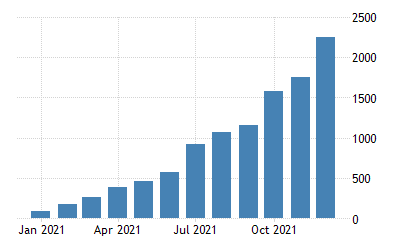
Being the largest trading partner of Russian in ASEAN and the fifth largest partner in APEC, Vietnam recorded 7.14 billion USD trade volume to Russia in 2021, increasing by 25.9% in 2020. In particular, the export of Russia to Vietnam reached 2.24 billion USD, up 38.3% compared to 2020. Meanwhile the import volume from Vietnam rose by 20,9% to 2020, standing at 4.89 billion USD, securing its 21st place in the main import partners of Russia.
Russia exports to Vietnam (Source: Tradingeconomics)
Yet, the Russia-Ukraine conflict has exerted a widespread impact on Vietnam’s import and export activities. For example, many Vietnamese exporters have stagnated their orders due to the tension between Russia and Ukraine. Further, the conflict has caused a sudden and prolonged plum in the food exports in Ukraine and Russia, thus burdening the international commodities prices and causing damage to vulnerable economies.
In addition, the USA and several EU countries have excluded some Russian banks from SWIFT- an international payment system. As a result, the cooperation between Russia and other nations has fallen into difficulties. Particularly, the blocking of Russia from SWIFT negatively hit the Russian investment projects in Vietnam, notably, power energy, oil and gas, and affected the contract payment in Euro currency.
The export of agricultural products has encountered various challenges due to theRussia-Ukraine conflict
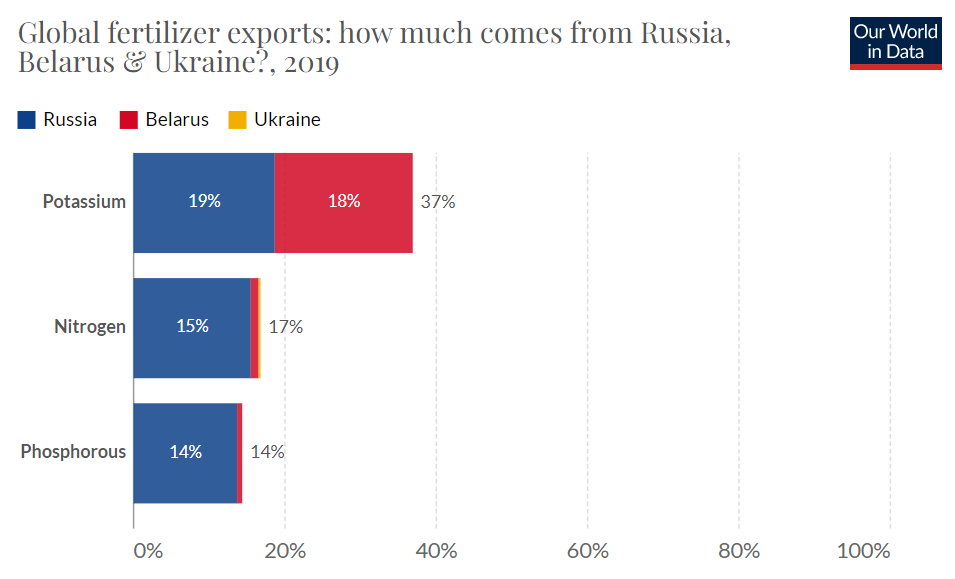
In Vietnam, the prices of domestically produced and imported fertilizers have increased by about 60-80% in 2021. The animal feed prices also experienced a sharp increase while the output prices saw considerable fluctuations, doubling the financial burden on farmers. Additionally, when the Russia-Ukraine conflict escalated, not only Vietnam, but also many countries worldwide have suffered from a surge in agricultural products. The reason behind this lies in the importance of Russia in the global fertilizer trade.
In detail, Russia is the world's largest fertilizer exporter, with a rich resource of urea and potassium. Therefore, the shortage of fertilizer supply from Russia has driven the input prices in food manufacturing in the world. Regarding Vietnam, the price of input materials, namely wheat, corn, among others, has increased by 10–20%, while the price of fertilizer has increased by over 20% (as of February 2022), adversely affecting the livestock and farming industry of Vietnam.
Russia fertilizer global export, 2019 (Source: Our World in Data)
As Russia is a potential export and import market for Vietnamese agricultural products, the Russia-Ukraine conflict severely affects the export and import quantities of these products between Russia and Vietnam. Before the conflict, the annual export turnover of Vietnam's agricultural products to Russia reached 550 million USD (2021). When the conflict broke out, export transactions to Russia were halted due to banking transaction risks, lack of shipping vessels and high costs.
For nearly a month now, according to some Vietnamese exporters of vegetables and fruits to Russia, their orders to Russia have been suspended due to the difficulties in transportation. Many Vietnamese export shipments are impeded in Russia, Ukraine and some Eastern European countries. Further, international banks have also declined and blocked their export documents to Russia as payments have been prevented from the SWIFT network.
In short, the conflict has sent food prices soaring in many parts of the world. The potential for agricultural disruption in these two essential commodity exporters could lead to a serious escalation of food insecurity globally. Under this situation, Vietnam's livestock and farming industry will be subject to a sudden shock, causing high inflation of agricultural products.
The supply chain has fallen back into deeper disruption.
The Russia-Ukraine conflict has exacerbated the shipping and supply chain crisis. In particular, the logistics bottlenecks and a supply-demand imbalance have dramatically slowed the average shipping times, resulting in a dire shortage of shipping containers. Plus, the fierce competition among logistics companies on leasing or purchasing containers has pushed freight costs to unbelievable rates. As a result, it severely affected the exporting companies in Vietnam to the EU, Ukraine and Russian markets.
Moreover, both Russia and Ukraine hold important positions in the global energy and supply chains. The two countries are one of the largest suppliers of niken, neon, krypton, aluminum and palladium. These natural resources contribute importantly to the manufacturing of electronic devices. Hence, any restriction or stagnation in the raw material supply from Russia may disrupt the electronic equipment production chain, directly affecting Vietnam. This will result in an increase in fuel prices, leading to the skyrocketing of final product prices.
The global supply chain crisis has emphasized the need for companies to diversify their supply chains to mitigate the risks. The Russia-Ukraine conflict is only the latest example. The disruption of the COVID-19 pandemic is another recent example. Therefore, identifying alternative suppliers and sources other than a single-country sourcing can help future-proof your business against uncertainty. Thus, Vietnam is an ideal contender for sourcing and diversifying the supply chains.
Government of Vietnam
Vietnam will soon experience inflation, yet by stabilizing prices and preventing a shortage of input materials, the inflation will be contained. In this way, the Government hopefully will pay greater attention to soon launching the upcoming socio-economic recovery programs.
In the short term, the Government would ensure sufficient supplies of petroleum products. But in the long term, the Vietnamese government should design a strategy to promote economic self-reliance, especially the development of renewable energy and a higher capability of data analysis in response to economic shocks. The Ministry of Industry and Trade has also warned businesses on the possibility of delays in delivery due to disruption in payment transactions. Therefore, local traders should take precautionary measures to avoid risks when engaging with foreign partners.
In conclusion
The Russia-Ukraine conflict has caused tremendous turmoil, which can put the global economy into the Second Great Recession. Without exception, Vietnam is under its influence. Yet, despite the risks, global experts still have a positive outlook on Vietnam’s economy. The potential growth can be accounted for by stable macro-and micro-economics, good Covid-19 containment, timely fiscal and monetary policies, along with the recovery of consumption and production.
Therefore, it's now time for both foreign and domestic businesses to diversify their supply sources and seek for new potential markets. For Vietnamese investors, if you want to search for new promising lands but are concerned about the current situation, let Viettonkin help you along. With a deep insight and practical knowledge, we can assist you throughout the whole process. For Russian investors, if you are looking for investment opportunities, Vietnam is the perfect country for you. As we know the Vietnam environment like the back of our hand, we are confident in supporting you through your business journey. Let us be your trustworthy companion!
HSBC's Vietnam at a glance report titled "Reclaiming glory from the victory" remarks that Vietnam's external momentum continues to shine thanks to the booming electronics industry and stable FDI inflows. The data shows that Vietnam is benefiting from the reopening strategy; Inflation pressure still remains under the control.
Since reopening, Vietnam's external dynamics have been in full swing. Export growth in April was especially strong thanks to the booming electronics export. It can be seen that Vietnam has reached out, successfully transformed, become the world's technology factory, and gained more market share in the export of phones and processors.
Despite the local disruptions caused by the pandemic, Vietnam continues to benefit from stable FDI inflows of the technology giants, both familiar corporations and new investors.
Chart 2. Electronics export has made the most distribution to the total export turnover of Vietnam
Chart 3. Vietnam emerged as an export country of smartphones at the world’s second position
HSBC acknowledges the most successful in the technology sector thanks to Samsung's foreign direct investment (FDI) for many years, with the investment value flowing into Vietnam over the past two decades accounting for about $18 billion. As a result, Vietnam's smartphone market share has significantly increased globally.
Chart 4. Vietnam’s global laptop export market share has increased, etc.
Chart 5. Similar to the processors, especially in the recent years.
In the context that 70% of the global finished computers are made in China, Vietnam's global laptop market share is also gradually increasing, surpassing Malaysia to become the main producer in the ASEAN region.
Meanwhile, Vietnam has also emerged as a supplier of microprocessors/controllers (although products assembled in Vietnam are often lower value microprocessors used in many electronic products). This result is supported by Intel's $1 billion investment in an assembly and testing facility in Vietnam since 2006. During the period of June 2009 to December 2020, Intel has invested an additional 475 million USD into the factory in Vietnam to strengthen the production of 5G products and core processors.
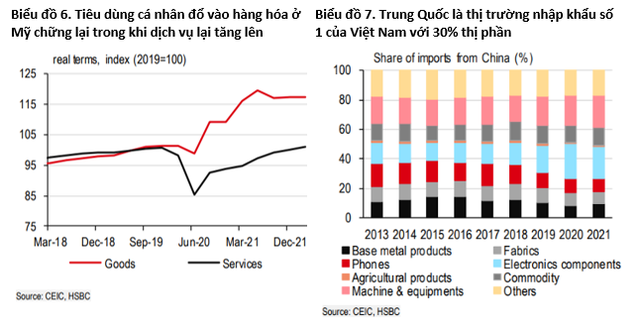
Chart 6. US private consumption of goods slows down while the epidemic rises up.
Chart 7. China is Vietnam’s number one import market with 30% market share.
HSBC also remarks that Vietnam should be careful with the strong winds that hinder trade from rising up. On the one hand, global consumption is shifting from goods to services.
On the other hand, supply chain disruptions in China make Vietnamese manufacturers more difficult to secure the input materials for future export activities. While Vietnam's export is very good, this brilliant result reminds us not to forget that Vietnam's manufacturing industry is highly dependent on imported raw materials.
About 30% of Vietnam's imports come from China, mainly in the fields of electronics (30%) and equipment and machines (22%).
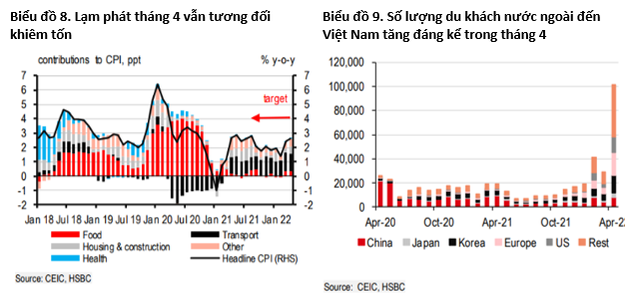
Chart 8. Inflation in April is still relatively modest.
Chart 9. The rate of foreign tourists to Vietnam significantly rises up in April
Vietnam's inflation pressure remains low in the ASEAN region. Total inflation only increased by 0.2% month against the last month, leading to a modest increase of 2.6% in the same period of the last year, still within the market's expectation rate.
Since officially opening the border on March 15, Vietnam has soon benefited from the return of tourism. Vietnam welcomed more than 100,000 tourists in April, three times higher than in March.
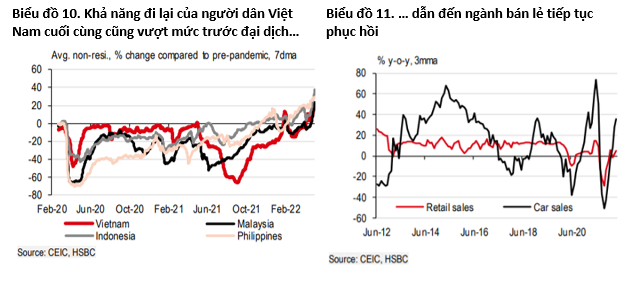
Chart 10. Vietnamese people’s mobility is finally exceeding the rate before the epidemics
Chart 11. …..resulting in the recovery of the retailing industry
In addition to tourism, domestic demand is also in a strong position thanks to the government's lifting of domestic epidemic prevention and control restrictions. After a slight decline in the first quarter of 2022, people's mobility has finally exceeded the pre-pandemic rate since early April.
This improvement has clearly contributed to the recovery of the retail industry, helping the industry grow 5.8% in April. Not only did merchandise sales increase 2% against the last month, but more importantly, even spending on services and travel-related segments rose 7% against the last month, signalling a bright start to the service sector recovery.
It is an ideal time to start investing in Vietnam. With a high chance of leveraging the opportunities, investors can harvest what they sow in the land of electric and technological sectors in Vietnam. Thus, to start your business in Vietnam, let us help you with the process! We are confident to have a strong team of professional and top-notch experts from the industry, who can assist you every step of the way! Let's get down to work!
The born of the future cars - Electric Vehicles (EVs)
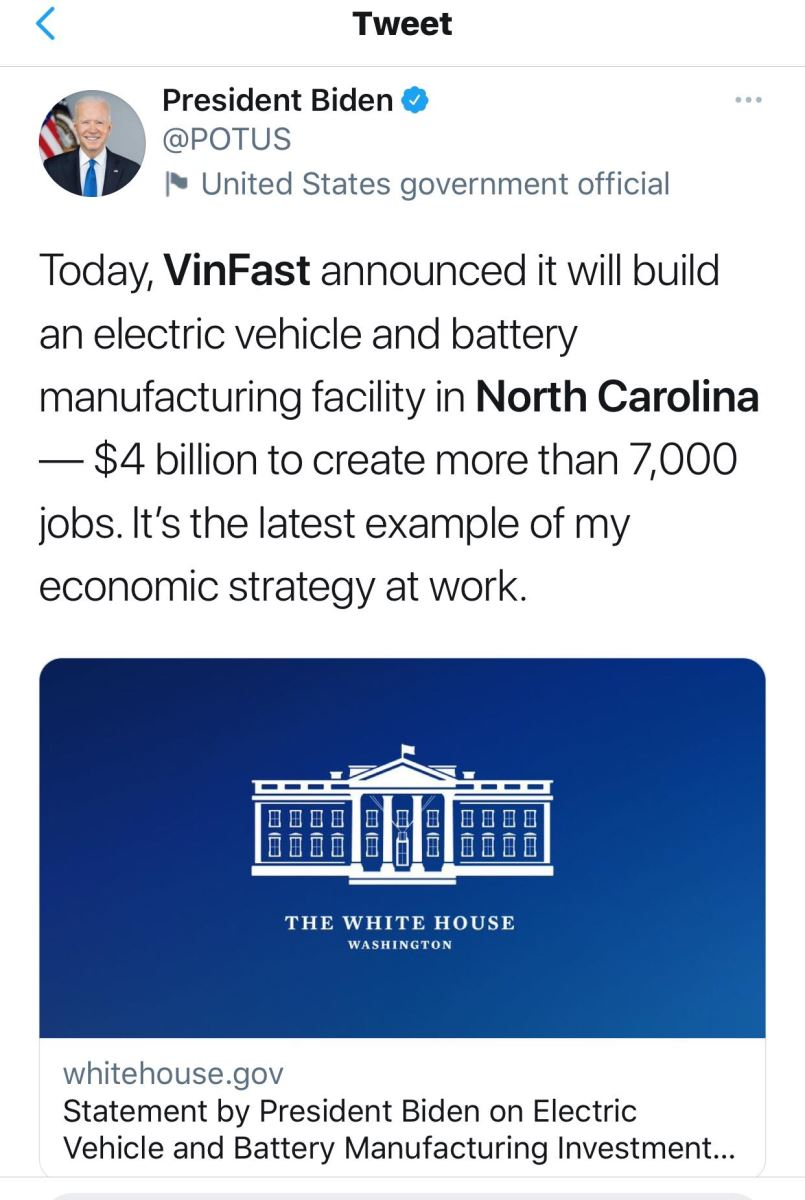
President Joe Biden of the USA has just congratulated Vinfast on its first investment in the Electrical Vehicles manufacturing plant in North Carolina on Twitter. For the first time, Vietnam has a made-in-Vietnam Electrical Vehicles (EVs) firm in the USA. This big success has its footing on the strategic planning and restructuring of Vingroup - the parent corporation of Vinfast. Vingroup is one of the largest multi-sector private corporations in Vietnam in particular and in Asia in general with a market capitalization of nearly 16 billion USD. Through three major restructurings in its development directions, Vingroup has been well-prepared for the global advancement of Vinfast.
President Joe Biden's tweet on made-in-Vietnam Electric Vehicles
Vingroup first restructured by replacing retails, agriculture and aviation with new-focus sectors - automobile, smartphones and television. In the second restructuring, the giant corp ceased the manufacturing of smartphones and televisions. Instead, Vingroup distributed most of its resources to the automobile sector. With this progressive approach of the group, several experts feared that it could be risky for Vin to put all its eggs in one basket. Yet, at that time, the focus on automobiles revealed a breaking-through step of Vin - electric vehicles.
Though Vinfast had initially generated strong impressions as the first Vietnamese-made car maker, the company has officially halted the production of its successful gasoline car lines to fully dedicate the organizational focus on the EV business launched in late 2021.
The decisive move of Vinfast has emphasized its long-term visionary plan of becoming the leading EV manufacturer in the region and in the world. At the moment, the trade-off between gasoline cars and EVs has caused significant loss to Vinfast. Nonetheless, according to the Chairman of Vingroup - Pham Nhat Vuong, this loss is only temporary. As the traditional automobile market in Vietnam has been saturated with the biggest pies belonging to well-established brand names, the opportunities for the follow-suit are marginal.
Meanwhile, the EV market is a potential land domestically and globally. The global demand for EVs in recent years has significantly increased. In particular, the Evs' global sales experienced a strong upswing of 4.2 million cars sold out in 2021, doubling the quantity in previous years. China contributes the largest share of electric vehicle sales in the world today, accounting for about 10% of annual car sales for the past three years, compared to 2% in the US. The consumption of EVs will reach 60% of the total car sales by 2040. Despite the rising demand for EVs, the supply of electric cars is in shortage. Therefore, the market space for EVs is tremendous, opening potential opportunities for first-movers. According to the Vietnam Registry, the number of electrified vehicles (hybrid, plug-in hybrid and pure electric vehicles) in Vietnam is marginal compared to the increasing demand. There were 140 electric vehicles in 2019 and 900 vehicles in 2020 most of which are imported and hybrid cars. Thus, Vietnam EVs are potentially blooming in the near future, creating a large market space for investors
Ranking
Car Line
Sales July 2021 (Quantity: car)
Comparision to June 2021 (Quantity: car)
Accumulated Sales(Quantity: car)
1
Vinfast Fadil
2,928
Increase by 376
13,005
2
Hyundai Grand i10
805
Decrease by 181
7,152
3
KIA Morning
194
Decrease by 67
2,467
4
Toyota Wigo
98
Decrease by 83
1,383
5
Honda Brio
81
Decrease by 106
1,612
Sales of Type A Car in Vietnam as of July 2021
Further, in the third restructuring, the electric vehicle ecosystem is the most promising business that Vingroup has ever launched, along with their well-established business line which is real estate. “It is worth trying,” Mr Vuong said, “all the new production and business areas of Vin in the past 5 years have been accumulating to converge on electric car manufacturing - VinFast”. Thanks to determined and aggressive actions from the Chairman of Vingroup, the electric cars of Vinfast have gradually put its name on the map with flattering compliments from international counterparts.
Heading to the American market…
Vinfast is heading its way to one of the most fastidious markets in the world - the USA. The reasons behind this expansion affirm Vinfast’s outstanding and visionary strategic vision.
When it comes to EVs, the USA is one of the early pioneers. According to the International Energy Agency (IEA), President Joe Biden’s administration strongly commits to reducing a considerable amount of traffic emissions into the environment. In this way, by 2030, President Joe Biden expects that 50% of sold cars in the USA are zero-emission vehicles. Under strong directives, the USA manufacturers in EVs are in bloom, notably Tesla, and Porsche, among others. In short, the USA is showing its biggest favour to EVs compared to other global counterparts. Thus, this is such a one-of-a-kind for foreign investors like Vietnam to take a bold chance. Vinfast is catching with no misses.
Additionally, the EV infrastructure in the USA has been well-established and continuously upgrading. The New York Times reported that the Government has devised a comprehensive plan for EV infrastructure development with a total value of up to 2.000 billion USD, part of which contributes to constructing EV charging systems. Further, according to CNBC, recently, President Biden promised to invest 400 billion USD in clean energy, including battery technology and electric vehicles. The Government, therefore, is determined to tackle climate change by motivating its people to use EVs instead. This creates a favourable environment for foreign investors to base their manufacturing plants in the country. Hence, Vinfast has taken a swift but firm move-in EV manufacturing in the US.
What sets the EVs in the USA apart lies in the developed skill level of electric vehicle manufacturing workers. The automobile industry is playing an important role in job creation for the US workforce. Therefore, for many years now, the US has been actively improving the skills of workers in automobile manufacturing (The Center for American Development - CAP). Seeing this as an advantage, Vinfast is on its way to establishing an EV production plant in the USA. The Vice President of Vingroup and General Director of VinFast Global - Mrs Le Thi Thu Thuy informed that VinFast has signed a preliminary agreement on an initial investment of 2 billion USD to build an electric vehicle and battery factory in North Carolina. In addition, to encourage the development of EVs, the US Government has also approved and issued diverse tax-incentivized policies for EV manufacturers. In the case of Vinfast, the company will receive a tax incentive of 20.5 million USD from the North Carolina State Government. Mrs Le Thi Thu Thuy also shared: "Locating the manufacturing plant in the US will help VinFast proactively supply, stabilize prices and shorten the supply time. As a result, VinFast's electric vehicles will become more accessible to customers, contributing to the realization of local environmental improvement goals."
Overall …
The current success of Vinfast has been attributed to various elements, products, strategies, marketing, and policy-insight, among others. This Vietnamese car brand name has become the nation’s pride and is spreading its impact and offering inspiration to the ambitious younger generation. However, this is just the beginning: Vinfast has a long way to go to achieve its goals. What we can tell now is that Vinfast has had a resounding debut, laying a solid foundation for its great long jump.
Opportunities are still wide open and equal for any investors. The question is Why not now? With assistance from a seasoned leading firm in the industry, you will be guided through the process of starting up a business in a foreign environment. Let us be your companion and help you along the way!
About Us
Founded in 2009, Viettonkin Consulting is a multi-disciplinary group of consulting firms headquartered in Hanoi, Vietnam with offices in Ho Chi Minh City, Jakarta, Bangkok, Singapore, and Hong Kong and a strong presence through strategic alliances throughout Southeast Asia. Our firm’s guiding mission is aimed towards facilitating intra-ASEAN investments and connecting investors in Southeast Asia with the rest of the world, thus promoting international business relationships and strengthening inter-nation connections.






 English