Vietnam's food trade industry is one of the most dynamic sectors in the country. Fueled by an expanding middle class, rising disposable incomes, and shifting consumer preferences, the increasing demand for high-quality food products is undeniable. From bustling markets in Ho Chi Minh City to modern supermarkets in other major cities, the opportunity for both […]
Vietnam's food trade industry is one of the most dynamic sectors in the country. Fueled by an expanding middle class, rising disposable incomes, and shifting consumer preferences, the increasing demand for high-quality food products is undeniable. From bustling markets in Ho Chi Minh City to modern supermarkets in other major cities, the opportunity for both […]
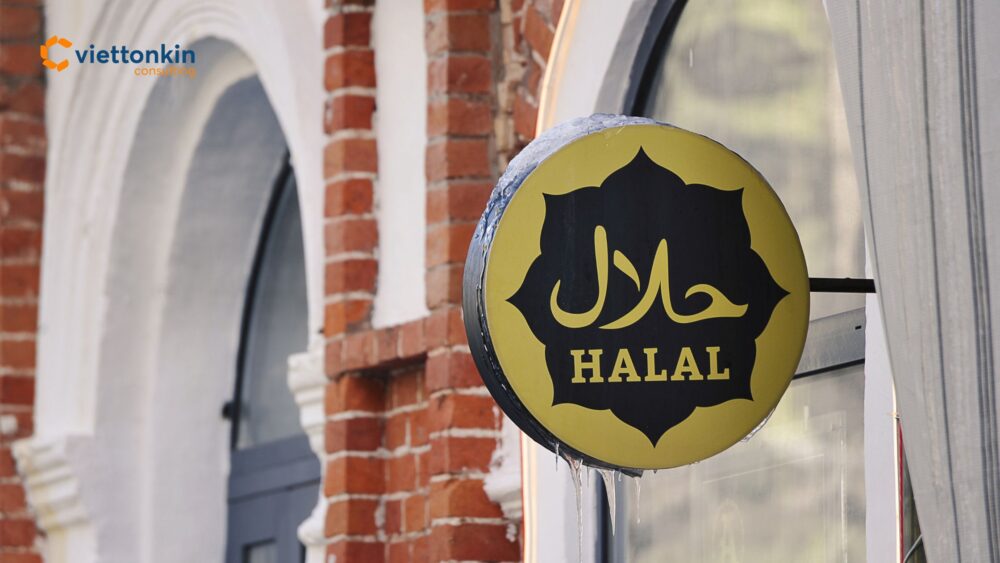
Thinking of branching in Indonesia? Do you still need a guide to Indonesia Halal Certification? Worry not, we will give you a comprehensive guide of Indonesia Halal Certification below.
Recently, Indonesia’s House of Representatives announced that Halal certification will be mandatory. The requirement for halal certification for food, beverages, and slaughtered goods will take effect on October 18, 2024.
All food, beverage, and slaughter products circulating and traded in Indonesia need to comply with the general Halal certification process and the first phase will be implemented as of October 18, 2024.
To avoid confusion, you can still sell products without a Halal certificate for now. Alas, as a business decision, it would be unwise to go ahead with your products without the Halal label in the largest Muslim country in the world.
Starting off, you must know the concept of Halal itself. This concept serves as a guide for Muslims in all aspects of consumerism and consumption of products and services. Bound by Islamic dietary laws, Muslims ensure the permissibility of all foods and drinks before consumption.
There will usually be a Law that will regulate the processing, materials, and certification of Halal products, to establish partnerships with international Halal agencies.
In Indonesia, The Halal Law assigned the establishment of the Halal Products Certification Agency (BPJPH), a new government agency under the Ministry of Religious Affairs that will issue Halal certificates through a one-stop-shop system.
Key Takeaways
Acquiring Halal Certification determines whether a product complies with Islamic law (halal), or "haram," which contains pork or deviates from it.
Receiving Halal Certification allows companies to ensure that their products comply with the regulations and laws applicable in various markets. As the world's largest halal market, it will be wise to have Halal status on your business processes in Indonesia.
Halal certification also opens doors to markets in Malaysia, the Middle East, and other Muslim-majority countries.
For the largest Muslim country in the world, this certification is consequential as it is a way for the citizens to adhere to their religion.
According to a study by Hayyun Durrotul Faridah, Halal certification in Indonesia (Vol. 2 No. 2 (2019): Journal of Halal Product and Research (JHPR)), halal certification and halal labeling are two interrelated things.
Halal certification is a process to obtain a halal certificate by going through several stages of inspection to prove that the raw materials, production process, and halal product assurance system in a company are in accordance with the established standards (LPPOM MUI 2008).
Halal labeling is the inclusion of a halal label or logo on the packaging of halal products. This label serves to show consumers that the product is a halal product.
The process establishes if a product adheres to the Islamic law,” halal,” or if they contain pork or deviate from the Islamic law, “haram.”
Get to Know Indonesia’s Halal Body - Badan Penyelenggara Jaminan Produk Halal (BPJPH)
The government of Indonesia established an independent organization to manage Halal Certificates. It is called Badan Penyelenggara Jaminan Produk Halal (BPJPH).
BPJPH has several tasks including (1) Formulating and determining JPH policies (2) Determining norms, standards, procedures, and criteria for JPH (3) Issuing and revoking Halal Certificates and Halal Labels on Products (4) Registering Halal Certificates on foreign products (5) Conducting socialization, education, and publication of Halal Products (6) Accrediting LPH (7) Registering Halal Auditors (8) Supervising JPH (9) Providing guidance to Halal Auditors; and (10) Cooperating with domestic and foreign institutions in the field of JPH implementation (Article 6 of the JPH Law). BPJPH determines the logo or label that applies throughout Indonesia. In addition, it is also authorized to issue or revoke the halal logo.
Importance of Halal Certification for Products
In his book, Halal and Kosher Food (2023), Osman Ahmed Osman mentioned that “Halal food is very important to both Islamic and non-Islamic communities around the world for religious, cultural, ethical, and market reasons”
For Muslims, it is acceptable, and adhering to halal principles is a religious duty that guarantees the maintenance of their religious integrity through dietary decisions.
On the other side, for a business point of view, you can reach a wider customer target, especially if you are considering the demographic of Indonesians.
Halal Certification Compliance Period
Halal certification is not a one-time event but a cyclical process that requires renewal. The validity period of halal certification is only valid for 4 years.
Any product you want to sell with the "Halal" label needs to be certified as Halal in Indonesia. You should verify whether any Halal certificates you have received from other nations comply with Indonesian Halal requirements.
According to the Badan Penyelenggara Jaminan Produk Halal (BPJPH), as outlined in GovernmenFt Regulation No. 39 of 2021, the mandatory Halal Labeling Law will apply to food and beverages, cosmetics, drugs, restaurants, slaughterhouses, and other consumer goods.
The Halal certificate is available to importers, distributors, and producers alike.
Foreign businesses must first obtain Halal certification from an organization in their home countries if they want to export goods to Indonesia and need to obtain Halal certification.
Step-by-step overview of the obtaining halal certification:
Submitting applications by businesses.
Product & product facilitations inspection.
Review by religious organizations for compliance with Islamic law.
Issuance of the halal certificate.
3 Key Agencies Involved in Indonesia’s Halal Certification
BPJPH (Badan Penyelenggara Jaminan Produk Halal): Overview of its role in managing certification.
Majelis Ulama Indonesia (MUI): Its role in religious oversight and issuing fatwas.
Lembaga Pemeriksa Halal (LPH): Their role in conducting the technical audits.
Why is Indonesia Halal Certification Important for Businesses?
Halal standards compliance is a crucial component of compliance in many nations, particularly those with a majority of Muslims. By obtaining this certification, businesses may guarantee that their products adhere to the rules and legislation that are relevant in different markets.
Importance of Indonesian Halal Certification for Businesses
Access to the Indonesian market will become wider. As the world's largest halal market, it will be wise to have Halal label on your business processes.
Consumer trust and brand loyalty: By default, Halal-certified products are preferred by Muslim consumers.
Export opportunities: Not only can you explore the Indonesian market better, Halal certification opens doors to markets in Malaysia, the Middle East, and other Muslim-majority countries.
Legal requirements: Overview of Indonesia’s laws mandating halal certification (e.g., Law No. 33/2014).
What will happen if you don’t comply with Halal Certification?
If you are a business that intends to sell products with halal labels, failure to comply with Indonesia’s mandatory halal certification can lead to significant consequences for businesses. Under Government Regulation No. 39 of 2021, non-compliance results in a range of administrative sanctions. These include:
Written warnings: The first step for minor infractions or delays in certification.
Fines: Financial penalties may be imposed on businesses that fail to meet the requirements within the specified deadlines.
Product recalls: Non-compliant products may be removed from the market, which can severely impact revenue and brand reputation.
Revocation of halal certificates: For businesses that have previously obtained certification but fail to maintain standards, the certificate can be revoked, restricting their ability to market their products as halal.
Halal Certification: What is The Challenge & Solution for Businesses?
Challenges businesses facein the certification process:
Business will need cost and time involved in certification, which can be challenging to some. You will need to await the Ministry of Finance's implementing regulations on fee payment, which the BPJPH says will be dependent on the applicants’ type of products or services, and type of business. Business also needs to adapt production processes to meet halal standards.
So what is the solution and strategy to overcome these challenges? You can try to work with consultants. A consultant can help you to obtain Halal Certification.
Work with Viettonkin to Get Halal Certification Services
Do you need to obtain halal certification for your business?Viettonkin, a business consultant company with over 10 years of experience as a halal certification consultant is ready to assist you! Our team has personally guided numerous businesses through Indonesia's regulatory landscape, ensuring compliance with both local and international halal standards.
Entering Vietnam's Banking Market: Get Your Essential 2025 eBook
Vietnam's dynamic banking sector is a top destination for foreign investment. To succeed, you need a deep understanding of the local landscape, from new regulations to market entry models.
Our eBook, "ESTABLISHING FOREIGN BANK PRESENCE IN VIETNAM" gives you the crucial insights you need, including:
2024–2025 Sector Overview: Key economic and banking industry analysis.
Step-by-Step Entry Guidance: A deep dive into all primary market entry modes.
The Latest Legal Updates: Critical regulatory changes taking effect in 2025.
Smart Investment Strategies: Insights on M&A, strategic equity, and Fintech.
Download now for the expert knowledge to invest with confidence.
Entering Vietnam's Banking Market: Get Your Essential 2025 eBook
Vietnam's dynamic banking sector is a top destination for foreign investment. To succeed, you need a deep understanding of the local landscape, from new regulations to market entry models.
Our eBook, "ESTABLISHING FOREIGN BANK PRESENCE IN VIETNAM" gives you the crucial insights you need, including:
2024–2025 Sector Overview: Key economic and banking industry analysis.
Step-by-Step Entry Guidance: A deep dive into all primary market entry modes.
The Latest Legal Updates: Critical regulatory changes taking effect in 2025.
Smart Investment Strategies: Insights on M&A, strategic equity, and Fintech.
Download now for the expert knowledge to invest with confidence.
Founded in 2009, Viettonkin Consulting is a multi-disciplinary group of consulting firms headquartered in Hanoi, Vietnam with offices in Ho Chi Minh City, Jakarta, Bangkok, Singapore, and Hong Kong and a strong presence through strategic alliances throughout Southeast Asia. Our firm’s guiding mission is aimed towards facilitating intra-ASEAN investments and connecting investors in Southeast Asia with the rest of the world, thus promoting international business relationships and strengthening inter-nation connections.





 English